
Hail and storm damage · Denton, Texas
Hail and Storm Damage Denton TX
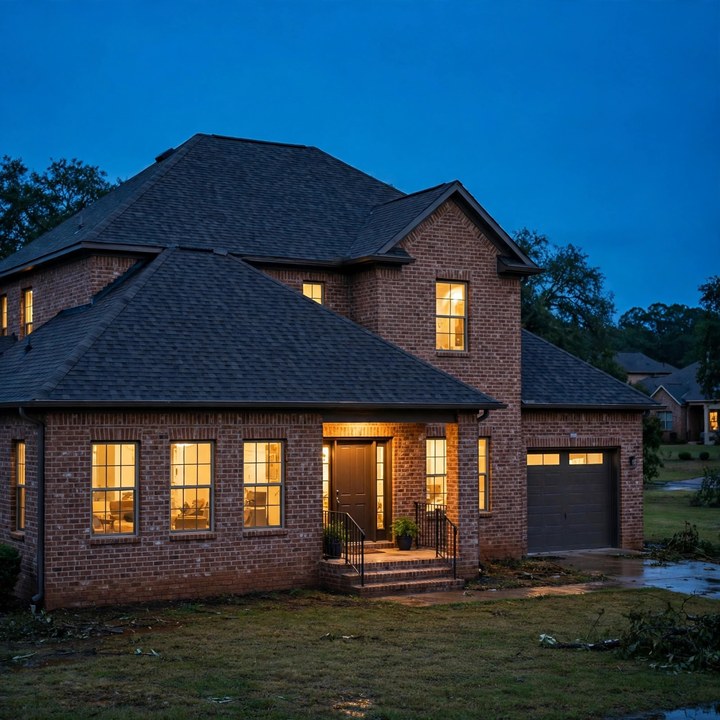
The morning after a North Texas storm, a hail-damaged roof looks perfectly fine from the driveway.
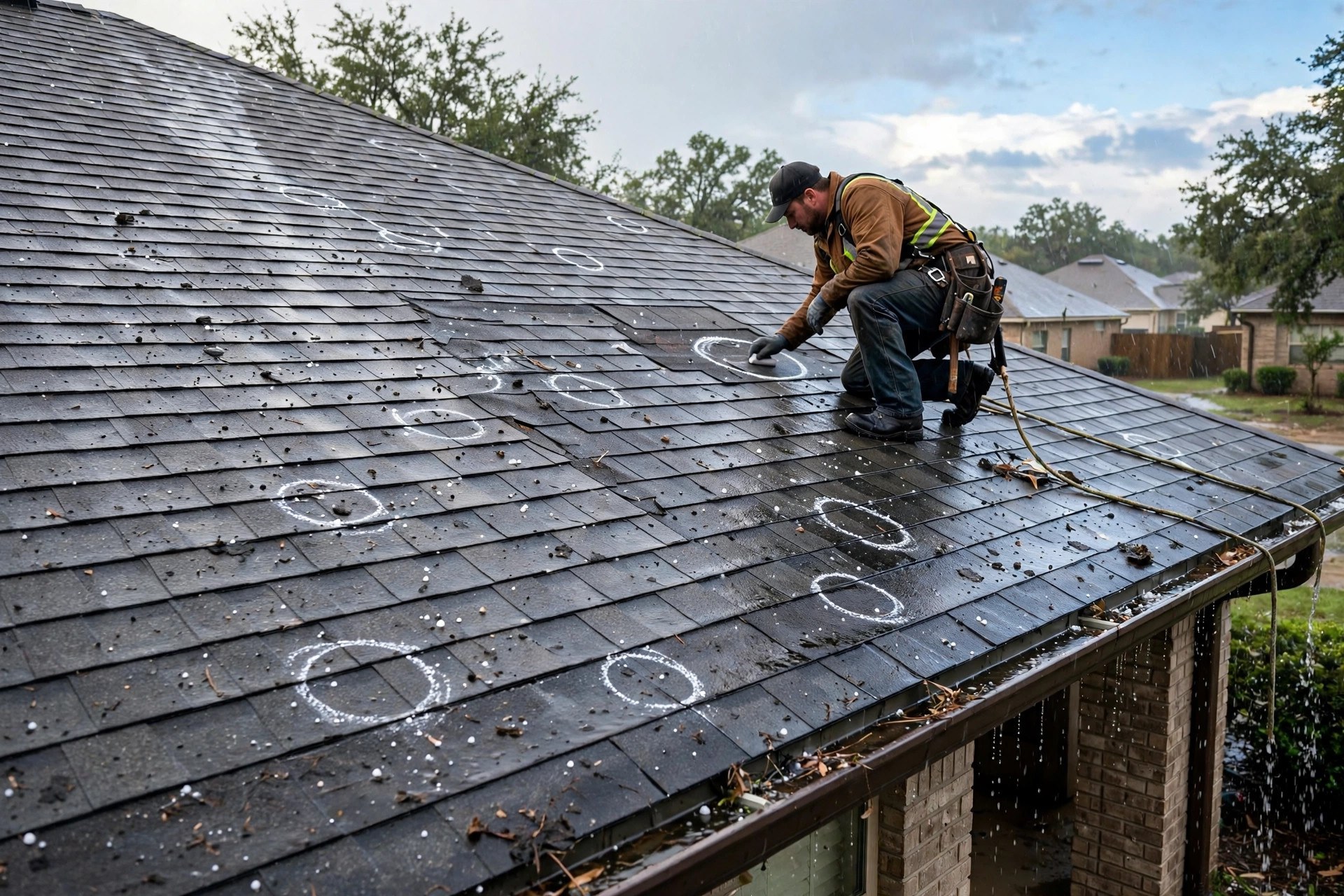
It is not. Hail fractures shingles from underneath and bruises the mat where no one on the ground can see it, and wind lifts edges that reseal just long enough to leak later. The only honest verdict comes from standing on the roof. JBN Roofing of Texas inspects hail and storm damage on the roof itself: every slope walked, damage chalk-marked and photographed, findings handed to you in writing. When a storm has totaled the roof, the replacement is measured and priced in one written document before anyone commits to anything.
What hail does
Hail and Storm Damage, Explained From the Roof
A hailstone does its work in a fraction of a second, and most of what it leaves behind is invisible from the street.
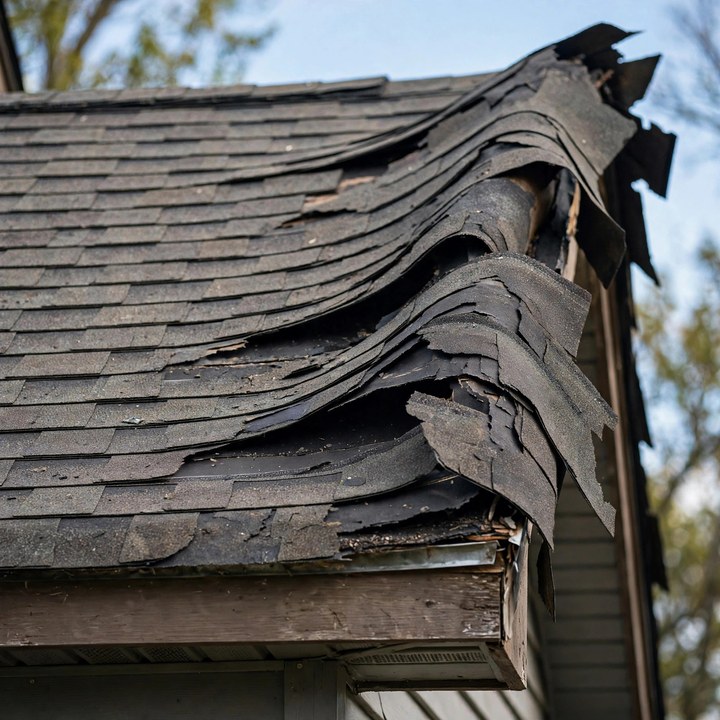
When hail strikes an asphalt shingle hard enough, it cracks the fiberglass mat beneath the granule surface. The shingle can look almost untouched while its waterproofing life is cut short: granules loosen and wash away over the following seasons, the exposed asphalt ages fast in the Texas sun, and the cracked spots become the leaks of next year or the year after. Wind works differently, lifting shingle edges and ridge caps, breaking the sealant bond so water drives underneath the next time rain comes sideways. Hail and storm damage is therefore a diagnosis made up close, by touch as much as by sight.
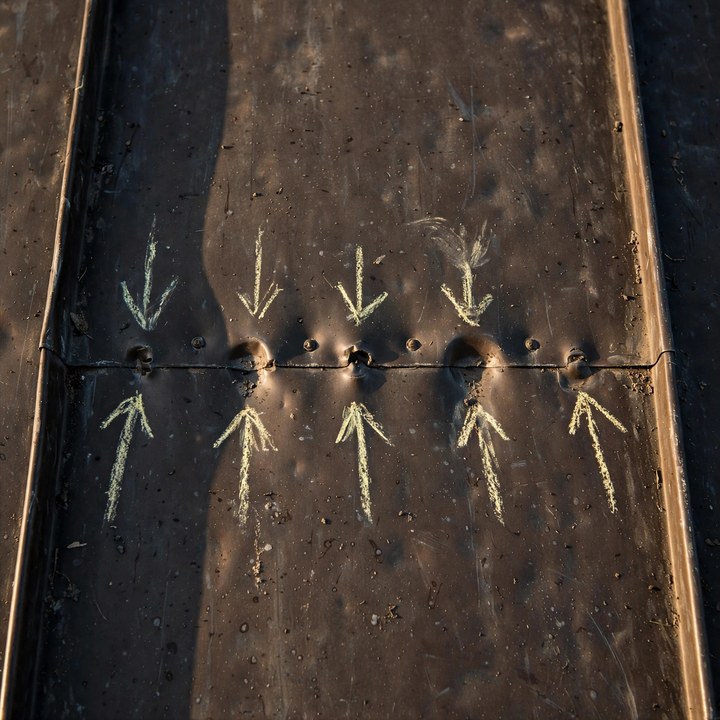
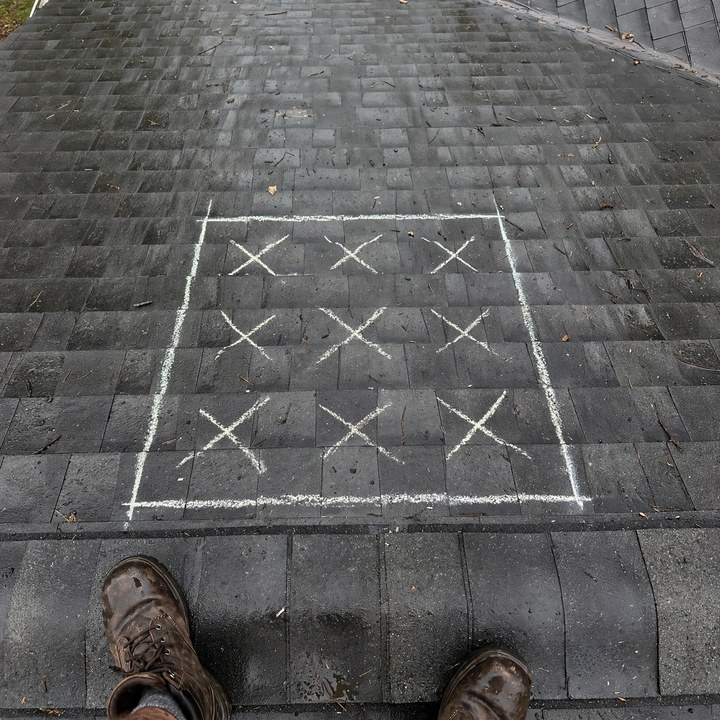
That is why our inspectors run test squares on each slope, count and mark the hits inside them, and check the soft metals — vents, flashing, and gutters — which record a storm's size and direction honestly. Call 469-340-0838 and get that record made while the evidence is fresh.
Storm paths
Where Hail and Storm Damage Leads
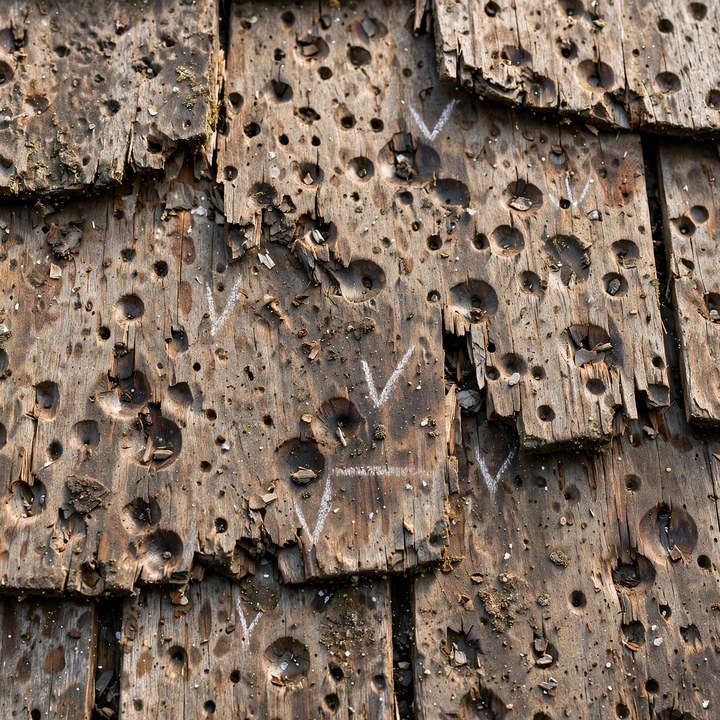
Different roofs take a storm differently, and a documented inspection sorts out which of these situations is yours.

After the storm
Six Sensible Moves After Hail or Wind
What a homeowner does in the first days after a storm decides how clean the rest of the process runs. Hail and storm damage keeps best when it is documented before anything is disturbed.
Stay Off the Roof
A wet, hail-damaged roof is slick and weakened in spots. Leave the climbing to the people who do it daily, with the gear for it.
Photograph From the Ground
Hailstones beside a coin for scale, debris, dented gutters and cars: dated ground photos add context to the on-roof record.
Check the Ceilings
New stains or drips indoors mark where water is already traveling. Note the rooms and dates; that map helps trace any active leak.
Do Not Sign at the Door
Storm weeks bring door-knockers with clipboards. A signature given in the driveway can sign away choices you have not priced yet.
Get the Roof Documented
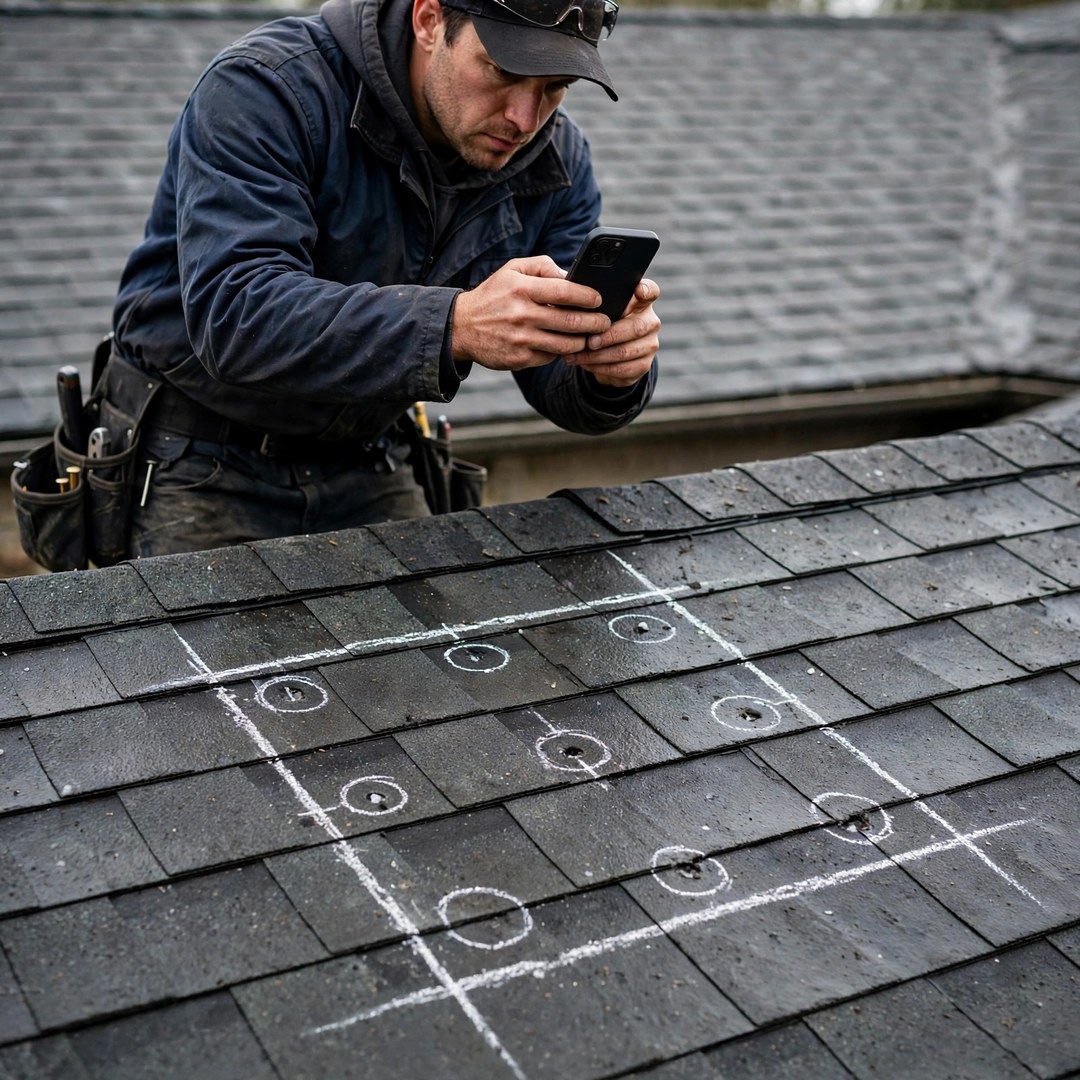
Have the roof inspected and the hail and storm damage photographed and written up while the chalk marks and storm evidence are fresh.
Price the Work in Writing
If the roof is totaled, get the full replacement scoped and priced in one document, and decide from paper, not pressure.
The paperwork
Documentation That Stands on Its Own
Opinions do not document a storm. Photographs of marked damage, a slope-by-slope count, and a written report do.
Every inspection for hail and storm damage here ends with a package the homeowner keeps: dated photographs of the test squares and marked hits, notes on the soft metals and edges, and a written conclusion — replacement warranted, or roof sound — with the reasoning attached. That record is yours whether or not JBN Roofing of Texas does the work, and it is written to stand up to a careful reader, including an adjuster. One boundary is worth stating plainly: thorough documentation is our job; the outcome of any insurance claim is the insurer's decision, and we never promise otherwise.
For storm documentation on your roof, start with the inspection. Call 469-340-0838.
The company behind the chalk
JBN Roofing of Texas
Hail and storm damage work is handled by JBN Roofing of Texas, a division of The JBN Group, Inc., the family-owned Denton general contractor founded in 1996. The roofing crews work from Suite 8 at 125 Old Alton Drive in Denton, the same address the family company has operated from across its divisions. When a storm totals a roof, the replacement is done by the same company that documented the damage: one inspection, one written price, one accountable name from the first chalk mark to the final walk-through.
Reach the office at 469-340-0838 or sales@jbnroofingoftexas.com: Monday through Thursday 9:00 AM to 5:00 PM, Friday 9:00 AM to 4:00 PM, and Saturday 10:00 AM to 2:00 PM Central, closed Sunday.
From storm to settled
How a Storm Roof Gets Handled Here
Hail and storm damage work follows the same order every time, because sequence is what keeps the record clean and the decisions calm.
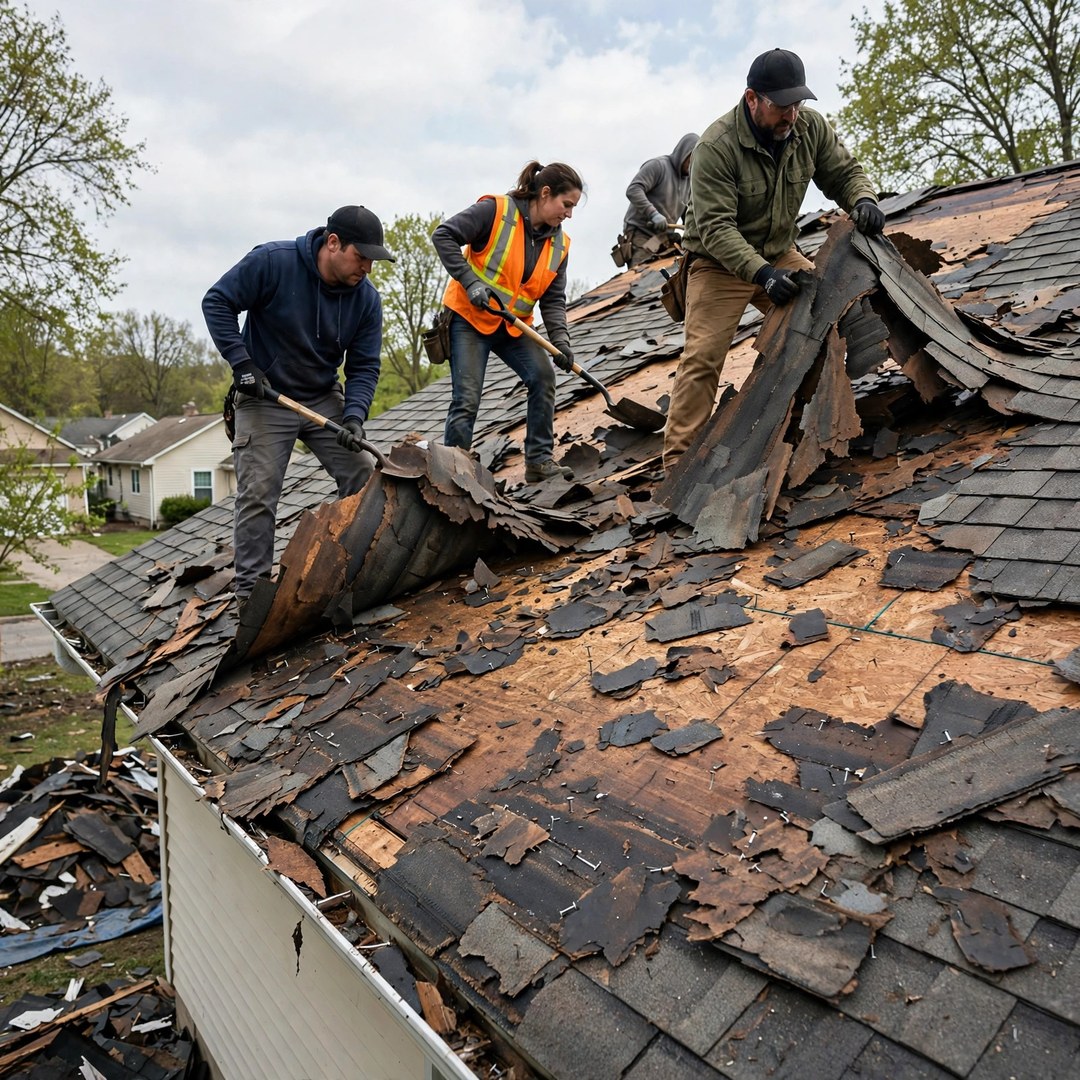
It starts with a call and ends, when the damage warrants it, with a crew tearing off the totaled roof and building the new one under a written price agreed before the first shingle moved. Between those points sits the work that protects the homeowner: a real inspection, a photographed record, and findings delivered in writing. Skipping the middle steps is how storm work goes wrong, and it is why hail and storm damage here is a process rather than a pitch.
- Every slope inspected, test squares chalked
- Photographs dated and tied to each slope
- Findings in writing, favorable or not
- Replacement priced before any commitment
- Tear-off and build by the documenting company
Call and Describe the Storm
Tell us what came through and what you are seeing. The inspection is scheduled and the roof is put on the record.
Inspect and Test on the Roof
Slopes are walked, test squares chalked, hits counted, and edges and soft metals examined up close.
Document and Report
Marked damage is photographed and the findings are written up and handed to the homeowner to keep.
Price and Build
A totaled roof is measured and priced in writing; on approval, the replacement is torn off and built as scoped.
Shown, not sold
You See Everything the Inspection Found
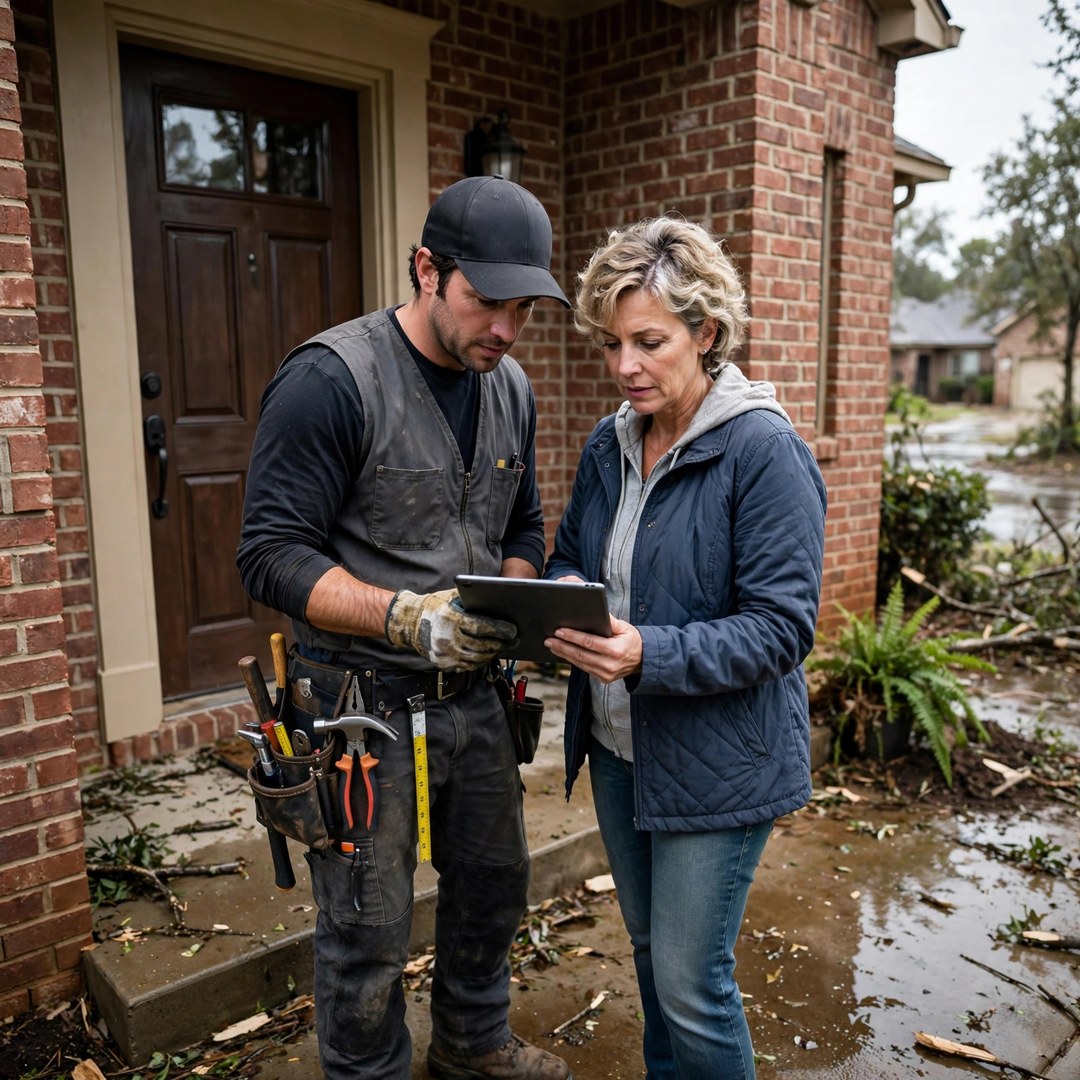
Storm work attracts exaggeration. The antidote is simple: the homeowner sees the same photographs and counts the inspector saw.
After the roof work is done, the findings are walked through at your door or your table: the test-square counts, the photographs of the marked hits, the condition of the edges and metals, and the conclusion they add up to. Where the evidence says the roof came through, that is the report. Where hail and storm damage has genuinely shortened the roof's life, the photos make the case without anyone raising their voice. Decisions about a five-figure roof should rest on evidence a homeowner can hold in their hands.
Call 469-340-0838 and have your roof read the same way.
Service area
Storm Inspections Across the Hail Belt
Storm inspections run from 125 Old Alton Drive in Denton across Corinth, Argyle, Flower Mound, Highland Village, Lewisville, Carrollton, Frisco, Allen, Lantana, Sanger, Bedford, and Bartonville — the corridor where North Texas hail does its steadiest work. The same test-square standard applies in every one of those towns: when a storm crosses the area, roofs there are read the same careful way as roofs in Denton.
Outside that circle, call 469-340-0838 and ask. A straight answer about whether we can serve your roof well is part of the service.
Storm Work We Take On
- Hail inspections for homes and businesses
- Wind damage documentation
- Full replacements for storm-totaled roofs
- Commercial roof repair after storms
- New roofs on storm-rebuilt homes
- Pre-purchase storm history assessments
Straight answers
Hail and Storm Damage FAQs
Can hail damage my roof if it looks fine from the ground?
Yes, and that is the usual case. Hail fractures the mat inside the shingle and knocks granules loose without changing how the roof looks from the street. The damage shows up close, by touch and by test square, which is why hail and storm damage is inspected on the roof rather than judged from the driveway.
How soon after a storm should the roof be inspected?
As soon as practical. Chalk marks, scattered granules, and storm debris tell the clearest story in the first days, and a dated record made early is worth more than one made months later. If a ceiling is leaking now, say so when you call: active leaks jump the line.
Will insurance pay for my new roof?
That decision belongs to your insurer, and no roofer can honestly make it in advance. Our part is the evidence: a thorough on-roof inspection with marked, photographed damage and written findings you can submit with confidence. Contractors who guarantee a claim outcome are selling, not inspecting.
Can the hail damage on my home just be repaired?
JBN Roofing of Texas does not sell repairs on residential roofs. Hail damage is spread across whole slopes rather than gathered in one fixable spot, and patching scattered fractures leaves the rest of the shortened roof in place. Homes get the full inspection, the documentation, and replacement when the damage totals the roof. Commercial roof repair is offered for business properties as its own service.
What does a storm inspection cost?
The hail and storm damage inspection and the written findings are the free first step of how this company works, the same as the quote that follows when work is warranted. What you receive either way is the complete record: photographs, test-square counts, and a conclusion in writing.
My roof is older. Is a storm inspection still worth it?
Yes. Age and storm damage are separate questions and the report keeps them separate: wear that belongs to the years is called wear, and hits that belong to the storm are marked as hits. An older roof is exactly the one whose remaining life a homeowner should have measured honestly after a storm.
Free inspection · Written price
The Storm Is Over. Get the Roof Read Properly.
Hail and storm damage rewards the homeowner who documents first and decides second. Start with an on-roof inspection, marked and photographed, from the Denton company that has stood behind its written word since 1996.