

01
Map the Drip Inside
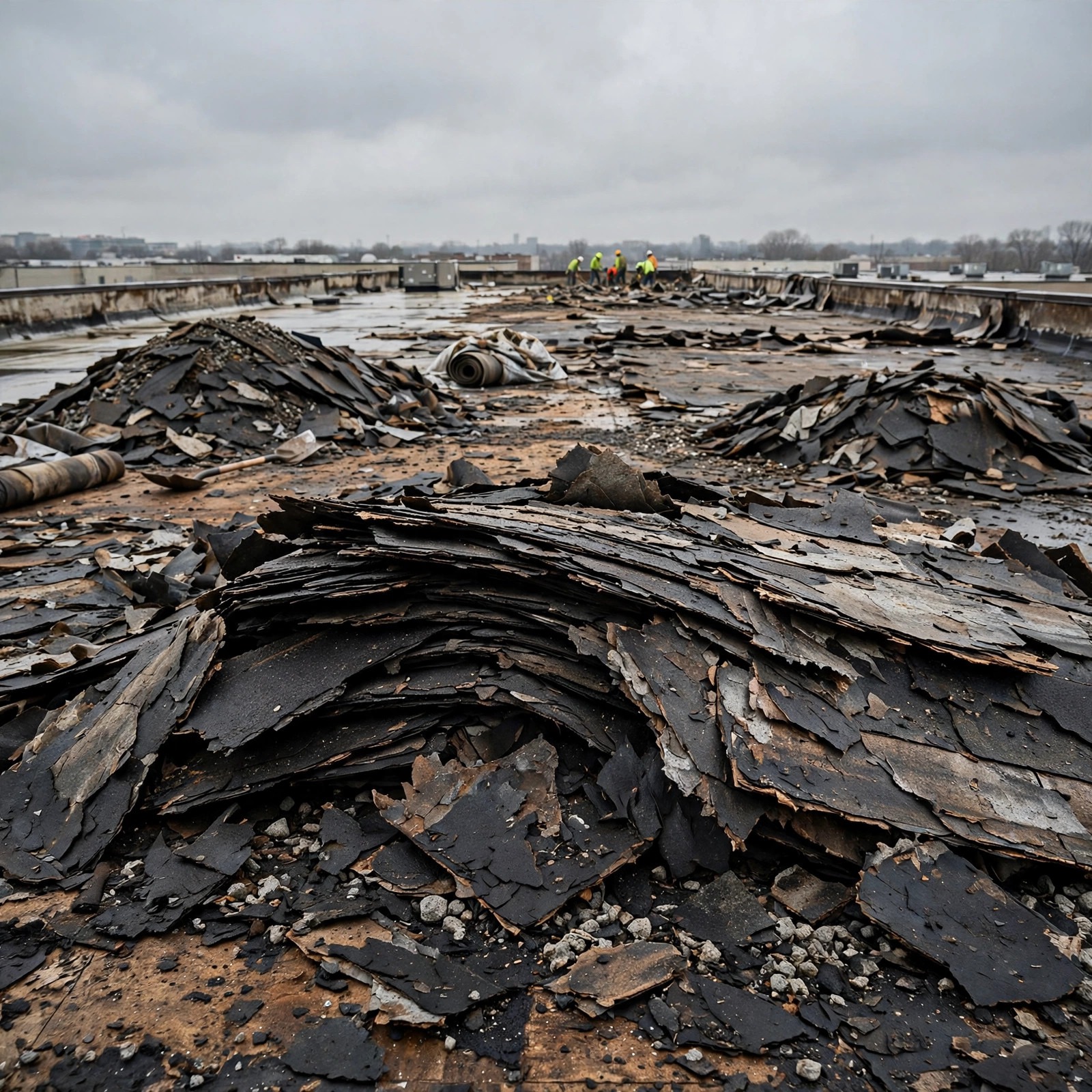
The stain and drip locations get marked and measured inside the building first. They are the end of the trail, and the measurements aim the search on the roof.
JBN Roofing of Texas · A Division of The JBN Group, Inc.
The stain on the ceiling is where the water lands. The repair starts where it gets in.
Leak Repairs on a commercial roof are detective work first and patching second. Water enters at a split seam, a failed flashing, or a puncture, travels along the deck, and drips through somewhere else entirely, so sealing the spot above the stain usually seals nothing. JBN Roofing of Texas traces commercial roof leaks back to their entry point, opens the section, and seals the actual source, for buildings across North Texas. From our Denton office, the roofing team can be reached at 469-340-0838.
Why leaks hide
Patch the drip and you have sealed a symptom. The water keeps coming in at the real opening and finds another way down.
On a flat or low-slope roof, water rarely falls straight through. It slips in at a separated seam, a cracked flashing boot, a puncture from a dropped tool or a storm-driven branch, then runs along the deck or the top of the insulation until it finds a joint to drip through. By then it may be twenty feet from the hole that let it in, soaking insulation the whole way.
That is why the repair sequence here runs backward from most patch jobs: get on the roof, read the seams and details around and above the drip, test the suspects, and mark the true entry point before anyone opens a tube of sealant. The repair that follows is aimed at the cause, and the wet material the water crossed gets dealt with instead of sealed in.
Got a stain spreading or a drip that keeps coming back? Call 469-340-0838 and get the source found first.
Roofing services
A leak repair sits inside a wider commercial program: the inspection that finds the source, the repair that seals it, and the coating or replacement waiting when a repair no longer makes sense. Every service below is performed by JBN Roofing of Texas crews and priced the same way, in writing, before work begins.
A repair done right
Repeat leaks are almost never bad luck. They are repairs that sealed the wrong place, or sealed the right place without fixing what the water did on its way in.
The stain and drip locations get marked and measured inside the building first. They are the end of the trail, and the measurements aim the search on the roof.
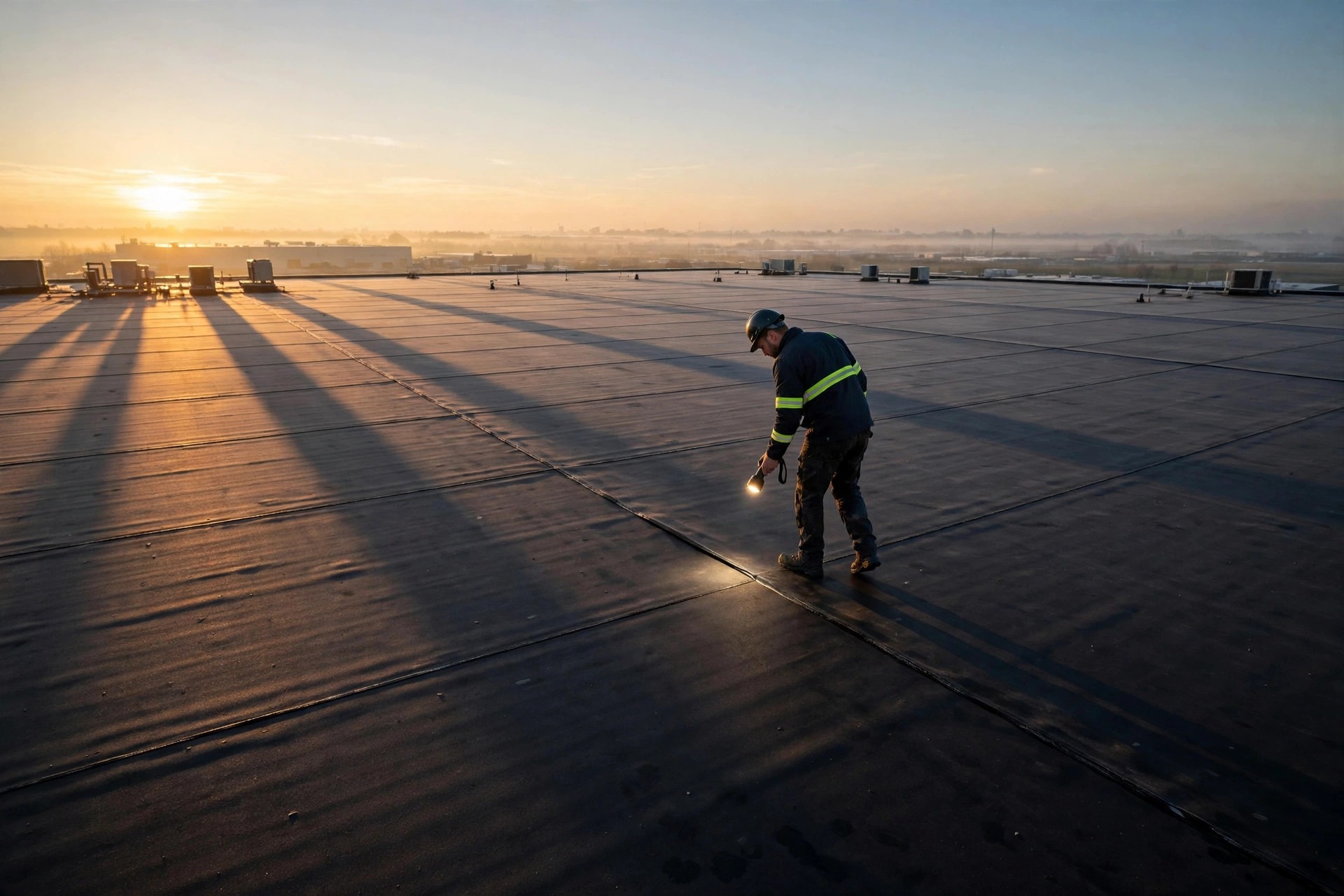
Seams, flashings, boots, and ponding areas uphill of the drip get hands-on inspection. Water runs downhill under the membrane, so the source sits above the stain.
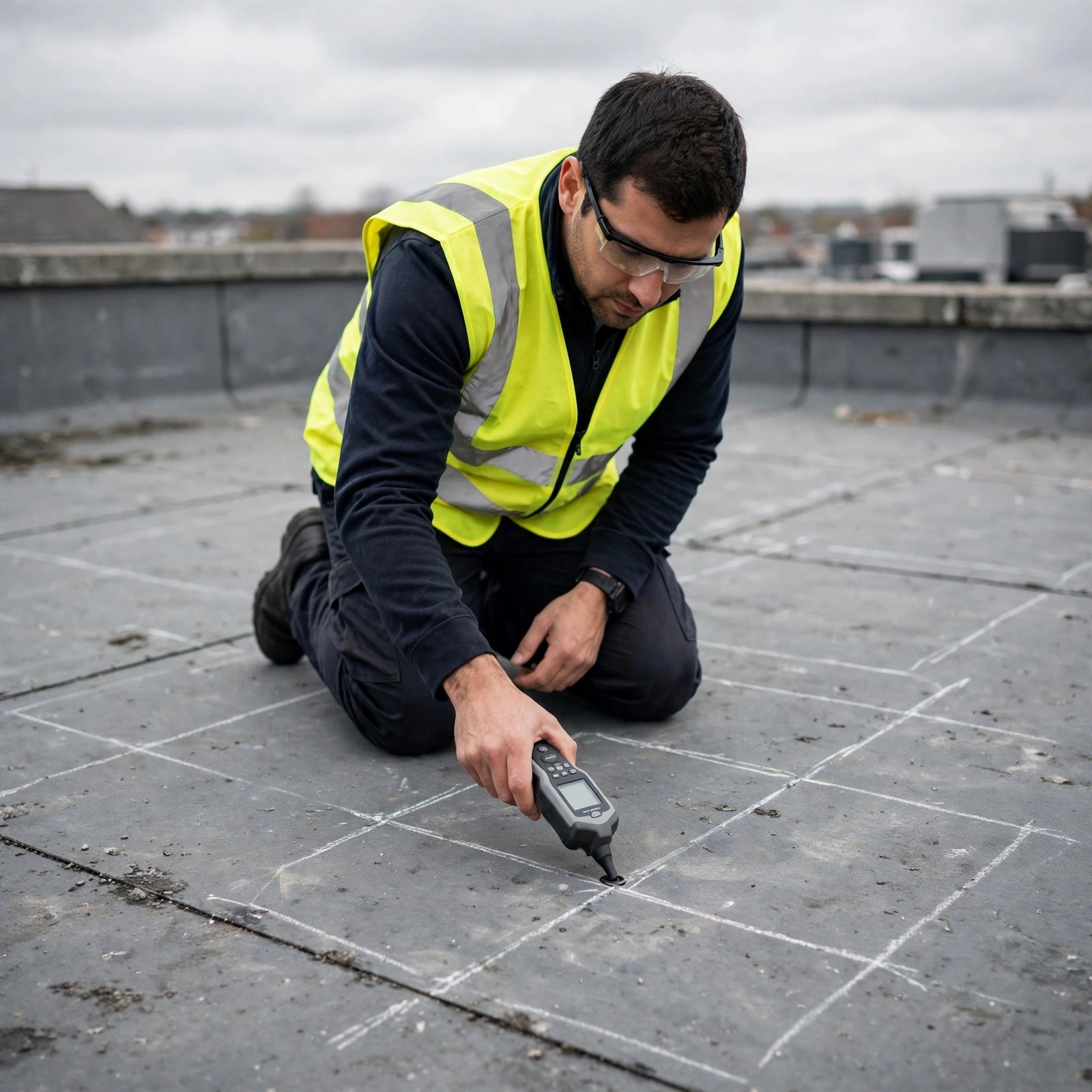
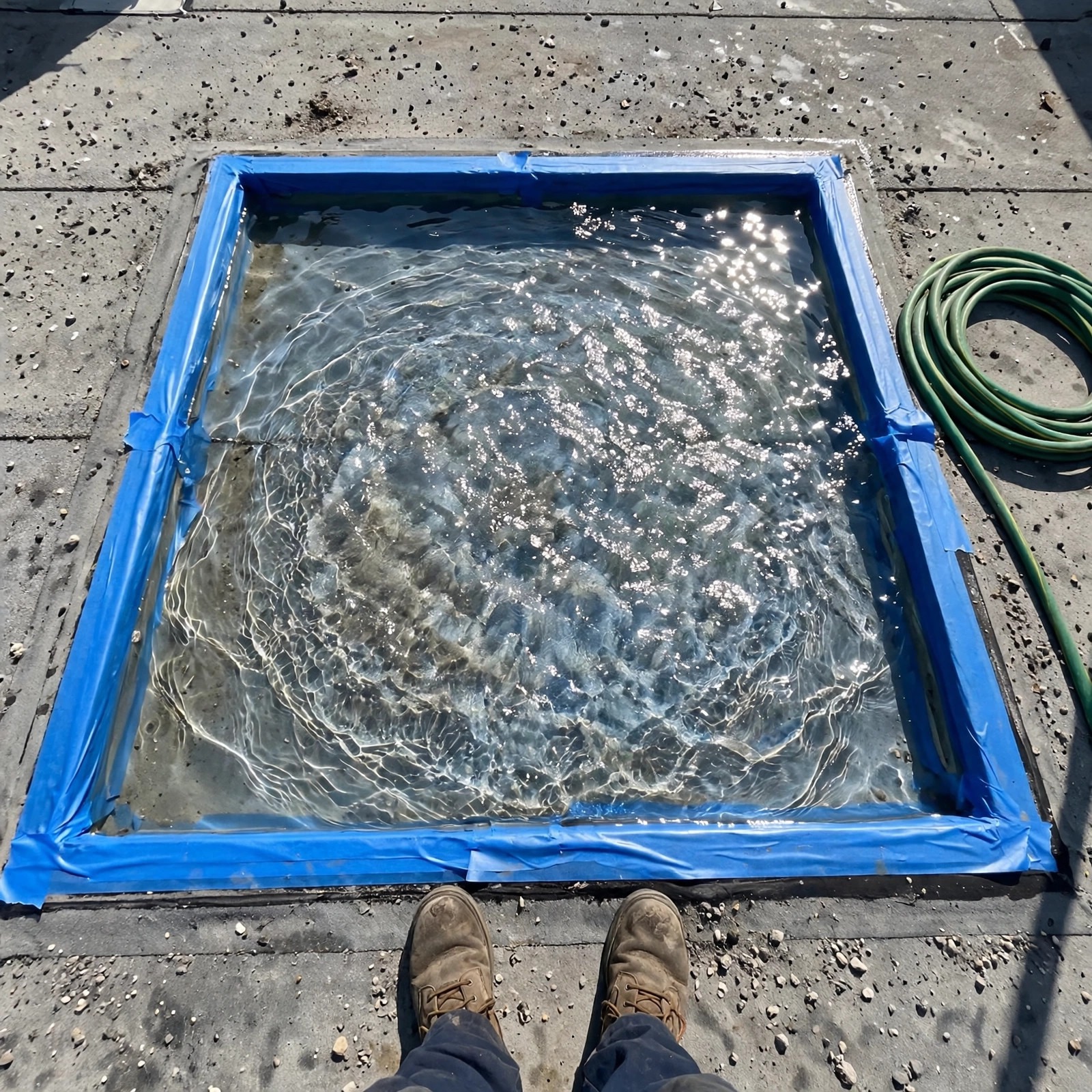
Likely entry points are probed and, where it helps, water-tested in sections, so the marked source is proven rather than guessed.
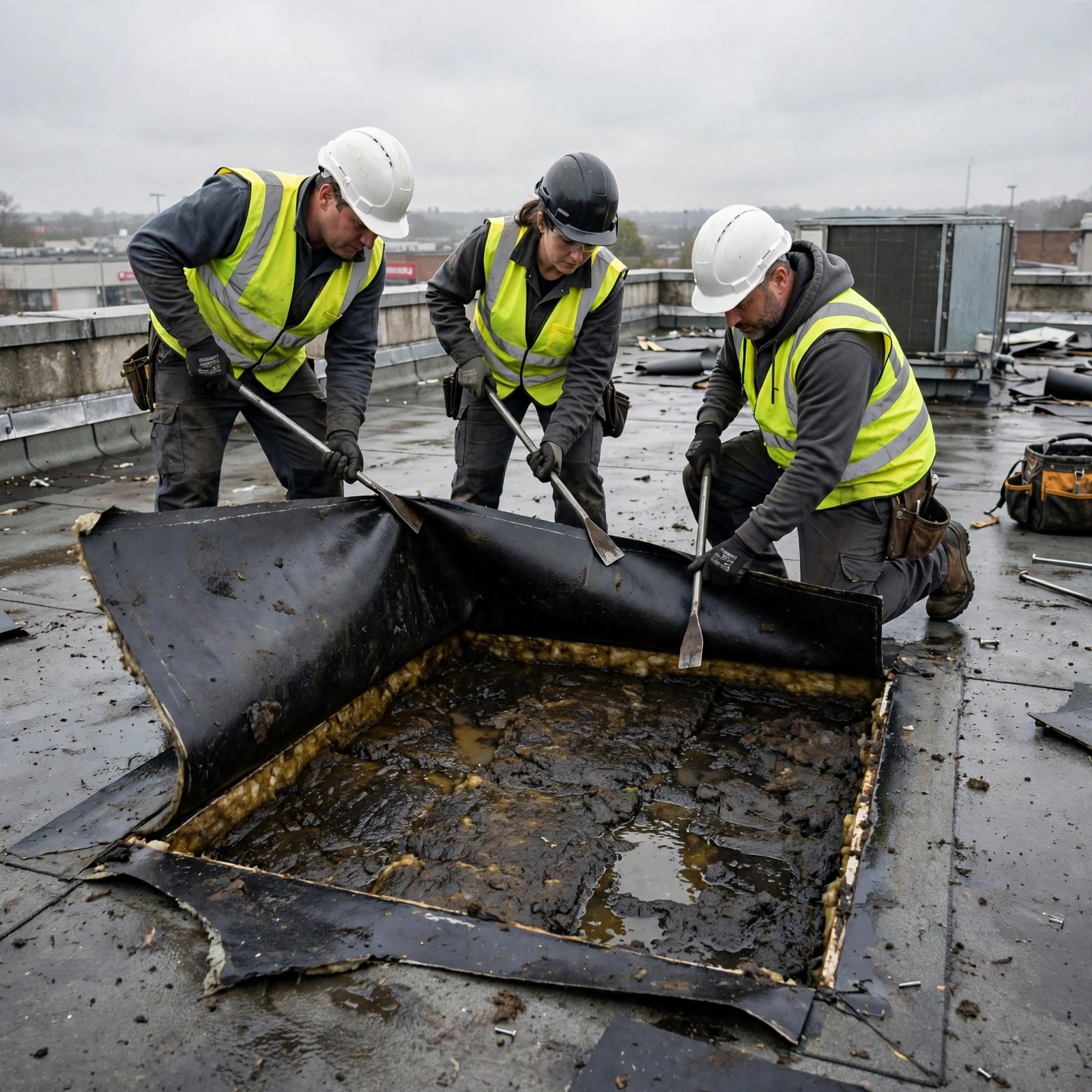
The area around the entry point is opened enough to see what the water crossed: wet insulation and damaged material come out instead of being sealed in.
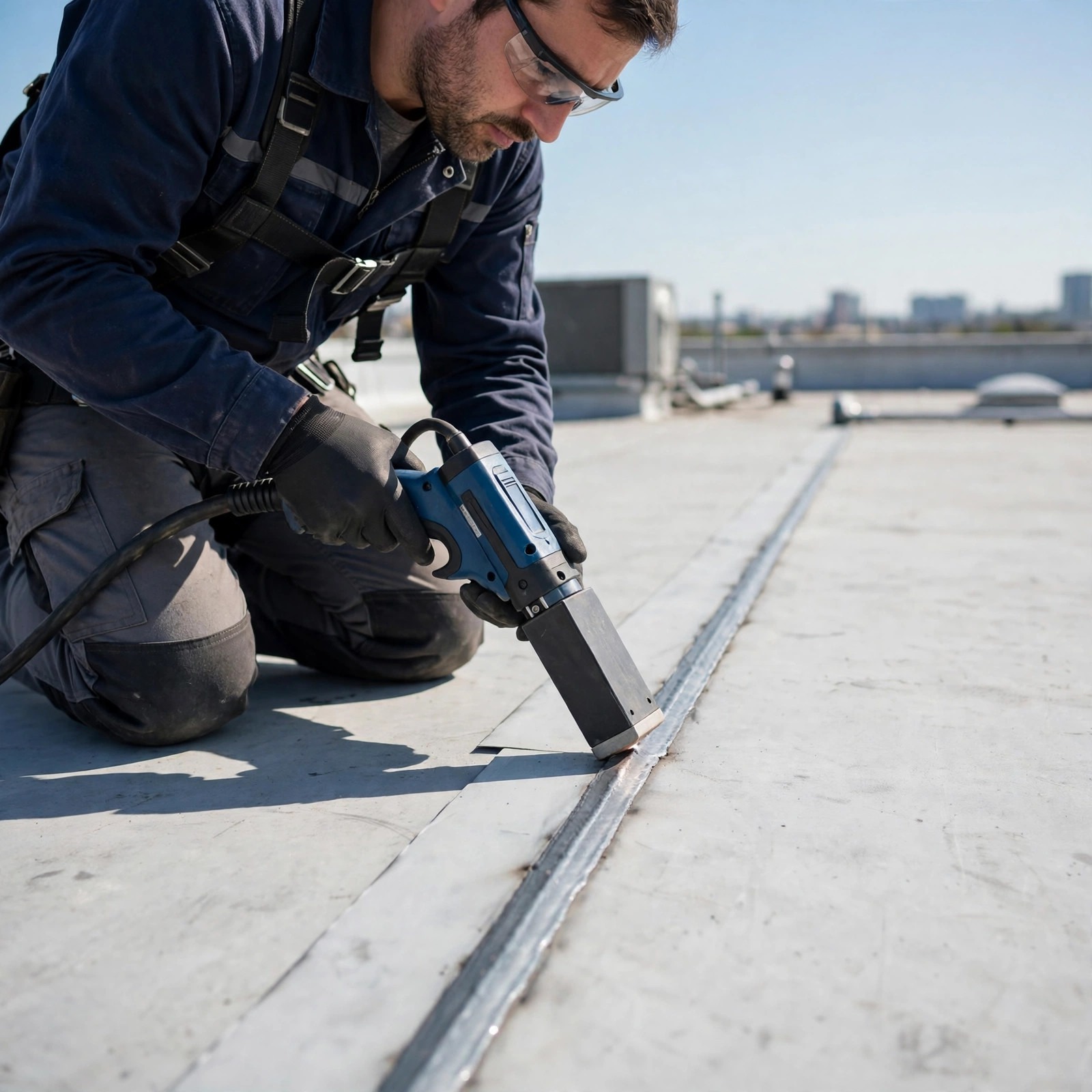
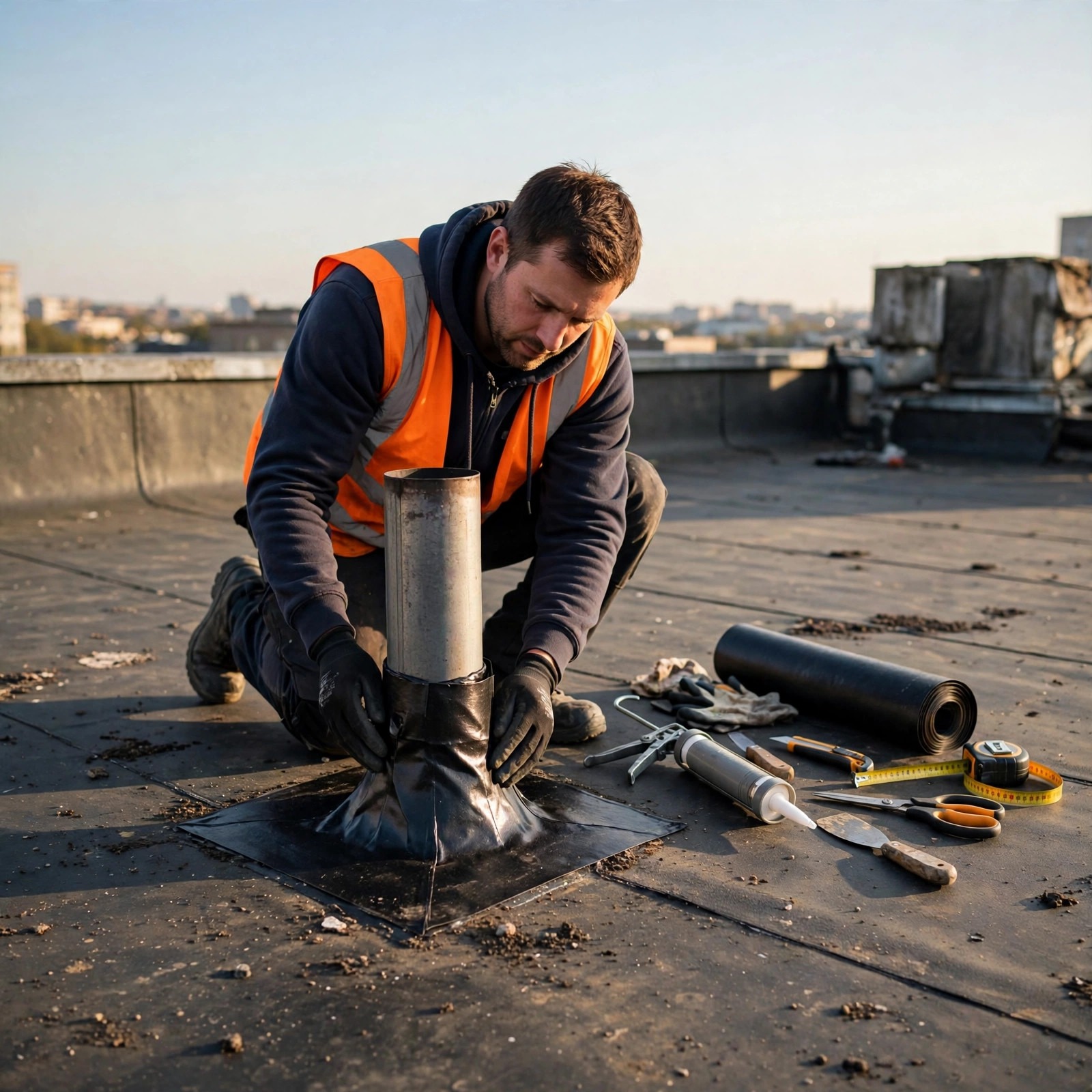
The seam is re-welded, the flashing rebuilt, or the section patched with materials matched to the roof system, tied into the sound material around it.
The repair is checked and photographed, and the owner gets the record: where the water was entering, what was done, and what to watch.
Tools of the trace
A bucket-and-patch roofer works from the stain. A leak repair works from evidence.
The search combines the roof's layout with its weak points. Drainage patterns show where water lingers. Seam probes find the separations a glance misses. Moisture checks under the surface show how far the water traveled and what it soaked on the way. Where the suspects stay ambiguous, controlled water testing one section at a time, with a spotter inside watching the drip line, settles which opening is the guilty one.
That evidence is what the written price is built on. The owner is not paying for a guess and a tube of sealant; the scope names the entry point, the material that has to come out, and the repair that goes back in.
The company
The JBN Group, Inc. is a family-owned general contracting company based at 125 Old Alton Drive in Denton, Texas, founded in 1996. JBN Roofing of Texas is its roofing division, working from Suite 8 at the same address and serving commercial property owners across North Texas. The group carries an A+ rating with the Better Business Bureau, and the roofing division is fully insured. Office hours run Monday through Thursday 9:00 AM to 5:00 PM, Friday 9:00 AM to 4:00 PM, and Saturday 10:00 AM to 2:00 PM Central. Reach the roofing team at 469-340-0838 or sales@jbnroofingoftexas.com.
How a repair runs
No sealant touches the roof until the entry point is proven. That order is the whole difference.
The visit starts inside, mapping the drip, and moves to the roof to trace it. Findings come back to the owner in writing: the entry point, the condition of the material around it, and the repair scope with one price. Approve it, and the crew opens the section, removes what the water ruined, rebuilds the detail, and ties the repair into sound material.
The closing step matters as much as the first: the repaired area is checked and photographed, so the owner holds a record of exactly where the leak was and what was done about it. If the same roof springs a different leak later, that record is where the next search starts.
Call with the drip's location and when it shows up. Active leaks get the roof traced while the evidence is fresh.
The entry point is found and proven, and the owner gets the findings and one written price for the repair scope.
The section is opened, ruined material removed, and the source rebuilt and sealed with matched materials.
The repair is verified and photographed, and the record of the leak and its fix goes to the owner.
When a repair is not enough
One leak with sound roof around it is a repair. Leaks everywhere, on a roof at the end of its life, is a different conversation.
If the trace finds a single entry point on a healthy roof, repair it and move on. If it finds saturated insulation across whole sections, seams failing roof-wide, or a surface too aged to hold a patch, another repair is money spent postponing the real fix, and we will say so. Sometimes the middle answer is a coating over a sound-but-aging roof once the leaks are repaired; sometimes it is replacement. The findings decide, and they are the owner's in writing either way.
Not sure which side your roof is on? Call 469-340-0838 and get the trace before the quote.
Where we work
From our Denton office, JBN Roofing of Texas traces and repairs commercial roof leaks across the northern Dallas-Fort Worth area. The same standard holds on every building: find the entry point, price the repair in writing, and fix the cause instead of the stain.
Own or manage a property outside that area? Call 469-340-0838 and ask. If we cannot serve the building well, we will tell you plainly.
Straight answers
Because flat and low-slope roofs are layered. Water gets in at a seam, flashing, or puncture, then runs along the deck or across the insulation until it finds a joint or fastener line to drip through. That travel can cover many feet, which is why patching the roof directly over a stain so often fails: the real opening is somewhere uphill, still letting water in.
By working backward from the evidence. The drip is mapped inside the building, then the seams, flashings, boots, and drainage patterns above and around it are inspected on the roof. Seam probes, moisture checks below the surface, and, when needed, controlled water testing one section at a time narrow it to the proven entry point before any repair is priced.
Most single leaks on a sound roof are repairs: the entry point is opened, any wet material comes out, and the detail is rebuilt. A roof with leaks in many places, saturated insulation across whole sections, or a surface too aged to hold a repair is a different case, and another patch would only postpone the real fix. The inspection findings decide, and they are given to the owner in writing.
It depends on what the trace finds: where the water is entering, how much material it soaked, and what the repair has to tie into. That is why the price comes after the leak is traced, as one written figure for the full repair scope, approved before the section is opened. Nobody can price a leak honestly from the stain on the ceiling.
Almost always because the repair sealed the drip point instead of the entry point, or sealed over material the water had already soaked. Water kept entering at the real opening, traveled, and found a new place to show itself. A repair aimed at the proven source, with the wet material removed, is what ends the cycle.
Yes, on commercial roofs across North Texas. Storm-driven debris and wind lift seams and puncture membranes, and an active leak after a storm is worth tracing while the path is fresh. The same standard applies: find the entry point, document what the storm did, and price the repair in writing.
Traced to the source · Priced in writing
Get the entry point found and proven, the wet material out, and the repair aimed at the cause, with one written price before the section opens. That is how a leak stays fixed.