
JBN Roofing of Texas · A Division of The JBN Group, Inc.
Industrial Roofing Systems
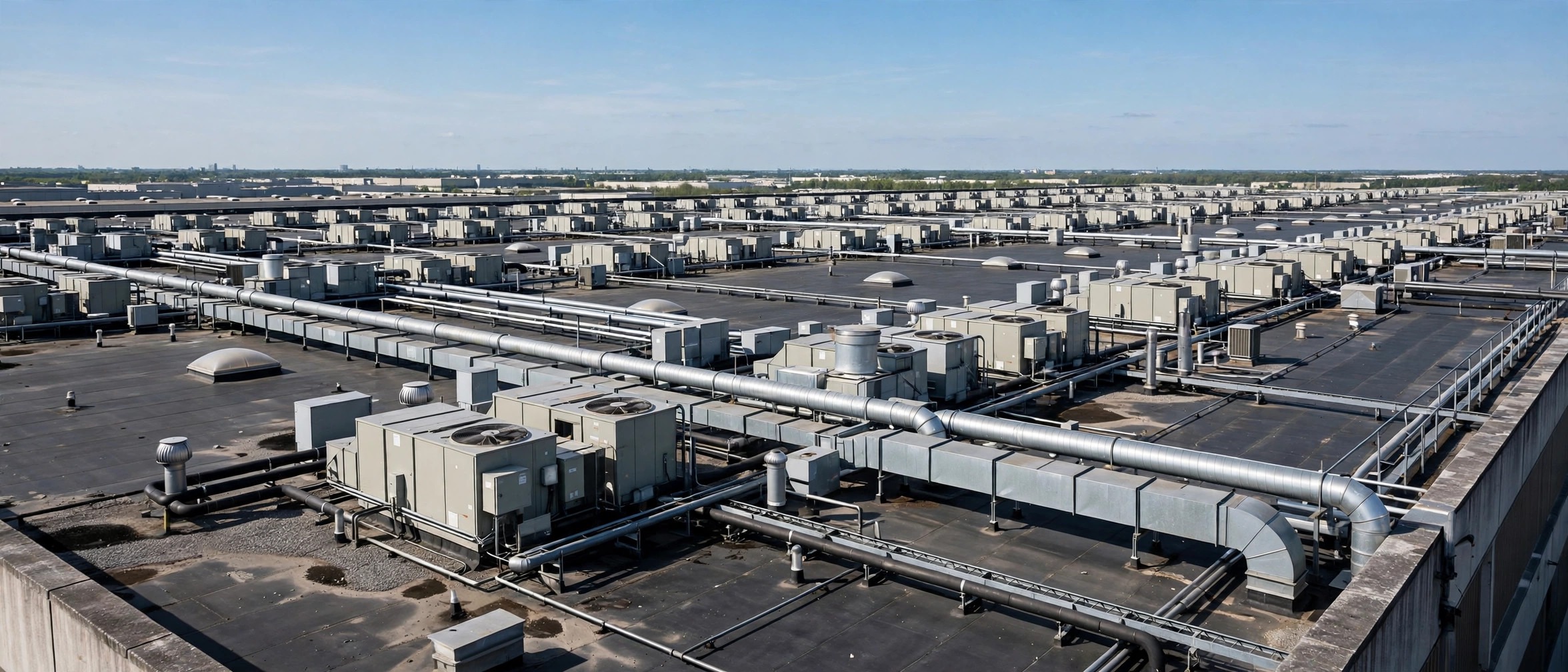
A plant roof works for a living: heat, exhaust, traffic, and no permission to shut down.
Industrial Roofing Systems are specified for buildings that punish ordinary roofs: manufacturing plants, warehouses, and distribution centers across North Texas. Their roofs carry process equipment and the crews who service it, vents that exhaust heat, grease, or chemicals onto the surface, and fields so large that a small drainage error becomes acres of standing water. They also share one hard rule: production does not stop for roofing. The system has to be matched to what the plant puts on it and into the air above it, and the work has to be phased so the line keeps running underneath. JBN Roofing of Texas designs and installs industrial systems around live operations. Get an assessment that starts with your process, not a product catalog: call us at 469-340-0838.
What industrial asks
Industrial Roofing Systems Start With the Process
Before any membrane is discussed, three questions decide the spec: what the plant exhausts, how the roof gets walked, and what a leak would cost downstairs.
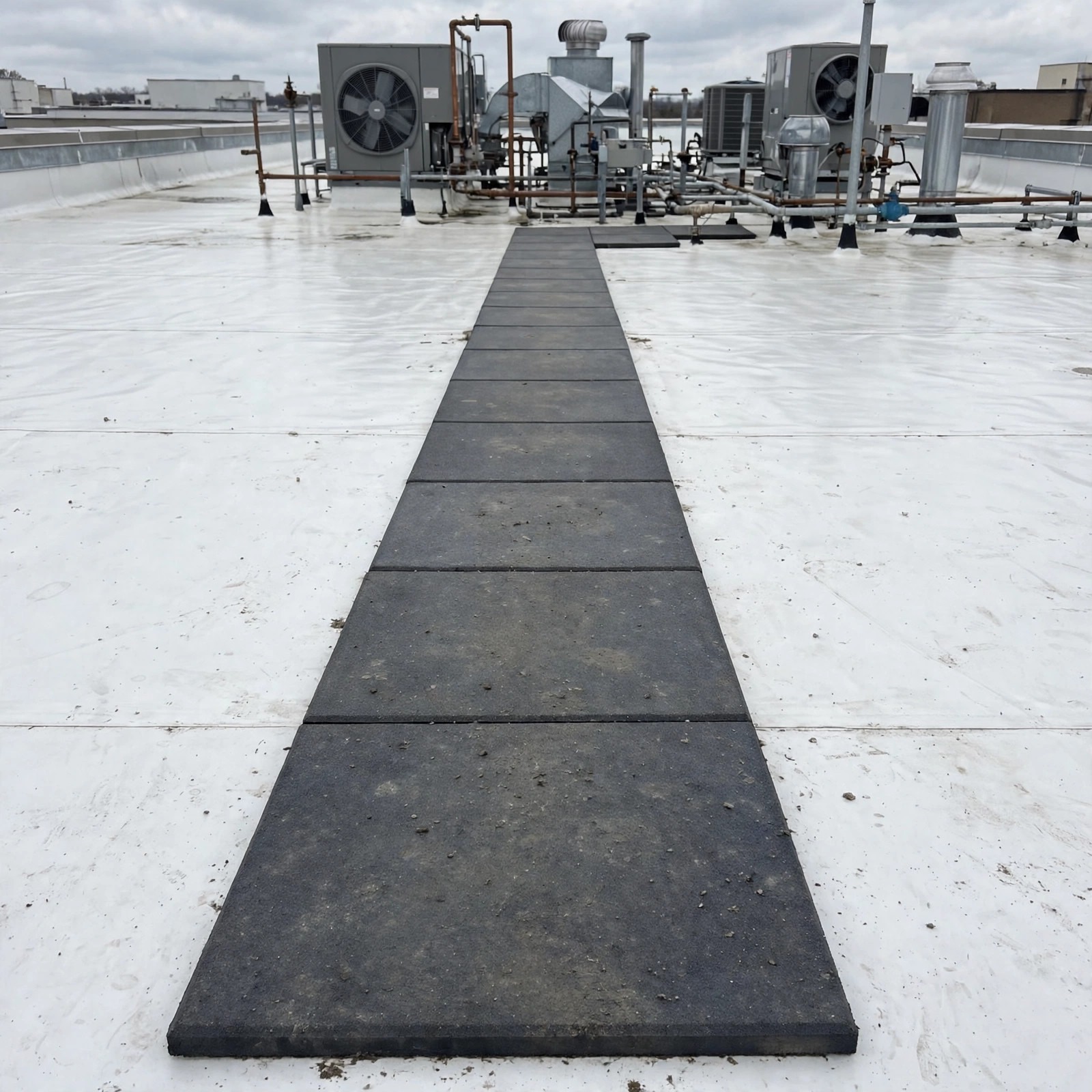
Exhaust chemistry rules materials in or out: PVC stands up to grease and many chemical outflows that soften other membranes, which is why food plants and manufacturers so often land on it. Traffic rules toughness: roofs crossed daily to reach equipment earn walkway pads, heavier membranes, or ply systems that shrug off boots and carts. And consequence rules everything else: a drip over a server room, a food line, or finished-goods storage is not the same event as a drip over raw materials, and the system's redundancy should match the risk.
Those answers come from walking the plant and the roof together. The catalog comes second.
Running a plant under an aging roof? Call 469-340-0838 and start with the walk.
Roofing services
The Systems Industrial Buildings Choose From
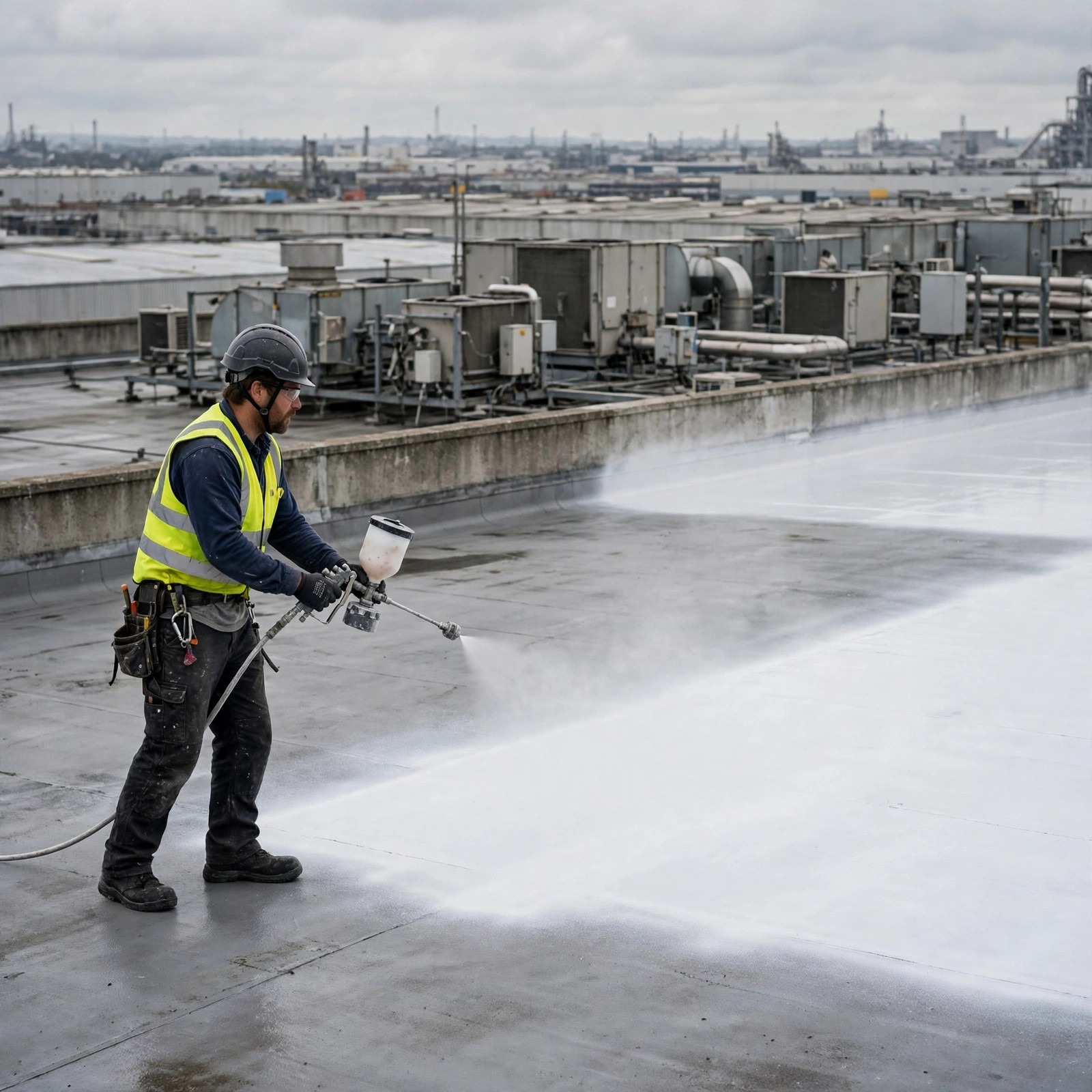
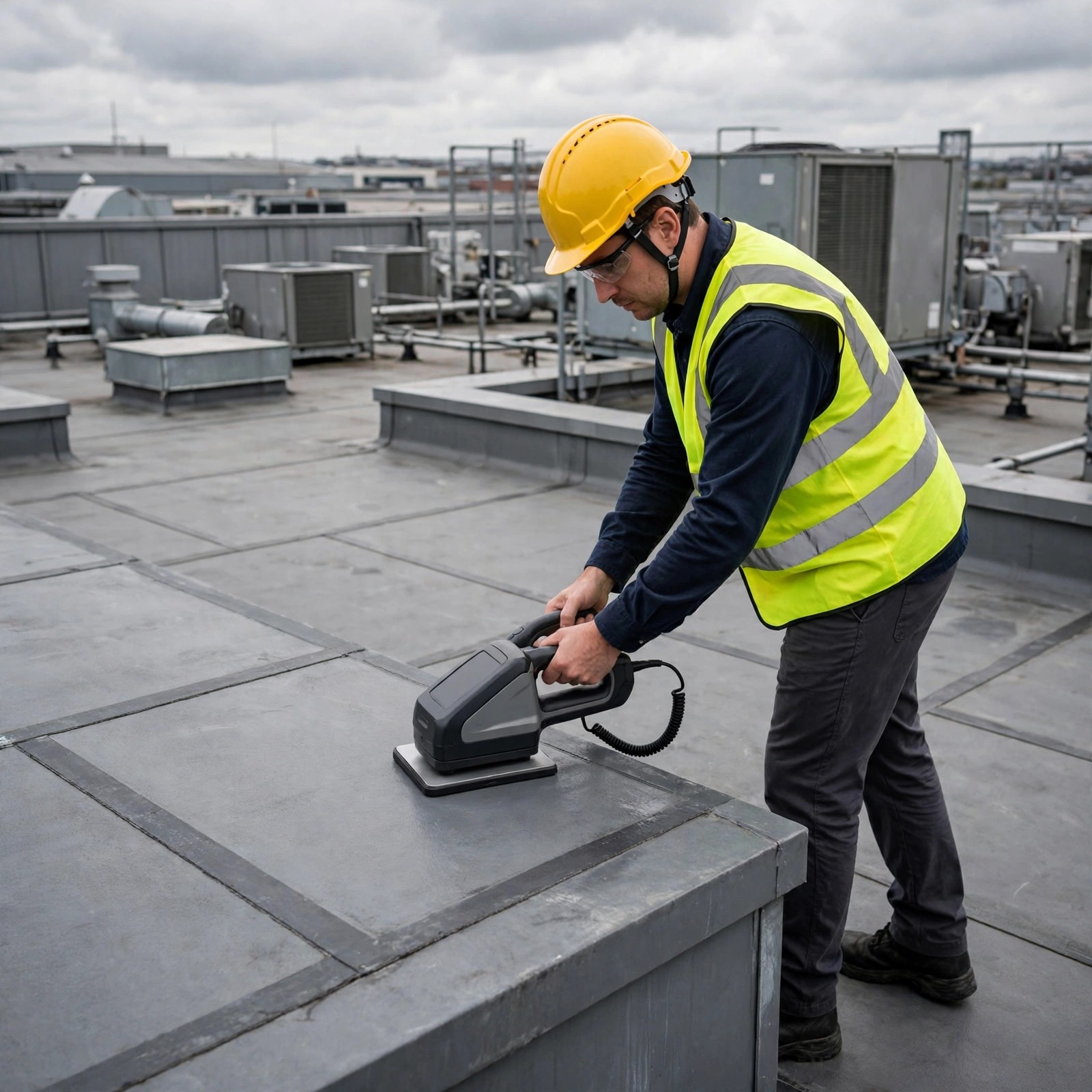
The full commercial family is available to industrial work; these are the members that most often fit plant conditions, plus the services that keep them running.
Matching system to plant
Six Industrial Conditions and the Systems That Answer Them
Plants differ more than offices do. These are the conditions that most often drive the industrial spec, and the answers that fit each.
Grease and Chemical Exhaust
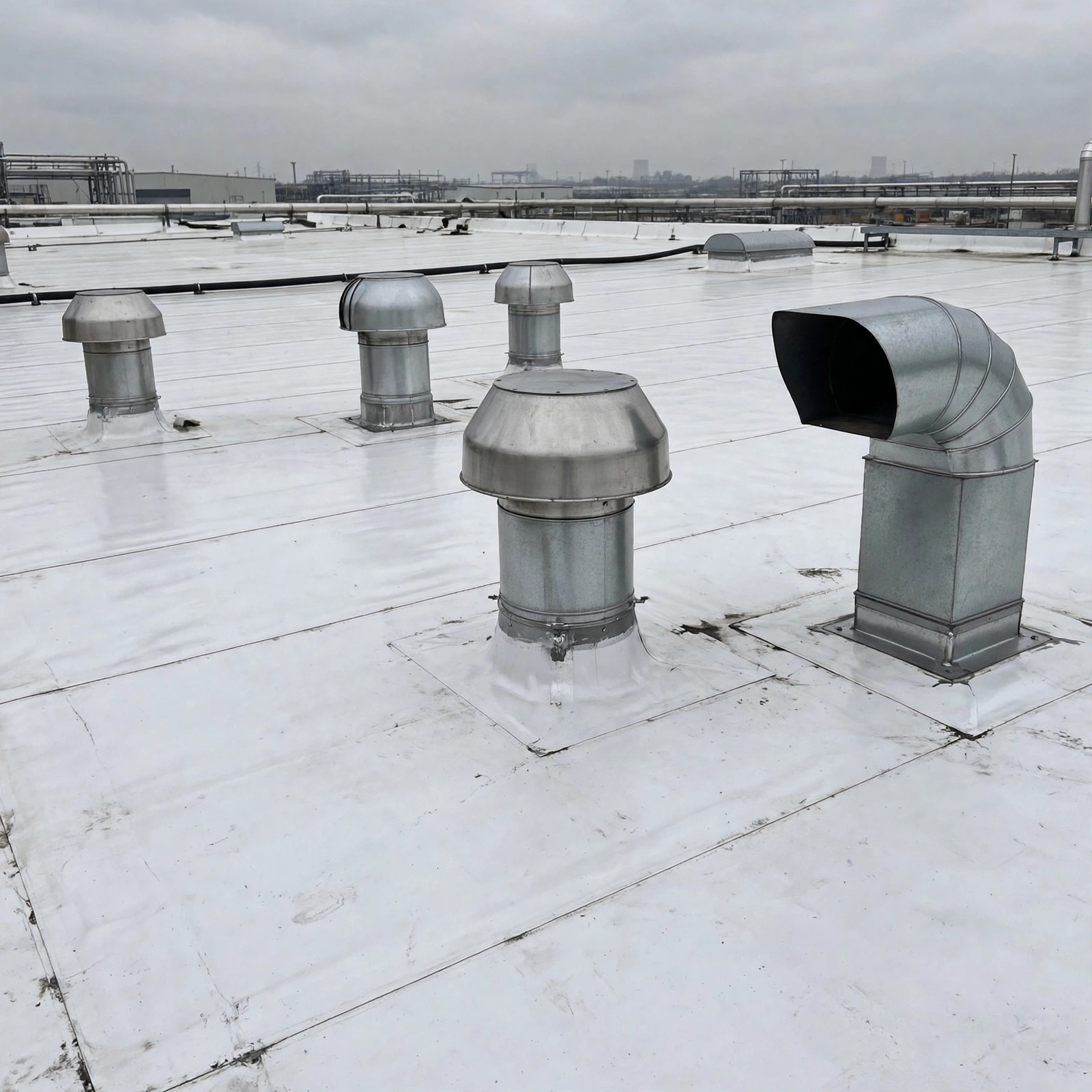
Kitchen plants, food processing, and chemical users exhaust compounds that pool around vents and attack membranes. PVC's chemical resistance makes it the standing answer where outflows are greasy or aggressive, with details at vents treated as the critical zone.
Heavy Foot Traffic
Equipment-dense roofs get walked daily. Walkway pads on traffic routes, sacrificial layers at access points, and tough ply systems like mod bit or BUR where carts and boots concentrate keep the field from wearing out at its busiest addresses.
Very Large Fields
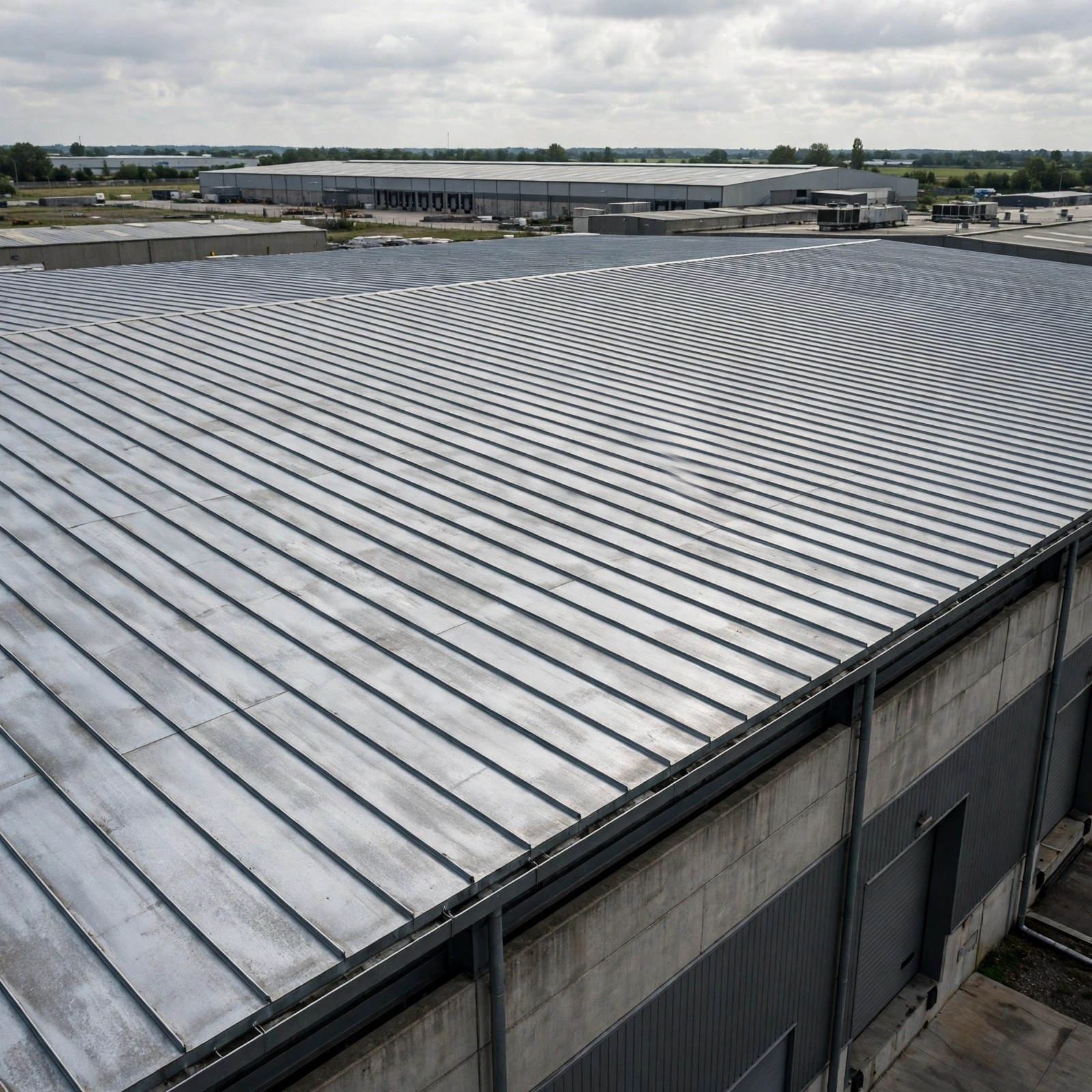
Distribution roofs measure in acres. Drainage design scales with them: tapered layouts, more drains, and overflow paths sized for the whole catchment, because an inch of ponding across an acre is a structural conversation, not a puddle.
Heat at the Surface
Process heat and rooftop equipment raise surface temperatures and cycle the membrane harder. Reflective single-ply surfaces cut the load, and assemblies are chosen with the plant's own heat profile in view, not just the Texas sun.
High-Consequence Interiors
Where a leak stops a line or ruins product, redundancy earns its price: multi-ply assemblies, reinforced details at every penetration, and inspection rhythms tight enough that the roof is never a surprise to the people under it.
No-Shutdown Installations
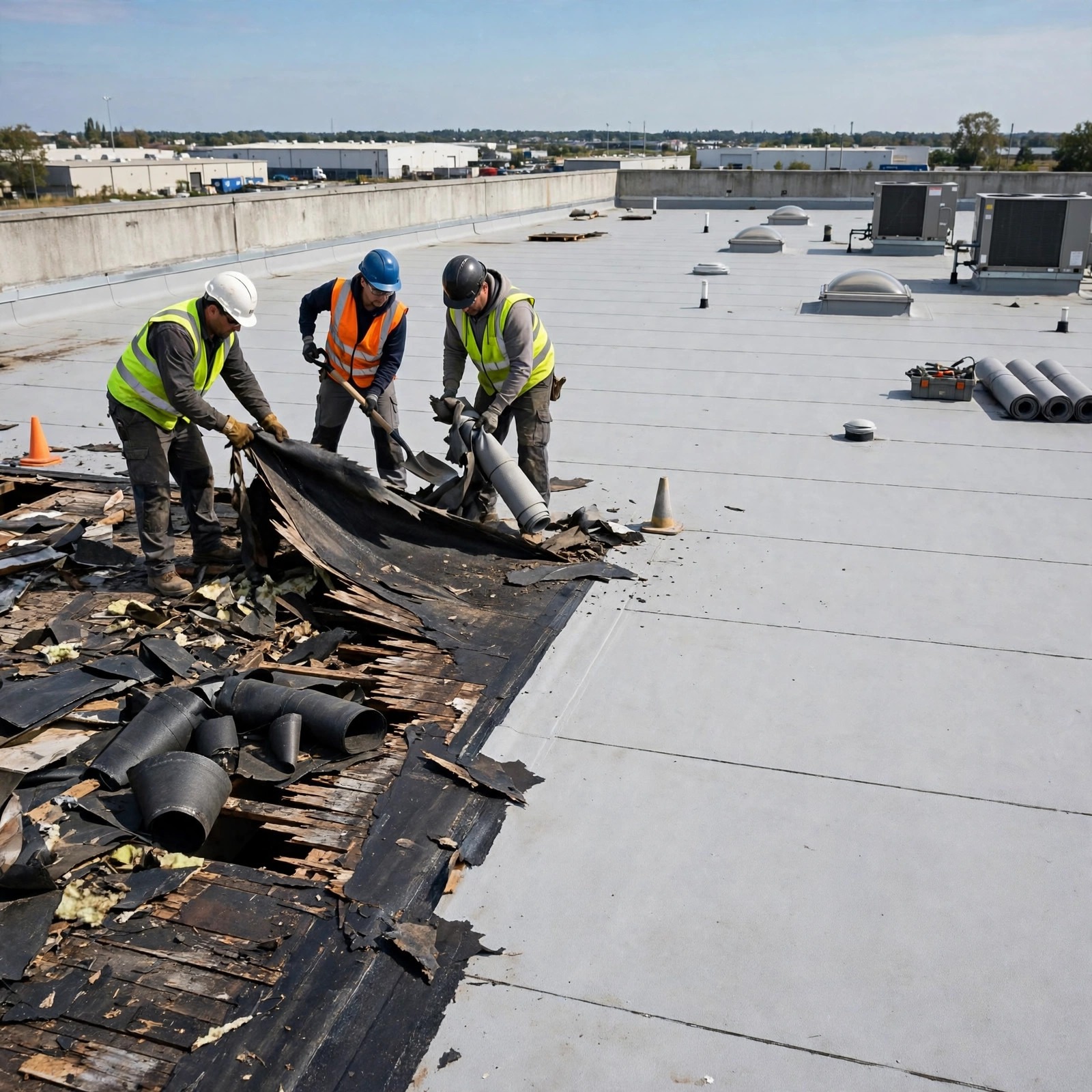
Most industrial roofs are replaced or restored while the plant runs. Phased tear-off in sections, interior protection, dust and odor control where processes demand it, and daily dry-in discipline make the schedule a feature of the spec, not an afterthought.
Working around production
How Industrial Roofing Gets Installed on a Live Plant
The plan is written with the plant manager, not just the owner: sections, sequences, and protection agreed before the first tear.
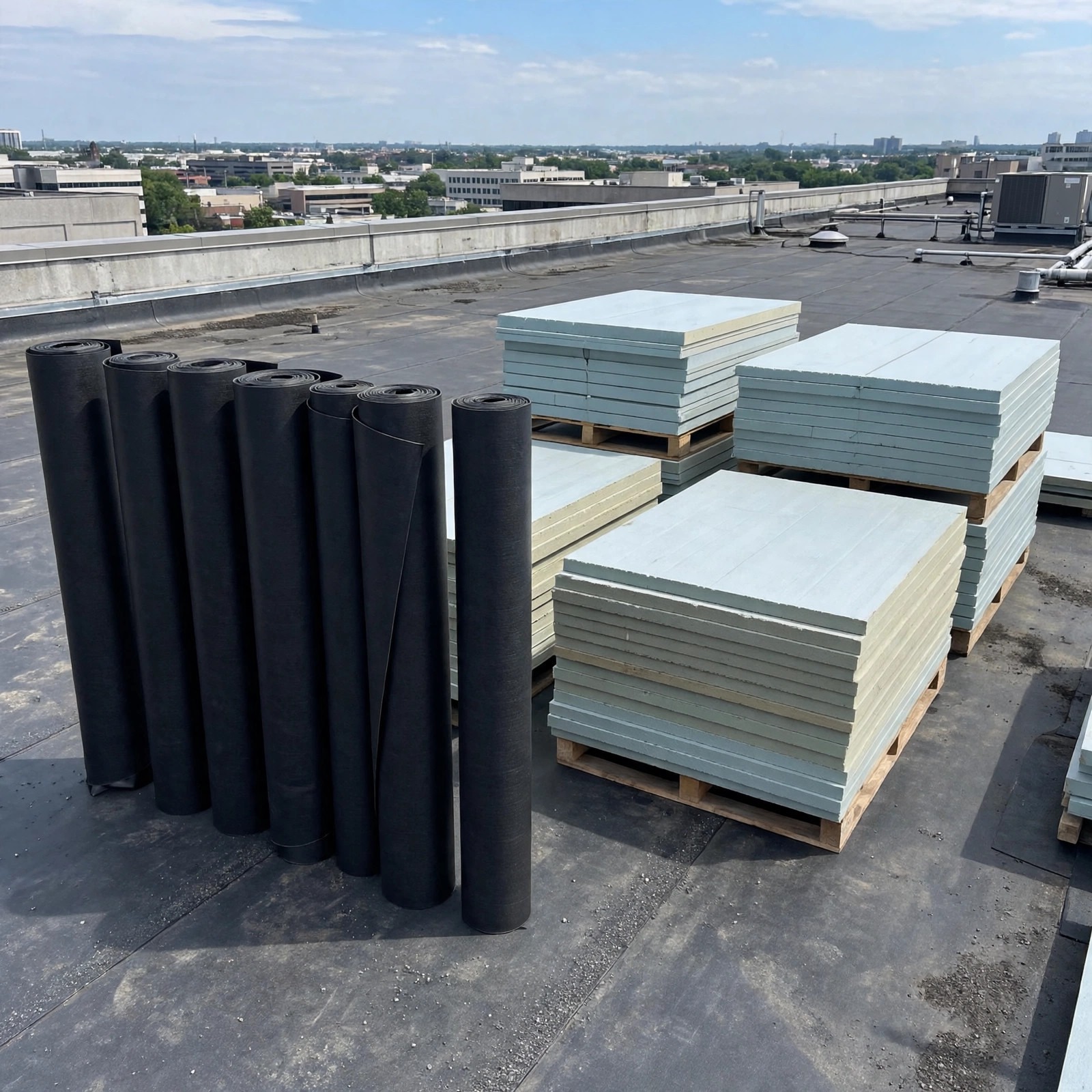
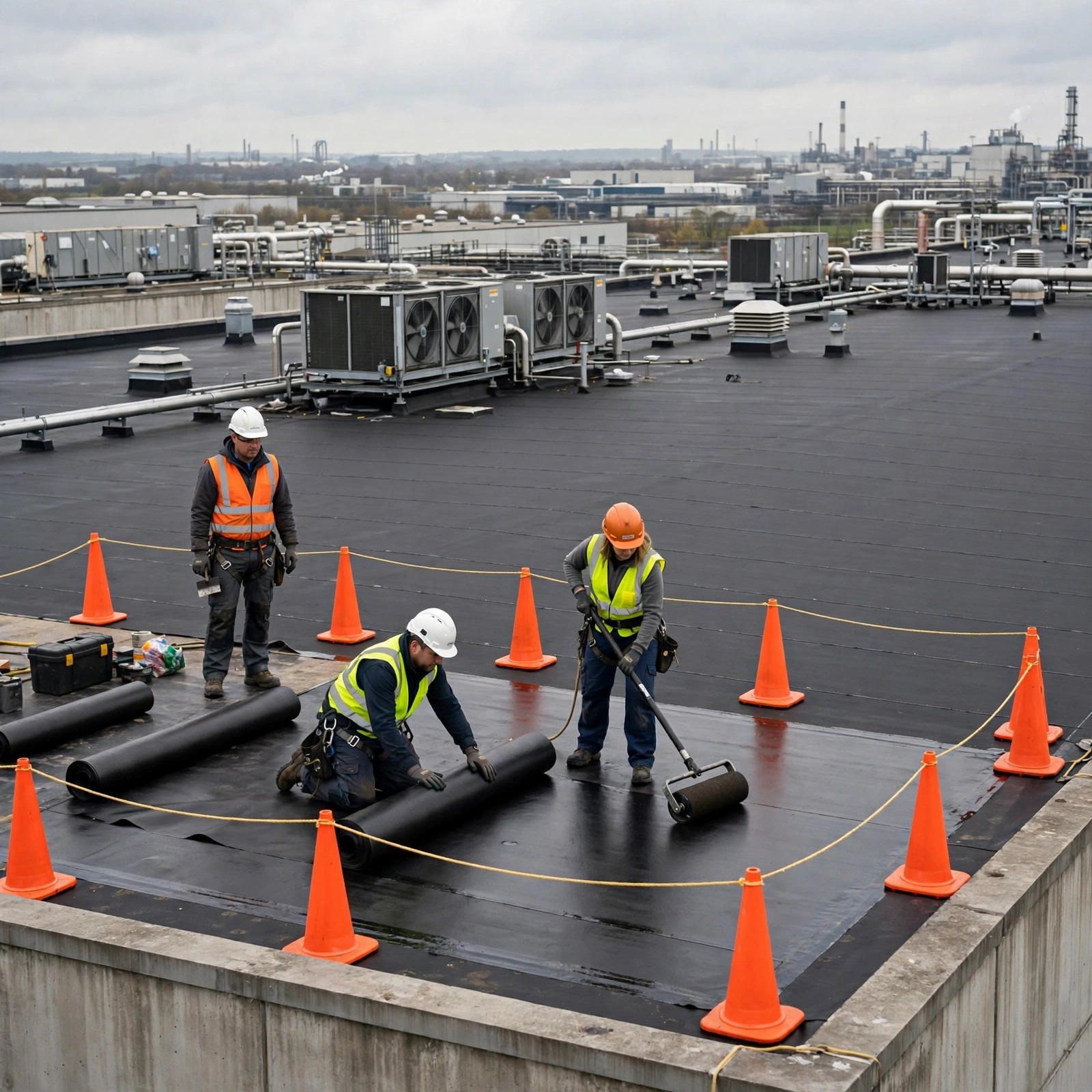
The roof is divided into phases sized so every section opened in a day is dried in the same day. Interior protection goes under active sections where product or equipment sits below. Access routes, crane or hoist positions, and material staging are placed to keep plant traffic moving, and noisy or odorous steps are scheduled against the plant's own calendar where the process allows. The daily discipline matters more than any single technique: nothing stays open overnight, and the building is never betting on the forecast.
The written proposal includes the phasing plan alongside the price, so operations can approve both at once.
- Sections opened and dried in the same day
- Interior protection under active work
- Staging and access kept clear of plant traffic
- Schedule coordinated with production
The company
JBN Roofing of Texas, a Division of The JBN Group, Inc.
The JBN Group, Inc. is a family-owned general contracting company based at 125 Old Alton Drive in Denton, Texas, founded in 1996. JBN Roofing of Texas is its roofing division, working from Suite 8 at the same address and serving commercial and industrial property owners across North Texas. The group carries an A+ rating with the Better Business Bureau, and the roofing division is fully insured. Office hours run Monday through Thursday 9:00 AM to 5:00 PM, Friday 9:00 AM to 4:00 PM, and Saturday 10:00 AM to 2:00 PM Central. Reach the roofing team at 469-340-0838 or sales@jbnroofingoftexas.com.
Keeping it running
Industrial Roofs Earn Their Keep on a Maintenance Rhythm
A plant roof's worst enemy is not weather. It is the unlogged change: the new penetration nobody flashed, the vent moved without a detail.
Industrial roofs change constantly as equipment is added, moved, and retired, and every change touches the waterproofing. A standing maintenance rhythm, inspections on schedule, drain discipline, and a rule that every new penetration gets flashed by the roofing contractor, keeps the system the plant paid for intact. JBN Roofing's program work on industrial roofs includes a penetration log, so the roof's current state is documented as it evolves instead of reconstructed after a leak.
The cheapest industrial roof is the one whose paperwork matches its surface.
- Scheduled inspections with photo reports
- Penetration log kept current
- Drains cleared on the plant's rhythm
- New equipment flashed by the roofer, not the installer
Walk Plant and Roof
Process, exhaust, traffic, and interior risk are documented together; the spec starts from the building's real life.
Spec and Phase
System, drainage, and the production-safe phasing plan are drawn and priced in one written proposal.
Install in Sections
Work proceeds section by section around live operations, every opening dried in daily.
Document and Maintain
The finished system is photographed, logged, and placed on an inspection rhythm that tracks future changes.
The honest fine print
What No Industrial System Survives
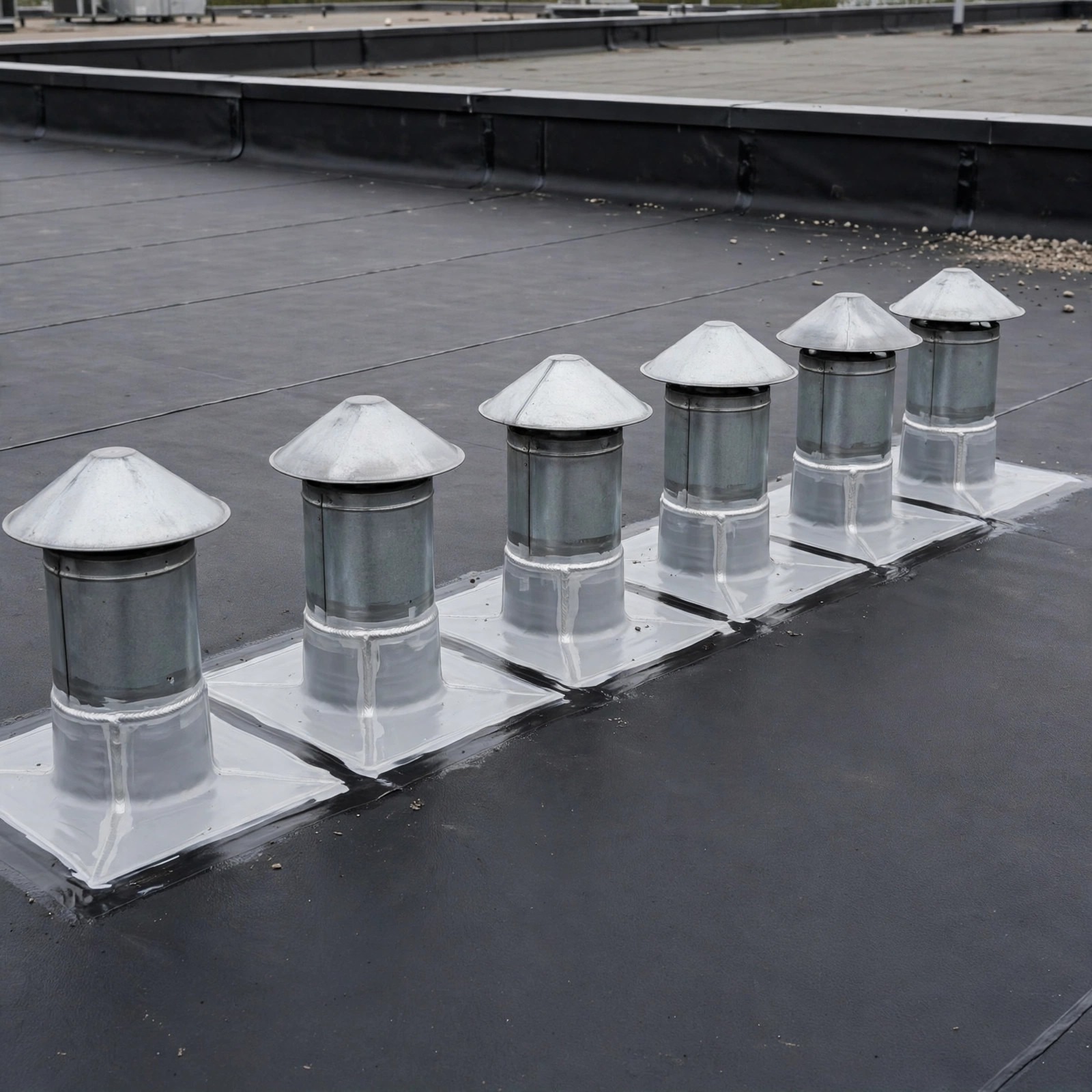
The finest membrane fails the same way the cheapest one does: at an unflashed penetration added on a Saturday by another trade.
Industrial roofs accumulate changes faster than any other building type, and the waterproofing only stays a system if every change goes through it. Chemical exposure also has limits worth naming: a membrane is chosen against the plant's known outflows, and a process change that introduces new compounds deserves a call before the first discharge, not after the first stain. Put the roofer on the change list and both problems mostly disappear.
Ask any bidder how they handle penetrations after the install. Call 469-340-0838 and ask us first.
Where we work
Industrial Roofing Systems Across North Texas
From our Denton office, JBN Roofing of Texas serves plants, warehouses, and distribution centers across the northern Dallas-Fort Worth area, where industrial corridors keep adding roof acres every year.
Operate a facility outside that area? Call 469-340-0838 and ask. If we cannot serve the building well, we will tell you plainly.
What the Assessment Covers
- Exhaust and chemical exposure mapped
- Traffic routes and wear points read
- Interior risk priced into the spec
- Drainage checked at full-field scale
- Phasing plan and one written price
Straight answers
Industrial Roofing Systems FAQs
Which system suits a plant with grease or chemical exhaust?
Usually PVC, whose chemical resistance holds up where exhaust pools around vents and softens other membranes. The honest answer starts with your actual outflows: the assessment identifies what the plant exhausts, then matches the membrane and treats vent details as the critical zone.
Can a plant roof be replaced without shutting down production?
In most cases, yes. The work is phased in sections sized to open and dry in the same day, with interior protection below active sections and scheduling coordinated with the plant. The phasing plan is part of the written proposal, so operations approves it alongside the price.
How do you protect a membrane roof from heavy foot traffic?
By designing for it: walkway pads along the routes crews actually walk, reinforced details at access points and equipment, and tougher assemblies (heavier membranes or ply systems like mod bit and BUR) where traffic concentrates. Traffic is a specification input, not a surprise.
Can our industrial roof be restored instead of replaced?
Often. A sound roof with dry insulation and an aging surface is a strong coating candidate, and restoration installs over the existing roof in phases, which suits live plants. A moisture scan decides candidacy; wet sections are cut out and rebuilt first. Replacement is reserved for roofs whose assemblies have failed underneath.
Why do industrial roofs leak at new equipment installs?
Because every new unit, vent, or pipe is a new hole in the waterproofing, and holes flashed by trades other than the roofer are the industry's most reliable leak source. The fix is procedural: every penetration goes through the roofing contractor and into the roof's log. Our maintenance rhythm keeps that log current.
How large a roof can you handle?
Industrial fields are our home ground: the assessment, phasing, and drainage design all scale to acre-sized roofs. What we will not do is promise a schedule the phasing cannot keep; the written proposal states sections and sequence plainly, so the plant can plan around real numbers.
Spec'd for the Process · Phased for Production
A Roof That Works as Hard as the Plant
One walk of the plant and the roof produces the spec, the phasing plan, and one written price. Production never has to stop for the roof again.