
JBN Roofing of Texas · A Division of The JBN Group, Inc.
Regular Maintenance
Scheduled inspections and small fixes that keep a commercial roof from turning into an emergency.
Regular Maintenance is the cheapest roofing a building ever buys. Commercial roofs rarely fail without warning: they fail at a drain that clogged, a seam that opened, a fastener that backed out, details anyone standing on the roof twice a year would have caught while the fix still fit in a service call. JBN Roofing of Texas keeps commercial roofs across North Texas on a standing maintenance rhythm: drains cleared, seams and flashing checked, small problems sealed on the spot, and a clear condition report after every visit so owners always know what their roof actually looks like. To put your roof on the schedule, call the Denton team at 469-340-0838.
Why roofs ask for it
Regular Maintenance Catches What Time and Weather Start
A commercial roof lives outdoors in Texas: ultraviolet, hundred-degree summers, hail seasons, and storms that test every seam the building owns.
Nothing exotic kills most roofs. Leaves and debris dam a drain until water ponds and finds a seam. Sealant at a penetration dries, cracks, and opens a pinhole path. A fastener walks up through a membrane one thermal cycle at a time. Each is a small repair on the day it starts and a leak, then a soaked insulation problem, months later. Regular Maintenance exists to stand on the roof often enough that those stories end at the first chapter.
The math is plain: a scheduled visit costs a fraction of one emergency leak call, and a fraction of a fraction of the replacement a neglected roof forces early.
Want your roof read on a schedule? Call 469-340-0838 and ask about maintenance visits.
Roofing services
Services That Keep Roofs Young
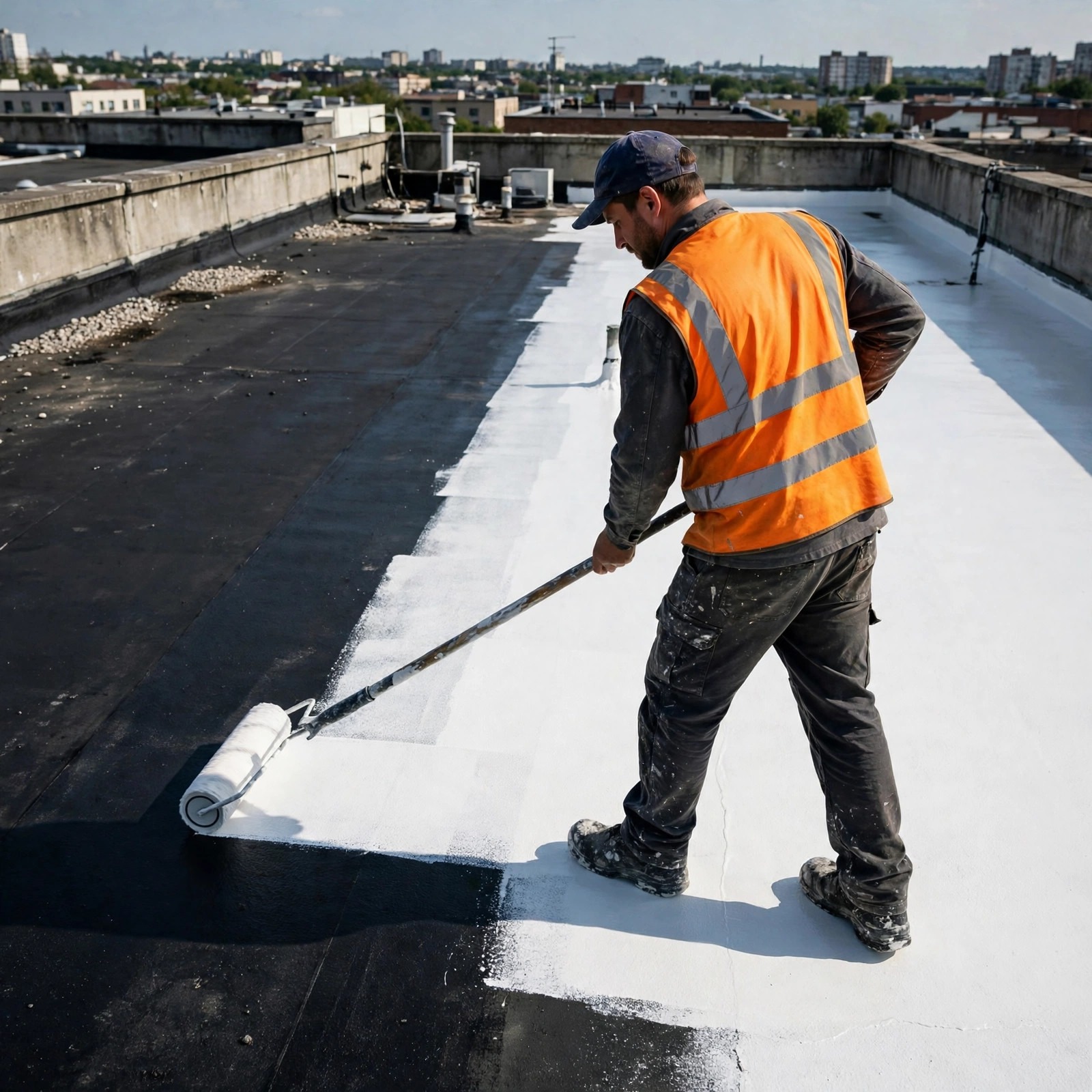
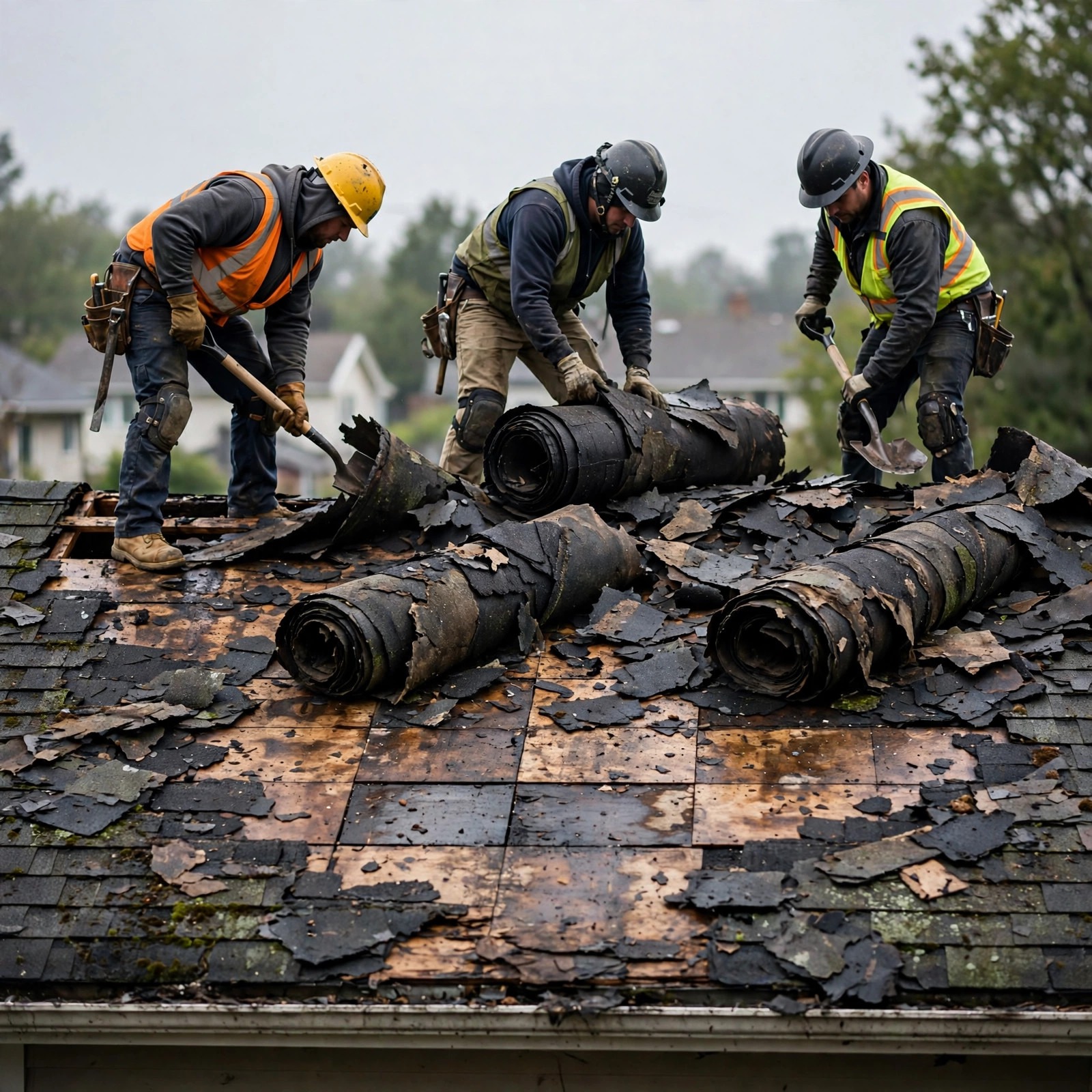
Maintenance is the habit; these are the services it connects to, from the standing program to the coating that renews a surface. Here is the family it belongs to.



What gets done
The Regular Maintenance Checklist, Visit After Visit
Six standing jobs make up a maintenance visit. None takes long; together they are the difference between a roof that ages and a roof that surprises.
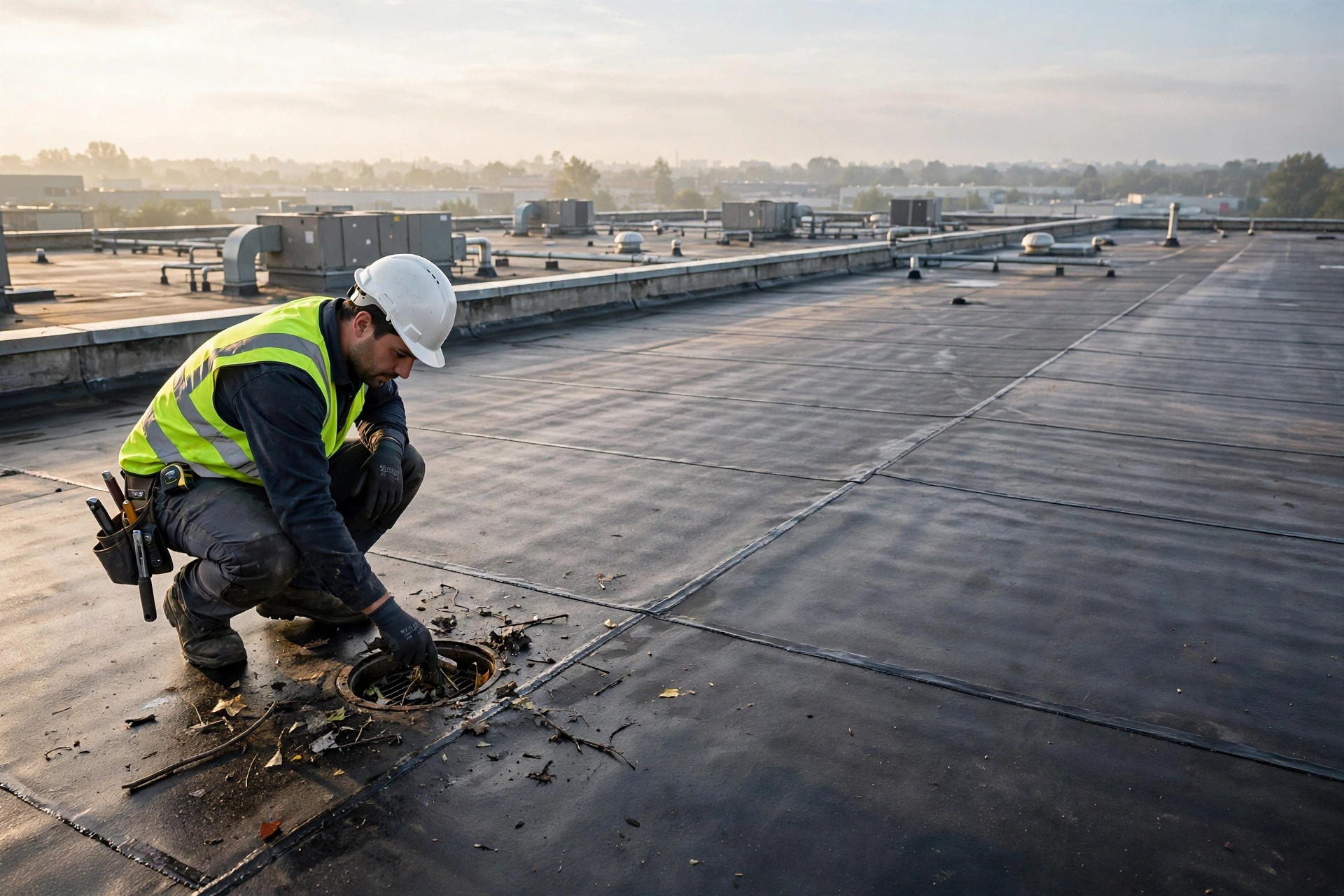
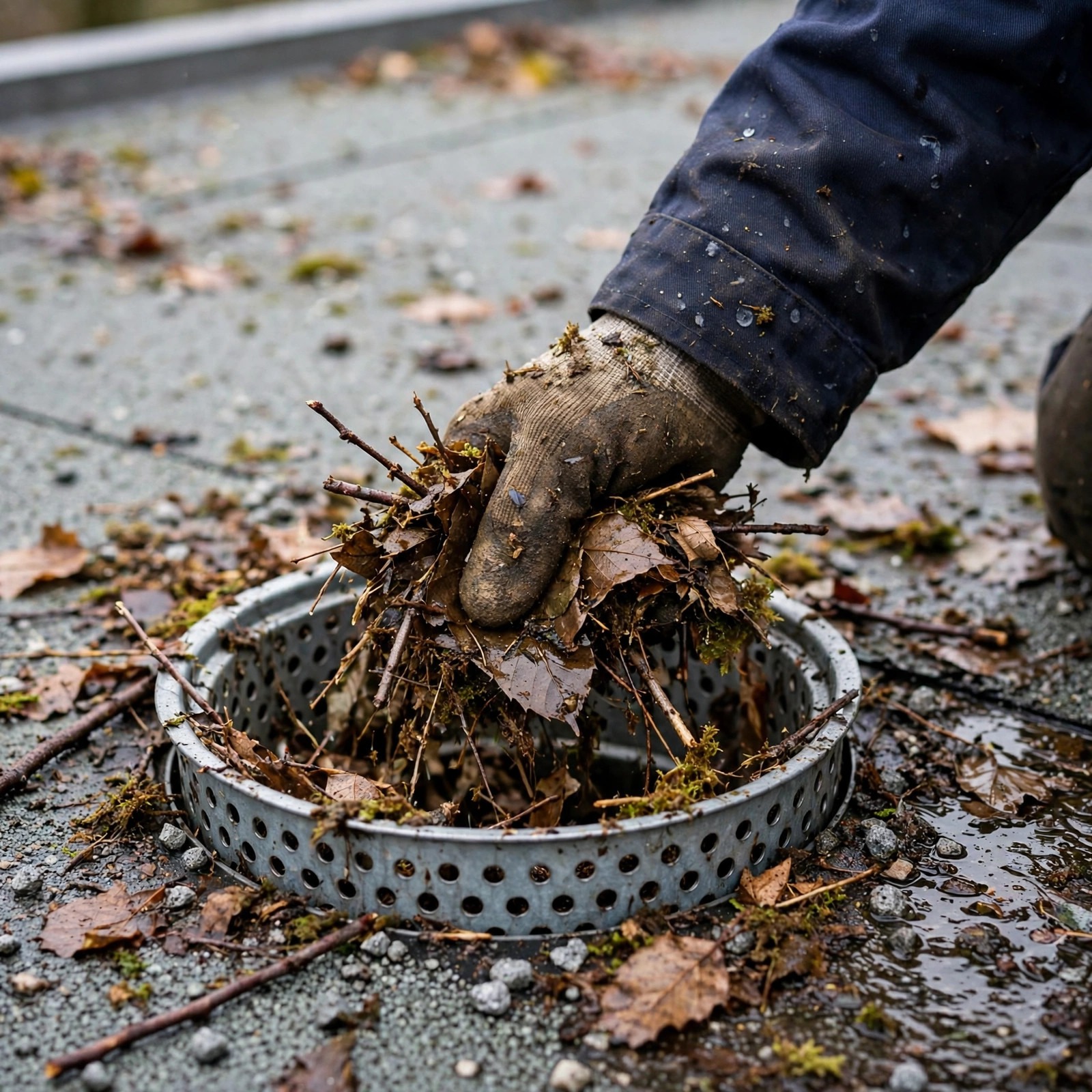
Drains Cleared
Internal drains, scuppers, and gutters collect leaves, balls, cups, and windblown Texas debris. A blocked drain turns every rain into a ponding event, and ponded water is heavy, patient, and looking for a way in. Clearing drainage is the first job on every visit.
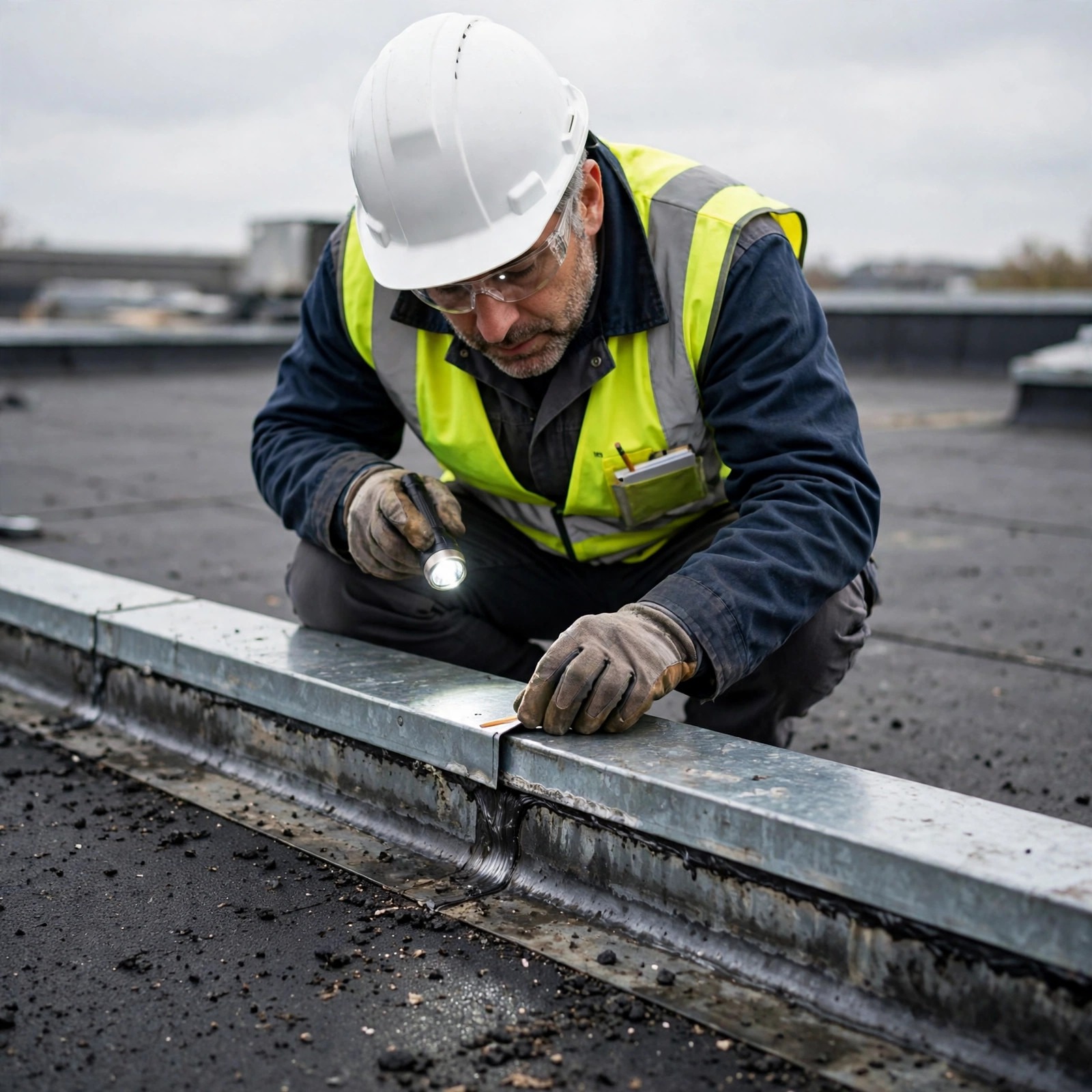
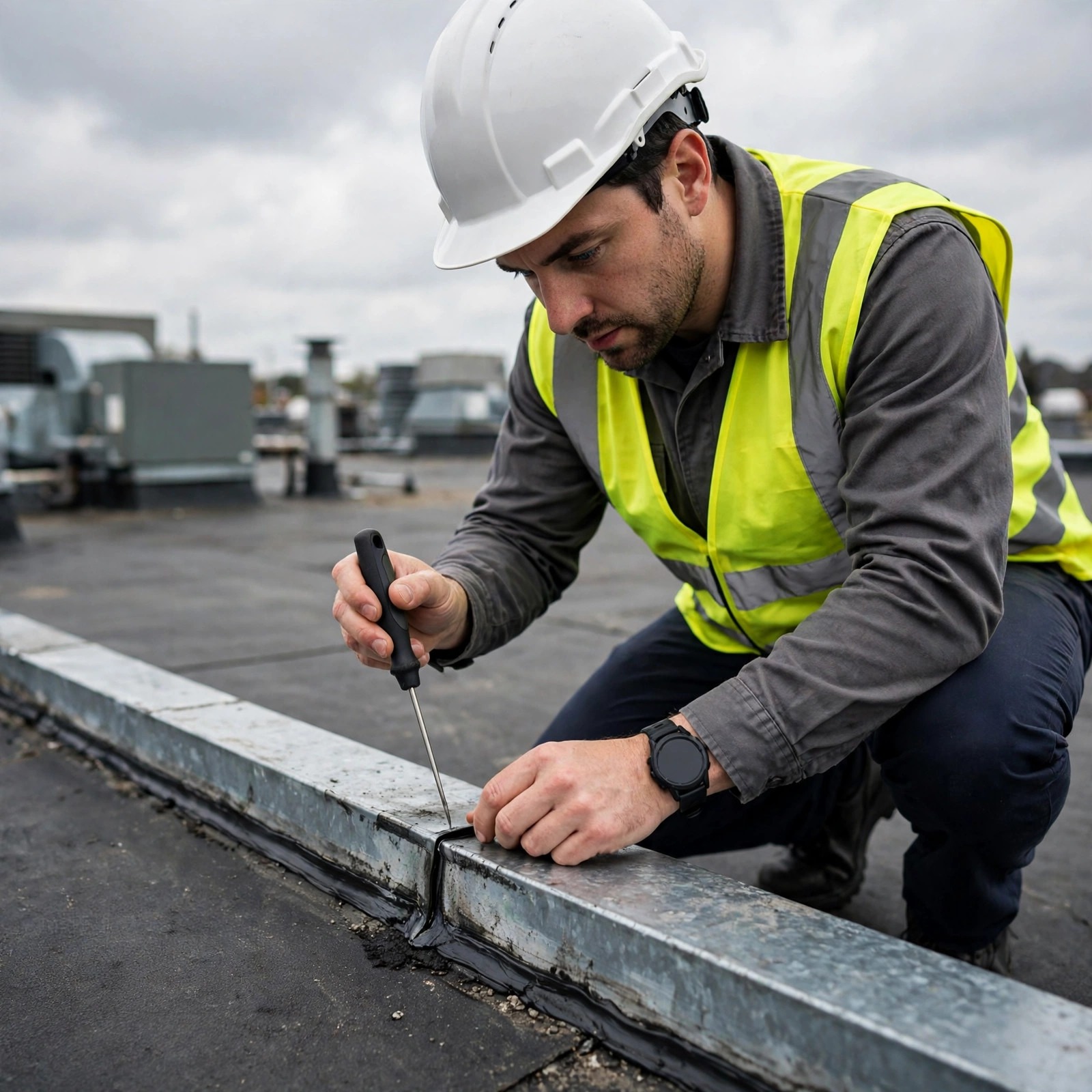
Seams Checked
Membrane seams are walked and probed, and any lap starting to lift gets resealed before the next storm works it open. Seams age from the edges inward; a finger and a roller twice a year keep a lap a lap instead of a leak path.
Flashing and Penetrations
Pipes, curbs, vents, and HVAC stands pierce the roof, and each pierce wears a seal that dries and shrinks in the sun. The visit checks every boot, counterflashing, and pitch pan, and renews the seals that have started to crack.
Fasteners and Surface
Backed-out fasteners get reset and sealed before they print through the membrane. The surface itself is read for blistering, cracking, punctures, and wear patterns that say where the roof is spending its life, and small damage is patched while it is still small.
Minor Sealing on the Spot
The small stuff does not get quoted and scheduled for another day: it gets fixed during the visit. Hairline gaps, loose trim, tired sealant: handled while the crew is already standing there, which is the entire economic point of the rhythm.
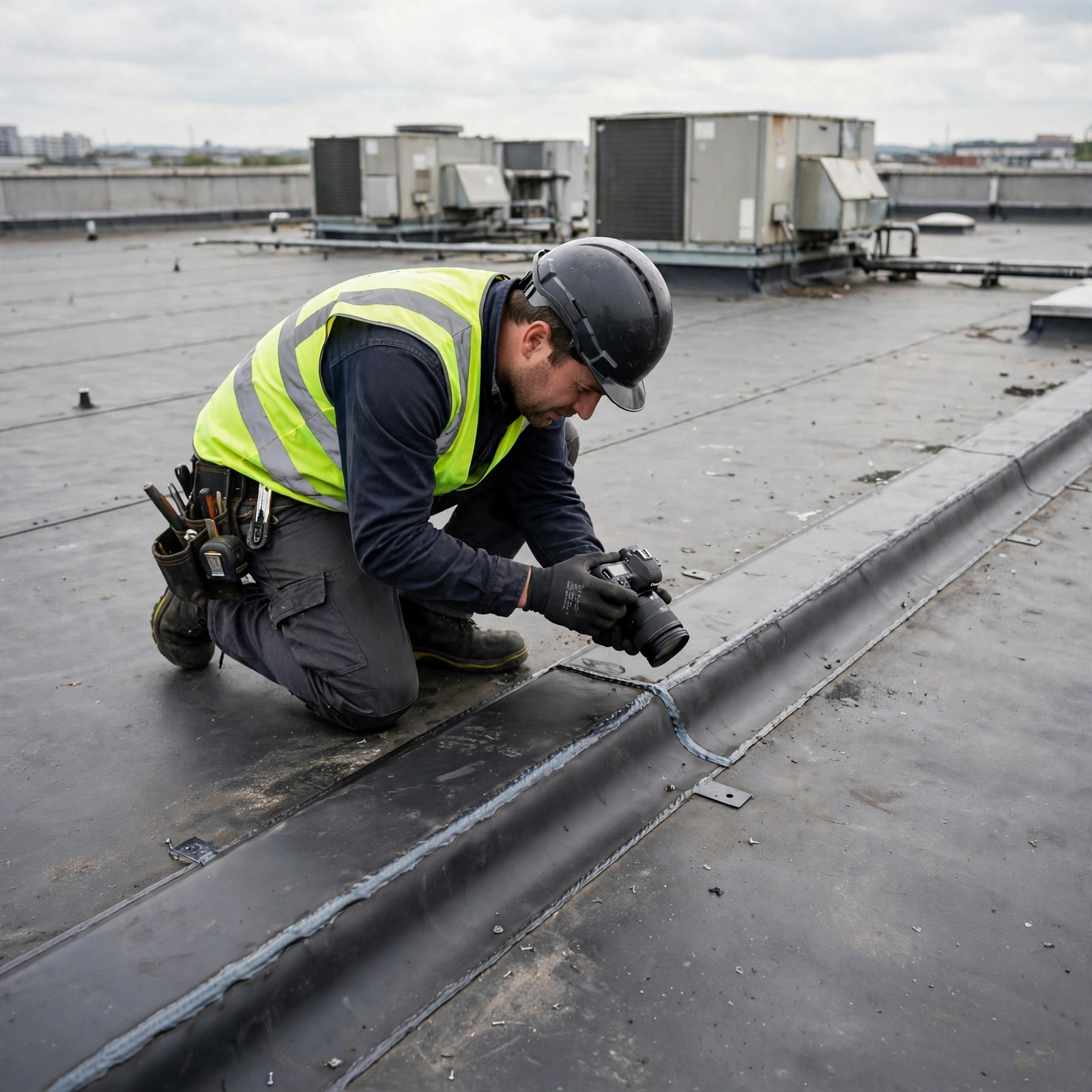
Report and Next Steps
Every visit closes with a written condition report and photos: what was done, what was found, what to watch, and what bigger work, if any, is coming in the next years. Owners budget from facts instead of surprises, and the file builds a maintenance history that also serves a future claim or sale.
The rhythm
How Regular Maintenance Runs Across a Year
Simple works: the same roof, read the same way, on a schedule the seasons respect.
The spring visit clears winter debris, checks what freeze and storm cycles did to seams and seals, and readies the roof for hail season. The fall visit clears the summer's accumulation, reads heat-season wear, and seals the roof against the wet months. Buildings with heavy tree cover, rooftop traffic, or known ponding get extra visits where the conditions argue for them, and the schedule is agreed in writing so nobody has to remember anything.
Between visits, a leak still gets a fast answer: maintenance customers call the same number and the file on their roof is already open.
- Spring visit before storm season peaks
- Fall visit ahead of the wet months
- Extra visits where trees or traffic demand them
- Standing file on your roof, updated each visit
The company
JBN Roofing of Texas, a Division of The JBN Group, Inc.
The JBN Group, Inc. is a family-owned general contracting company based at 125 Old Alton Drive in Denton, Texas, founded in 1996. JBN Roofing of Texas is its roofing division, working from Suite 8 at the same address and serving commercial property owners across North Texas. The group carries an A+ rating with the Better Business Bureau, and the roofing division is fully insured. Office hours run Monday through Thursday 9:00 AM to 5:00 PM, Friday 9:00 AM to 4:00 PM, and Saturday 10:00 AM to 2:00 PM Central. Reach the roofing team at 469-340-0838 or sales@jbnroofingoftexas.com.
Who it serves
Maintenance Pays Most Where Stakes Are Quiet
A warehouse with inventory under the roof, a restaurant that cannot close, a school that cannot move classrooms: for these buildings a leak is never just a leak.
Property managers run maintenance because it converts roofing from an emergency line item into a planned one, with reports that satisfy owners, insurers, and buyers. Facility teams run it because the visit finds the loose curb flashing before the ceiling tile finds it for them. Even a small landlord with one retail strip runs it because one avoided interior repair pays for years of visits.
The first visit sorts the roof into shape: what needs fixing now, what needs watching, and what the realistic remaining life looks like, all written down.
- Planned cost instead of emergency cost
- Reports owners and insurers accept
- Interior damage prevented, not repaired
- Remaining-life readings for real budgeting
Baseline Visit
The first visit reads the whole roof, fixes the small findings, and records the condition baseline in photos.
Schedule Set
Spring and fall visits are placed on the calendar, with extra visits added where the roof's conditions call for them.
Price It in Writing
The visit scope and any repair findings are priced in writing, so the year's roofing cost is known up front.
Visit, Fix, Report
Each visit runs the checklist, seals the small stuff on the spot, and closes with a photo report.
The honest fine print
What Regular Maintenance Cannot Promise
Maintenance stretches a roof's life and shrinks its surprises. It does not make an old roof new or a bad roof good.
A roof already at the end of its service life will still reach the end; maintenance just makes the arrival visible years ahead instead of one wet morning. Storm damage can still happen between visits, and a maintenance history does not replace a storm inspection after a major hail event, though it does give the claim a documented before picture. What maintenance honestly buys is time, warning, and small bills instead of large ones, which for most buildings is the best trade in roofing.
Ask for the visit scope in writing from any provider, us included, and compare what each visit actually does. Call 469-340-0838 and ask us first.
Where we work
Maintenance Routes Across North Texas
From our Denton office, JBN Roofing of Texas runs maintenance routes across the northern Dallas-Fort Worth area. Warehouses on the spring-and-fall rhythm, restaurants checked between seasons, schools read over the summer break: the routes flex around each building's real calendar.
Own or manage a property outside that area? Call 469-340-0838 and ask. If we cannot serve the building well, we will tell you plainly.
What the Visit Report Shows
- Photos of every area checked
- Work done during the visit, listed
- Findings ranked by urgency
- Repairs priced in writing
- Watch items for the next visit
- Remaining-life reading, updated yearly
Straight answers
Regular Maintenance FAQs
How often should a commercial roof be maintained?
Twice a year is the standard rhythm, spring and fall, bracketing the Texas storm seasons. Roofs under heavy tree cover, with lots of rooftop traffic, or with known drainage quirks benefit from an extra visit. The point is catching small openings while they are still small, and that argues for standing on the roof more often than problems develop.
What happens during a maintenance visit?
The crew clears drains and debris, walks and probes the seams, checks flashing and every penetration, resets backed-out fasteners, and seals minor gaps on the spot. Regular Maintenance then closes with a written condition report and photos: work done, findings ranked, and anything coming priced in writing.
Does maintenance really extend a roof's life?
Yes, by removing the causes of early death. Most roofs die from water that got in at a detail and worked quietly, not from the field wearing out. Sealed seams, clear drains, and sound flashing keep the field able to reach its full design life, and catching wet spots early stops the spread that ends roofs ahead of schedule.
Is maintenance different from the Roof Maintenance Program?
They are the same discipline seen two ways. This page explains what Regular Maintenance is and does; the Roof Maintenance Program page covers the standing plan itself: enrollment, scheduling, and what the plan includes across the year. Most owners read this page first, then the program page.
What does maintenance cost compared to repairs?
A scheduled visit costs a fraction of a single emergency leak call, and the small fixes are included in the visit instead of billed as separate trips. One avoided interior repair, ruined inventory, ceiling, or stock, commonly pays for years of visits. The visit scope and any larger findings are priced in writing before extra work begins.
Can maintenance start on an older roof?
Yes. The first visit doubles as a condition baseline: it fixes the small findings, photographs everything, and gives an honest remaining-life reading. An older roof in decent shape gains the most from the rhythm, because its details are exactly where age shows up first.
Twice a Year · Small Fixes · Photo Reports
Put Your Roof on the Schedule
One baseline visit reads the roof, fixes the small stuff, and starts the file. After that the calendar does the remembering, and the surprises stop.