
JBN Roofing of Texas · A Division of The JBN Group, Inc.
Commercial Roofing Systems
Six proven ways to roof a commercial building, and the differences that decide which one belongs on yours.
Commercial Roofing Systems are not interchangeable. A white single-ply membrane, a standing seam metal roof, and a traditional built-up roof all keep water out, but they differ in service life, repair style, energy behavior, and what they cost to own over decades. JBN Roofing of Texas installs and restores the full range for commercial buildings across North Texas, and this page lays the systems side by side in plain language: what each one is, where it performs best, and where it falls short. When you are ready to talk about your building specifically, the roofing team in Denton can be reached at 469-340-0838.
Start with the building
Commercial Roofing Systems Earn Their Keep Differently
The best system is the one matched to the building: its slope, its rooftop traffic, what happens inside it, and how long the owner plans to hold it.
A warehouse that needs thirty quiet years from a roof asks different things than a restaurant whose kitchen exhaust rains grease on the membrane, or a retail center where air-conditioning costs land in every tenant's lease. Slope matters too: some systems shrug off standing water, others need drainage help, and metal panels want a pitch that flat-roof membranes do not require.
That is why this company does not push one system. The inspection comes first: the deck, the drainage, the existing layers, and the building's use. Then the systems that genuinely fit are put in front of the owner with their tradeoffs stated plainly, and the recommendation is priced in writing. The sections below give you the same briefing before anyone climbs a ladder.
Want the building-specific version? Call 469-340-0838 and ask for a systems consultation.
Roofing services
Services Behind the Systems
Every system on this page connects to a service this company performs: installing single-ply, restoring with coatings, inspecting what is already up there, and replacing what has finished its run. Follow any card to the service behind the system.
The systems, one by one
Six Commercial Roofing Systems, Plainly Compared
Each system below is a real option on real North Texas buildings. What separates them is how they handle sun, water, traffic, and time.
Single-Ply Membranes
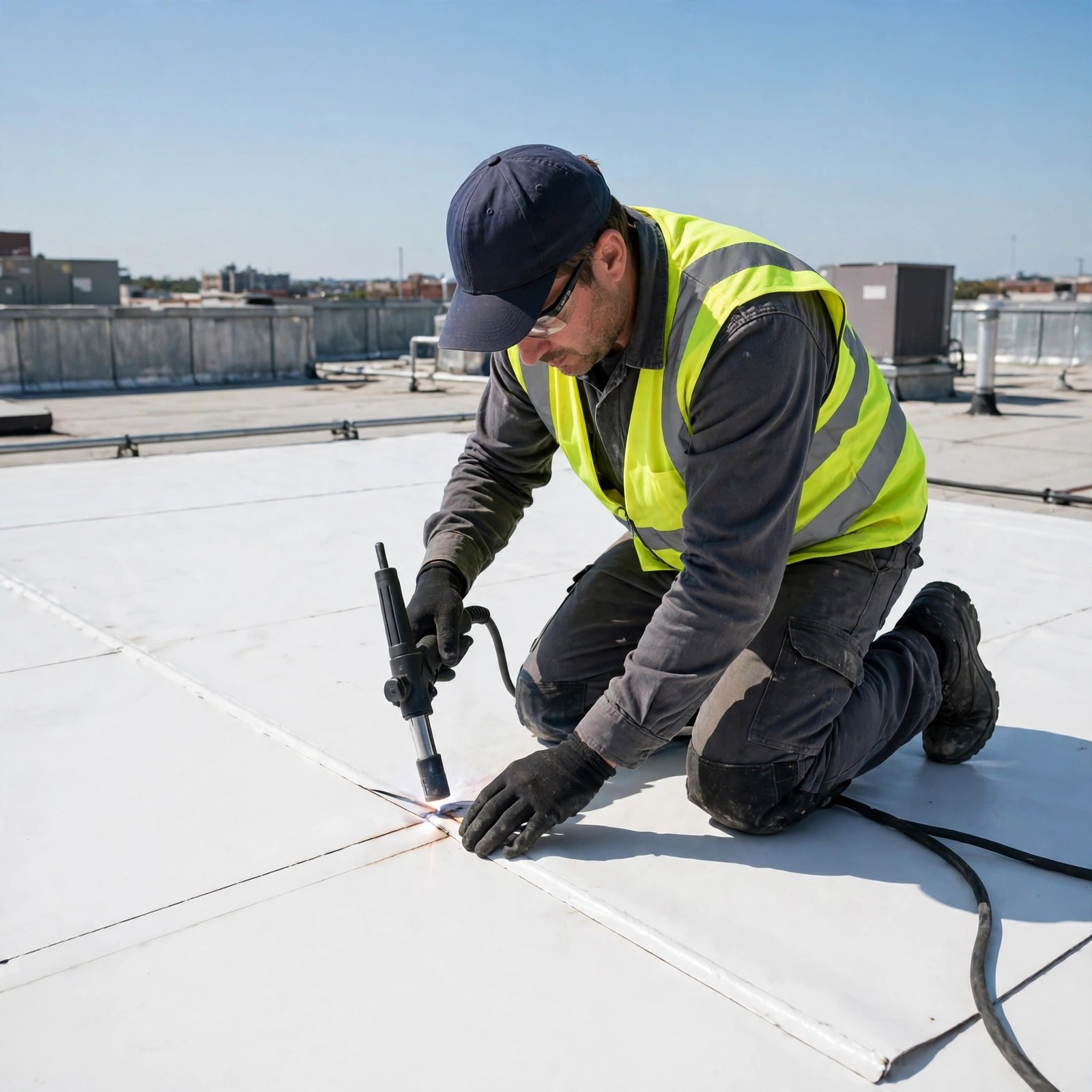
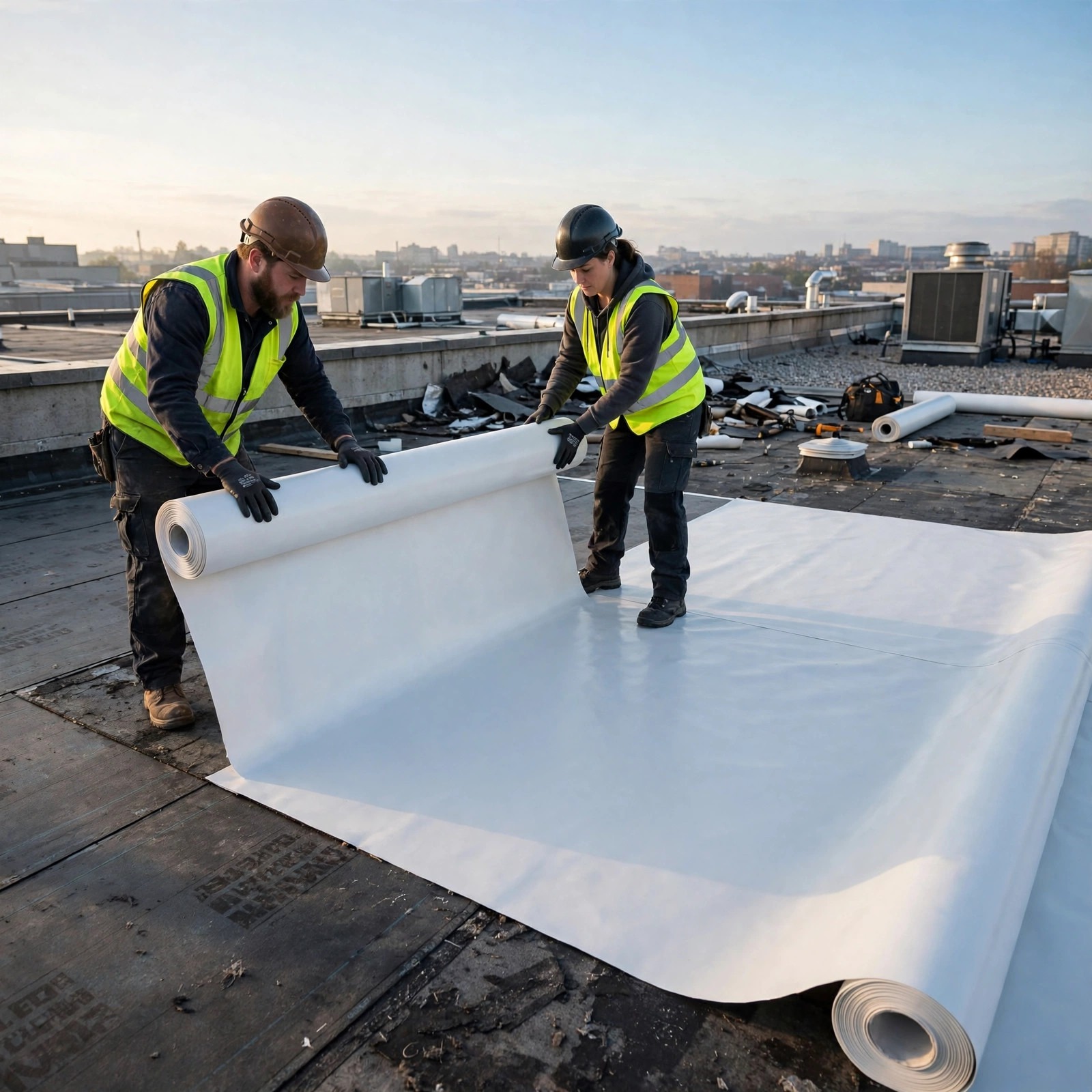
One flexible sheet, three personalities. TPO is the white, heat-reflecting workhorse of modern flat roofs: energy-efficient, puncture-resistant, and the most popular choice going. EPDM is a synthetic rubber sheet prized for flexibility, long service, and repairs a crew can make quickly. PVC welds its seams with hot air and stands up to chemicals, grease, and fire, which makes it the restaurant and industrial favorite.
Metal Roofing Systems
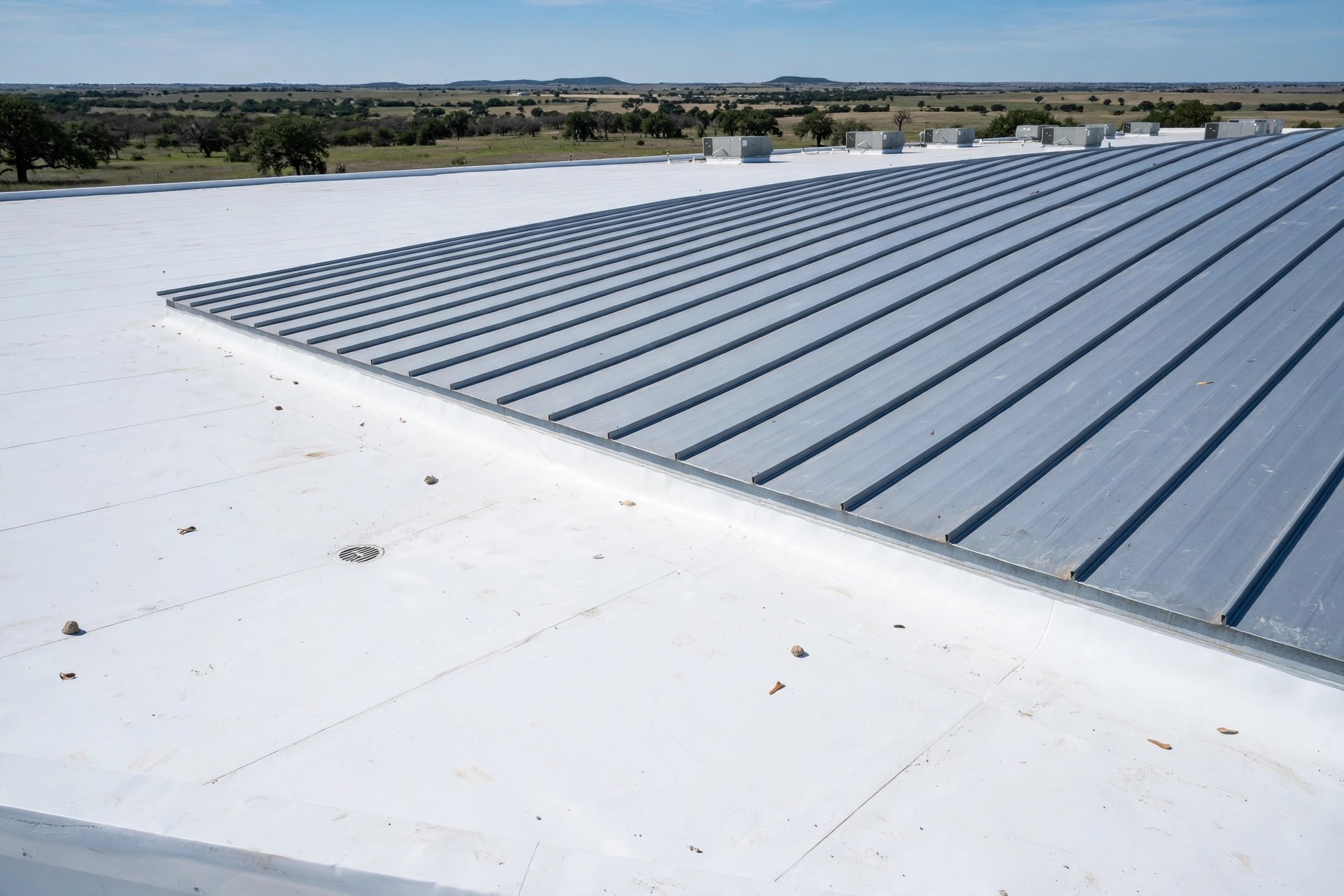
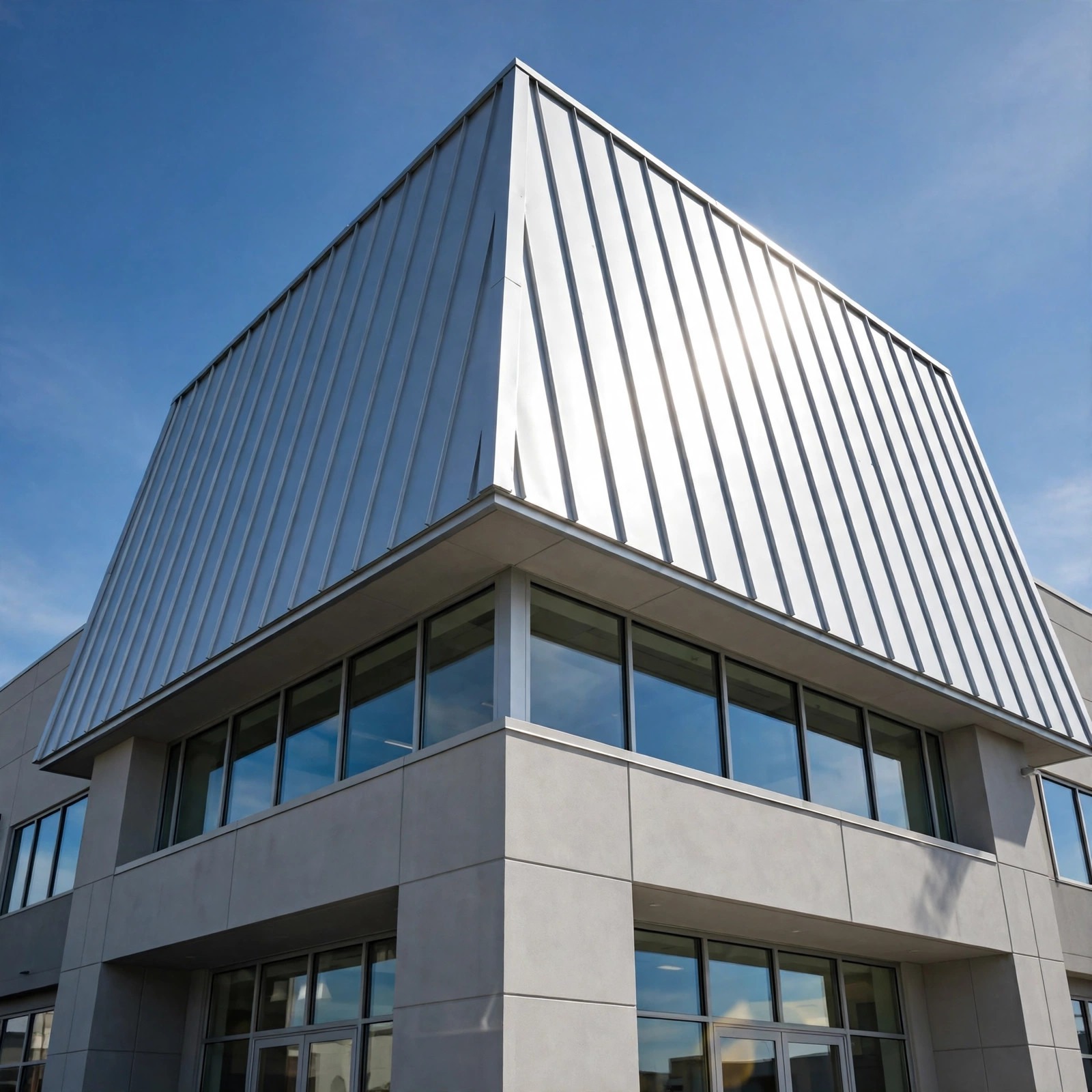
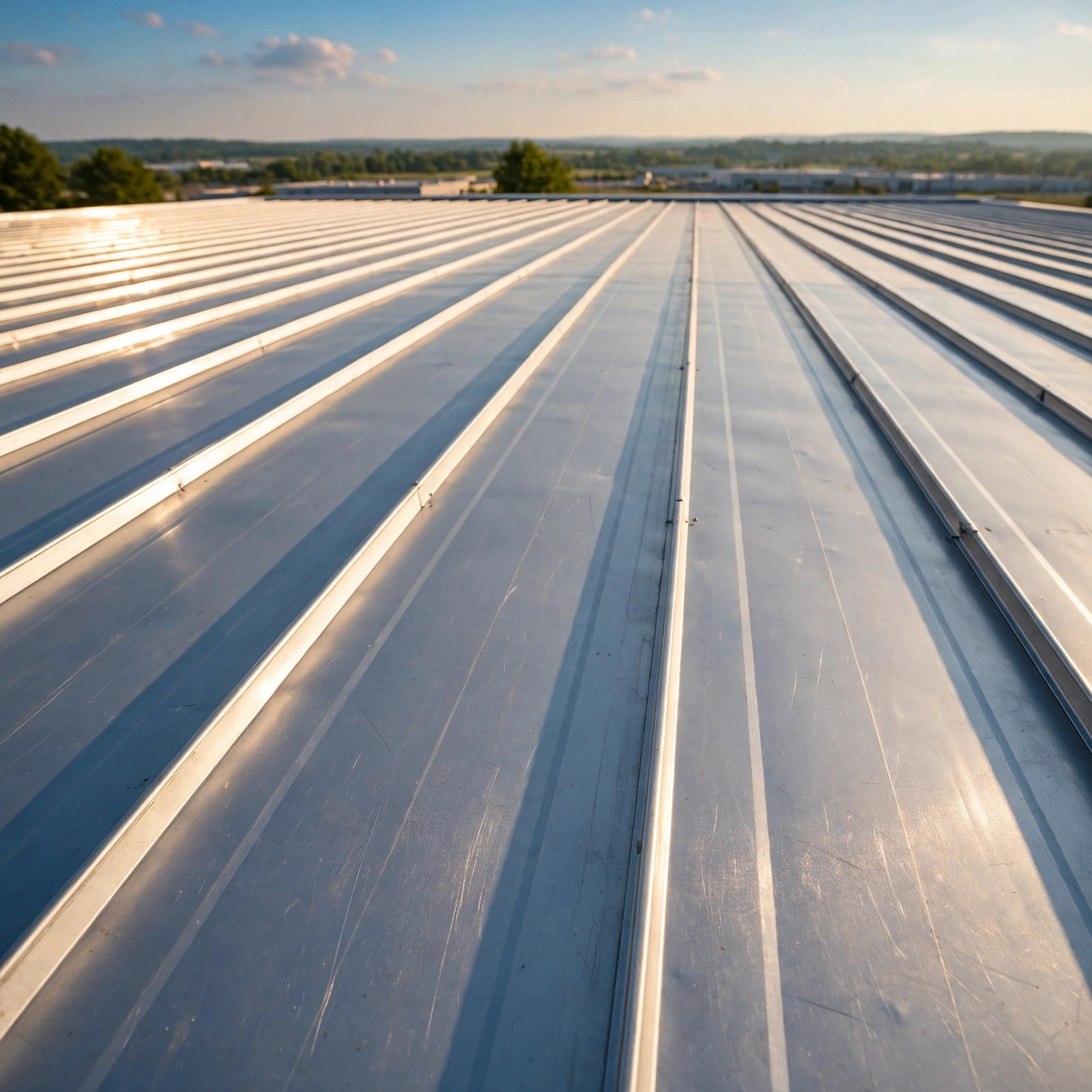
Standing seam and architectural panels in steel, aluminum, or copper. Metal is the long game: service lives of forty to sixty years and beyond, water shed cleanly on low and steep slopes alike, and a natural partner for rooftop solar. The first cost runs higher than membrane; the decades run longer.
Built-Up Roofing (BUR)
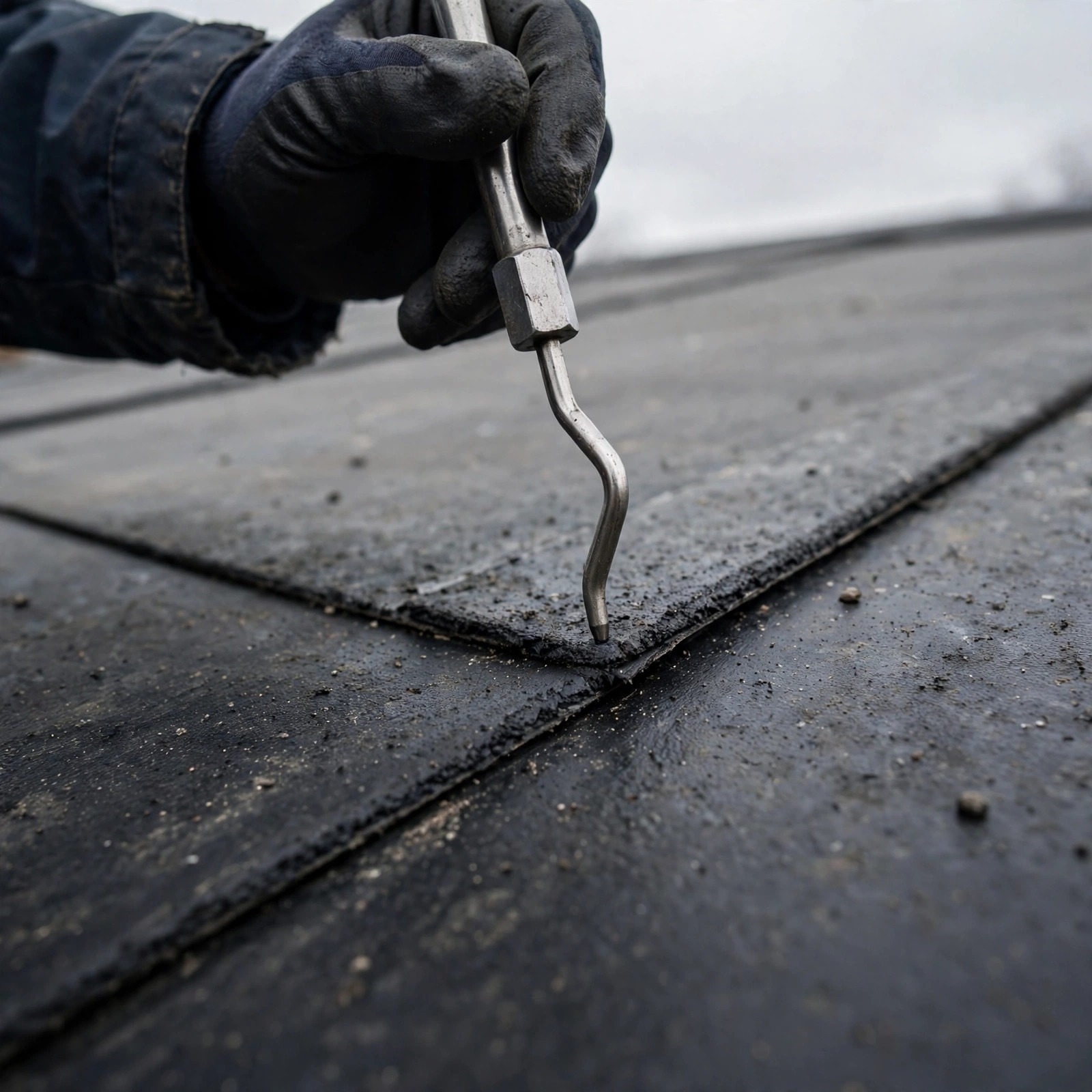
The original flat roof: layers of reinforcing fabric set in hot asphalt, built up ply over ply on site and finished with a cap sheet or a gravel surface. Owners call it tar and gravel. The payoff is redundancy: several waterproof layers thick, heavy-duty under foot traffic, with a long record of service.
Modified Bitumen
BUR's direct descendant. Asphalt sheets are factory-modified with rubber (SBS) or plastic (APP), which buys flexibility and tear resistance the old felts never had. Crews set it by torch, cold adhesive, hot asphalt, or self-adhering rolls, so there is an application method for nearly every building and fire code.
Spray Polyurethane Foam (SPF)
A liquid sprayed onto the roof that expands into a seamless foam layer: insulation and waterproofing in one pass, with no seams to fail. A protective elastomeric coating goes over the top to shield it from sun and weather. Foam also builds slope toward drains on roofs that pond.
Roof Coatings & Restoration
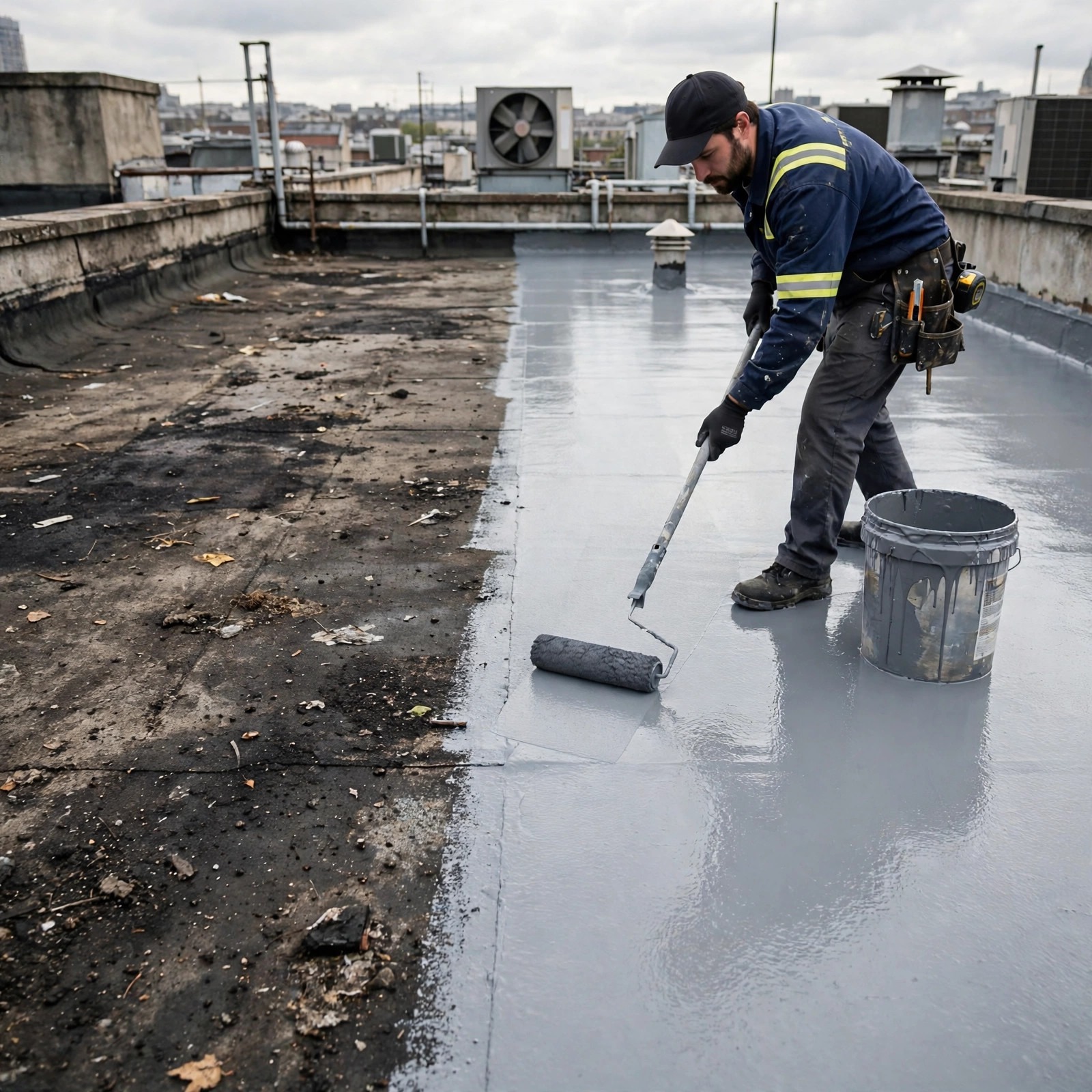
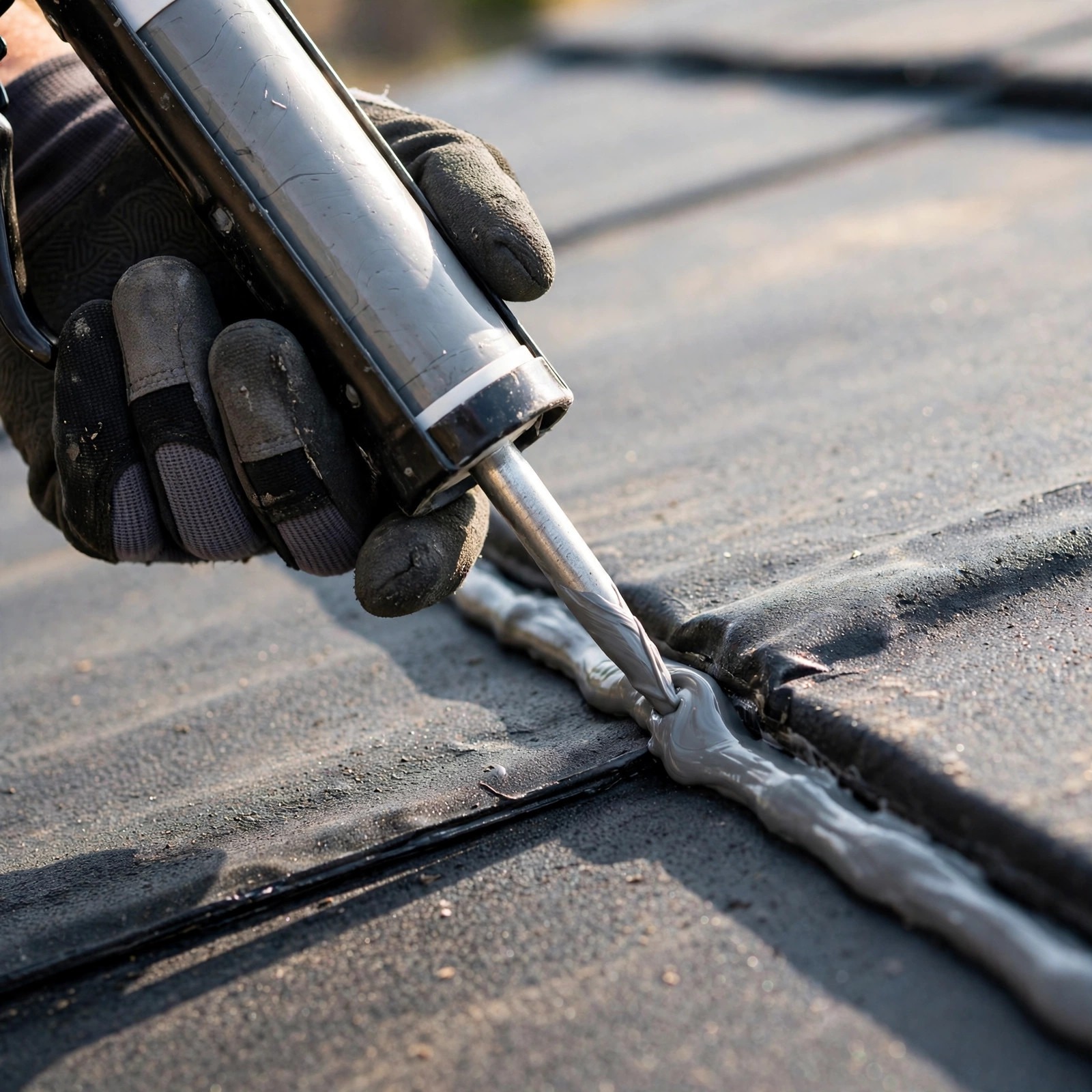
Silicone, acrylic, or urethane coatings rolled or sprayed over a sound but aging roof: single-ply, metal, or modified bitumen. The coating seals the surface, restores reflectivity, and adds years of service without tearing the old roof off, at a fraction of replacement cost, provided the roof underneath is dry and sound.
The single-ply decision
TPO, EPDM, or PVC: Where Each One Wins
Most new flat commercial roofs in North Texas wear one of these three membranes. The choice turns on what lands on the roof and what the owner values.
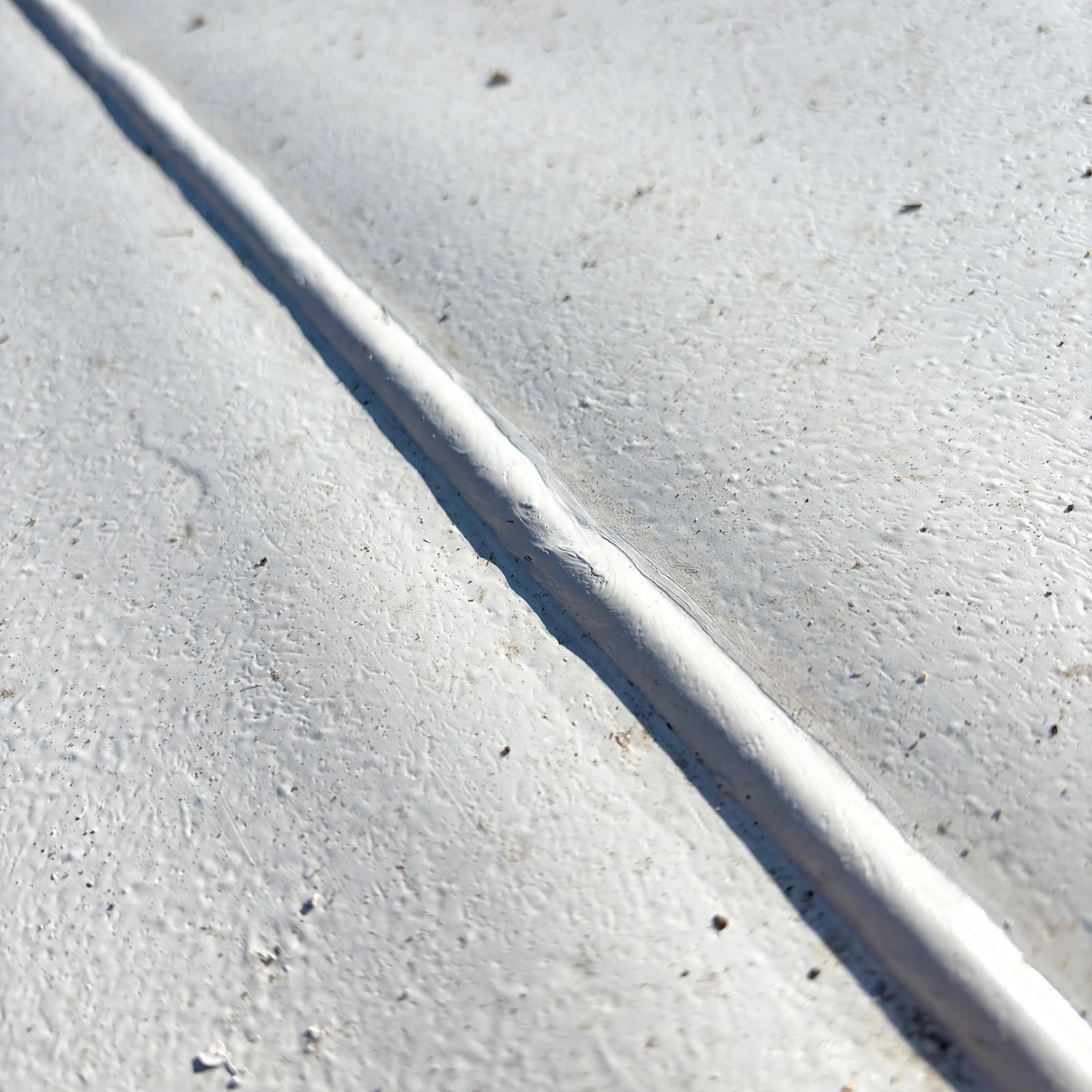
TPO earns its popularity honestly: the white surface reflects Texas sun back off the building, seams are heat-welded into one continuous skin, and the material resists punctures from the foot traffic every rooftop collects. EPDM's black rubber handles building movement and temperature swings with the least fuss, and when it does get damaged, a patch is simple and permanent. PVC costs more and earns it where the roof takes abuse: kitchen grease, chemical exposure, and fire-conscious facilities all point to PVC, and its welded seams are the strongest of the three.
None of the three is the wrong answer everywhere, and none is the right answer everywhere. That is the whole argument for having the building inspected before the membrane is chosen.
- TPO for reflectivity, welded seams, all-around value
- EPDM for flexibility and the simplest repairs
- PVC for grease, chemicals, and fire resistance
- All three priced in writing for your building
The company
JBN Roofing of Texas, a Division of The JBN Group, Inc.
The JBN Group, Inc. is a family-owned general contracting company based at 125 Old Alton Drive in Denton, Texas, founded in 1996. JBN Roofing of Texas is its roofing division, working from Suite 8 at the same address and serving commercial property owners across North Texas. The group carries an A+ rating with the Better Business Bureau, and the roofing division is fully insured. Office hours run Monday through Thursday 9:00 AM to 5:00 PM, Friday 9:00 AM to 4:00 PM, and Saturday 10:00 AM to 2:00 PM Central. Reach the roofing team at 469-340-0838 or sales@jbnroofingoftexas.com.
How the choice gets made
A Recommendation Built on the Roof, Not the Brochure
System first is backwards. The roof, the deck, and the building's work come first; the system follows from what they say.
The process opens on the roof itself: what system is up there now, whether moisture has gotten into the layers, how the drainage actually behaves, and what condition the deck is in. Some buildings turn out to be coating candidates and keep their existing roof for years more. Others need a tear-off before any new system makes sense, and the honest recommendation says so.
The owner receives the findings and the fitting options in writing: the systems that suit the building, what each costs, and what each commits the owner to over its life. No system gets sold because it is the one a crew happens to prefer installing.
- Current system and moisture condition identified
- Drainage and deck graded before options are offered
- Fitting systems compared in writing, with prices
- Coating considered before replacement, honestly
- One written price on the system the owner chooses

Inspect What Is Up There
The existing system is identified and its condition documented, including any moisture in the layers.
Match Systems to the Building
Slope, drainage, rooftop exposure, and the owner's plans narrow the field to the systems that genuinely fit.
Price the Options in Writing
Each fitting system arrives with its scope and one written price, tradeoffs stated, before the owner decides.
Install and Document
The chosen system is installed by JBN crews, with the work and the roof's new condition documented for the owner's file.
The honest tradeoff
There Is No Best System. There Is the Right One for the Building.
Any contractor who names one system as best for every building is selling inventory, not advice.
Metal outlasts everything on this page and costs the most up front; on a building the owner plans to sell in five years, that math may never pay back. A coating is the smartest money in roofing when the roof under it is sound, and wasted money when it is wet. Built-up and modified bitumen shrug off abuse that would scar a membrane, and ask for heavier structural support in return. Foam insulates beautifully and needs its coating maintained to stay protected.
Our job is to put the real tradeoffs for your building in front of you, priced, and let the building make the argument. Call 469-340-0838 to start that conversation.
Where we work
Every System, Installed Across North Texas
From our Denton office, JBN Roofing of Texas installs and restores commercial roofing systems for buildings across the northern Dallas-Fort Worth area. Warehouses lean membrane or foam, restaurants lean PVC, long-hold properties lean metal, and the inspection settles which way each building should go.
Own or manage a property outside that area? Call 469-340-0838 and ask. If we cannot serve the building well, we will tell you plainly.
Systems This Company Installs
- TPO, EPDM, and PVC single-ply membranes
- Standing seam and architectural metal
- Built-up roofing and modified bitumen
- Spray polyurethane foam with coating
- Silicone, acrylic, and urethane coatings
- Full tear-off and replacement in any system
Straight answers
Commercial Roofing Systems FAQs
What are the main types of commercial roofing systems?
Six families cover nearly every commercial building. Single-ply membranes (TPO, EPDM, and PVC) are single flexible sheets. Metal systems use standing seam or architectural panels. Built-up roofing layers fabric and hot asphalt on site. Modified bitumen is that idea modernized with rubber- or plastic-modified sheets. Spray polyurethane foam is sprayed on as seamless insulation and waterproofing under a coating. Roof coatings restore a sound aging roof in any of the membrane or metal families without a tear-off.
Which commercial roofing system lasts the longest?
Metal, by a wide margin: standing seam and architectural panel systems commonly serve forty to sixty years or more. The membranes and asphalt systems generally serve in the twenty-to-thirty-year range when they are installed well and maintained, and a coating can add years to a sound roof in those families. Longevity only pays when it matches how long the owner plans to hold the building, which is part of the recommendation.
What is the difference between TPO, EPDM, and PVC?
All three are single-ply membranes, and they differ in temperament. TPO is white and heat-reflective, with heat-welded seams and strong puncture resistance; it is the most popular modern choice. EPDM is a synthetic rubber sheet valued for flexibility and the easiest repairs of the three. PVC also heat-welds its seams and adds high resistance to chemicals, grease, and fire, which is why restaurants and industrial buildings so often wear it.
Can a coating really replace getting a new roof?
Sometimes, and the inspection is what decides. A silicone, acrylic, or urethane coating over a dry, sound roof restores a sealed, reflective surface and adds real service years at a fraction of replacement cost. Over a roof with wet insulation or failing seams, a coating just seals the problems in. When the roof underneath is finished, we will recommend replacement instead and put both options in writing.
Which system is right for a restaurant or food facility?
Usually PVC. Kitchen exhaust deposits grease on the roof, and grease breaks down several membrane types. PVC resists grease and chemicals, its seams are hot-air welded, and it carries strong fire resistance, which is why it is the standard recommendation for food service and similar buildings. The inspection confirms what the individual roof needs.
How do I know which system my building should get?
Start with an inspection, not a catalog. The roof's slope, drainage, deck condition, existing layers, and what the building houses all narrow the field, and the owner's plans for the property finish the decision. JBN Roofing of Texas documents the inspection findings, presents the systems that genuinely fit with their tradeoffs and one written price each, and lets the owner choose with the full picture in hand.
Six systems · One right fit
Find the System Your Building Has Been Asking For
It starts with an inspection and a plain-language briefing: what is on the roof now, what belongs there next, and what each honest option costs, in writing.