
JBN Roofing of Texas · A Division of The JBN Group, Inc.
Single-Ply Membranes
One layer thick, three very different materials: TPO, EPDM, and PVC, compared without the sales pitch.
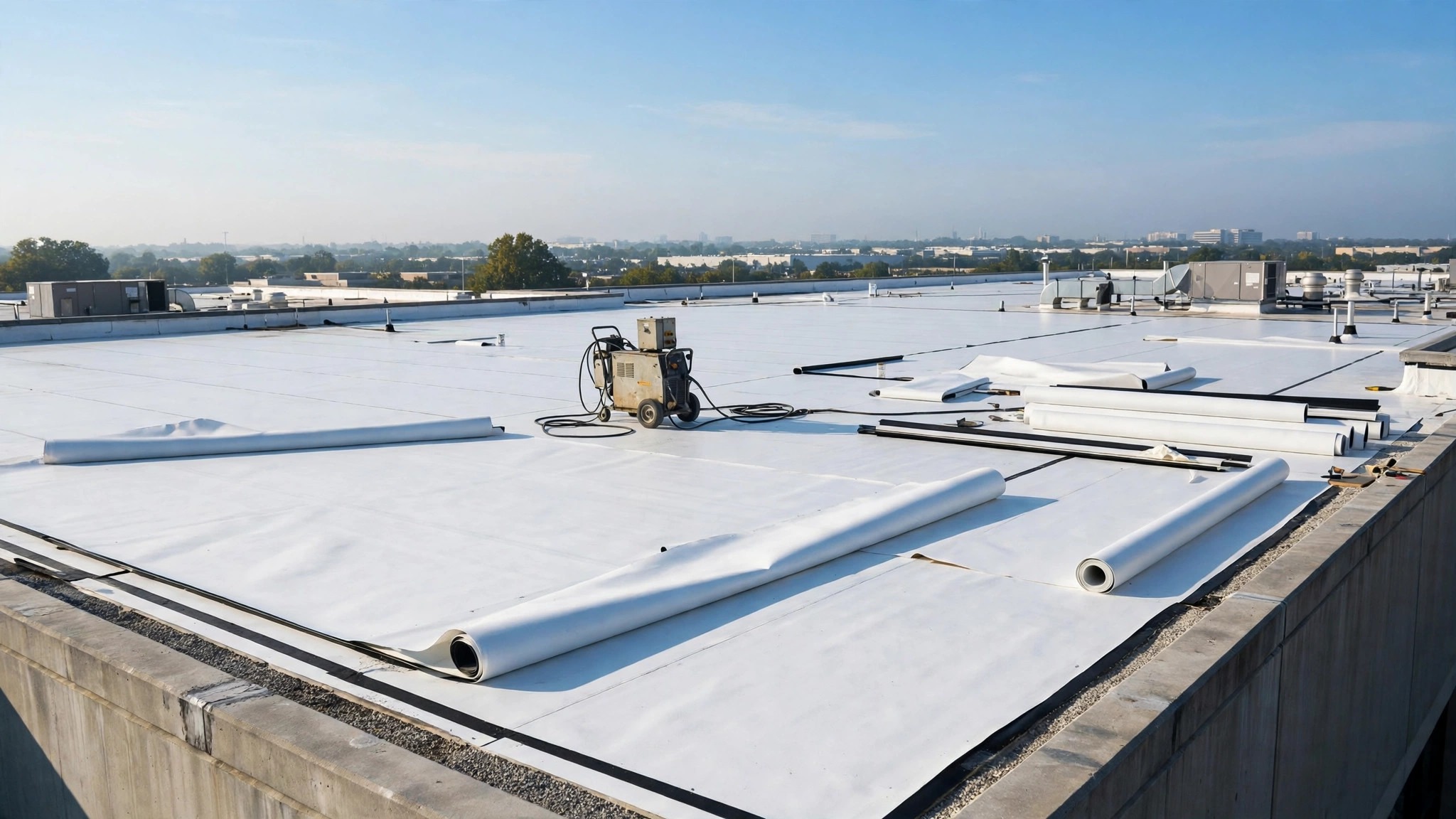
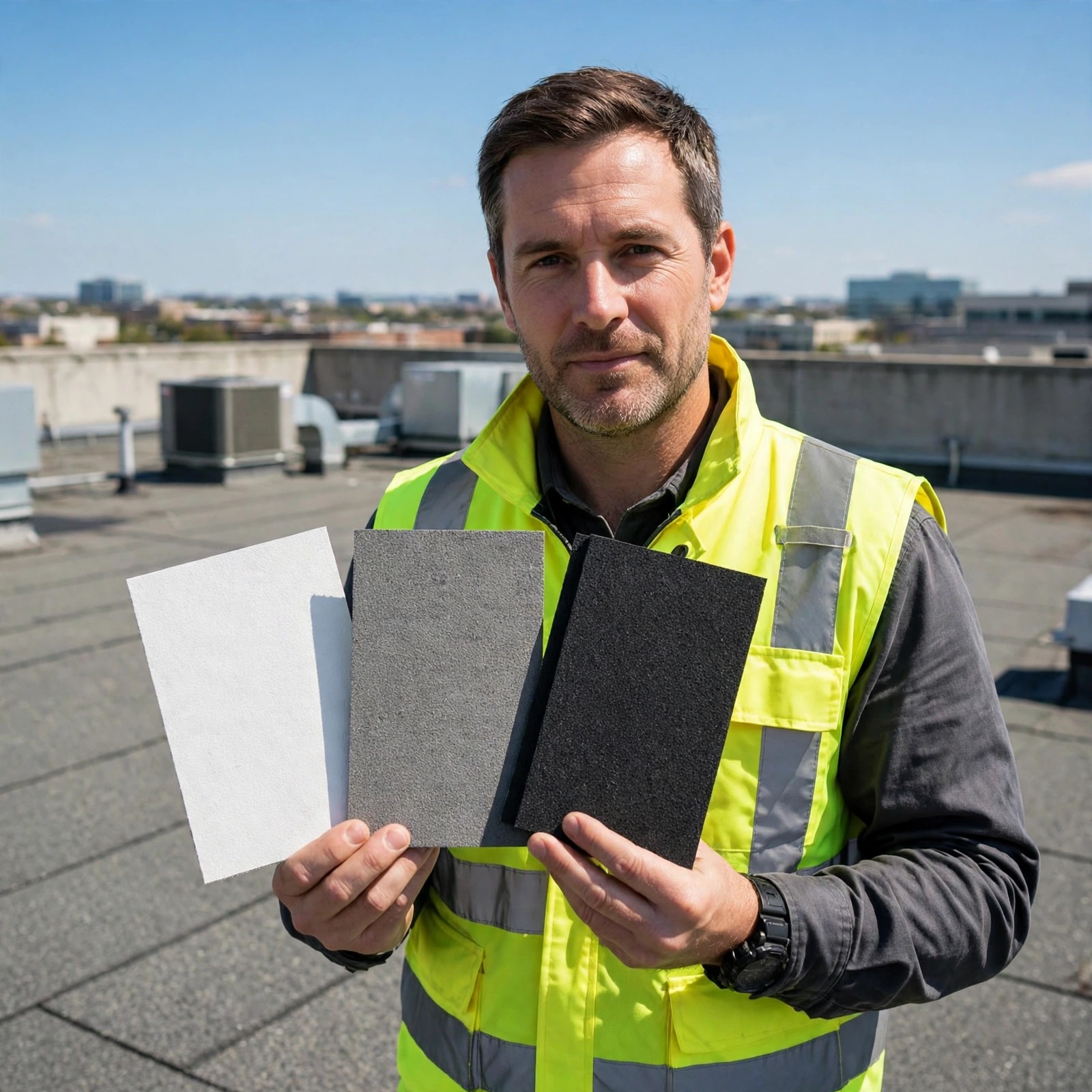
Single-Ply Membranes are factory-made sheets laid in a single layer over a commercial roof, and they cover more flat roofs in North Texas than every other system combined. The family has three members, and they are not interchangeable: TPO is the white, reflective modern standard; EPDM is the black rubber veteran; PVC is the chemical-resistant specialist. JBN Roofing of Texas installs all three and this page compares them the way an owner needs: seams, service life, repair style, and which buildings each one suits. To talk through your roof, call the Denton team at 469-340-0838.
What single-ply means
Single-Ply Membranes Put the Craft in the Seams
Built-up roofs stack their waterproofing in layers. A single-ply roof trusts one engineered sheet, so everything rides on the sheet's quality and the seams where sheets join.
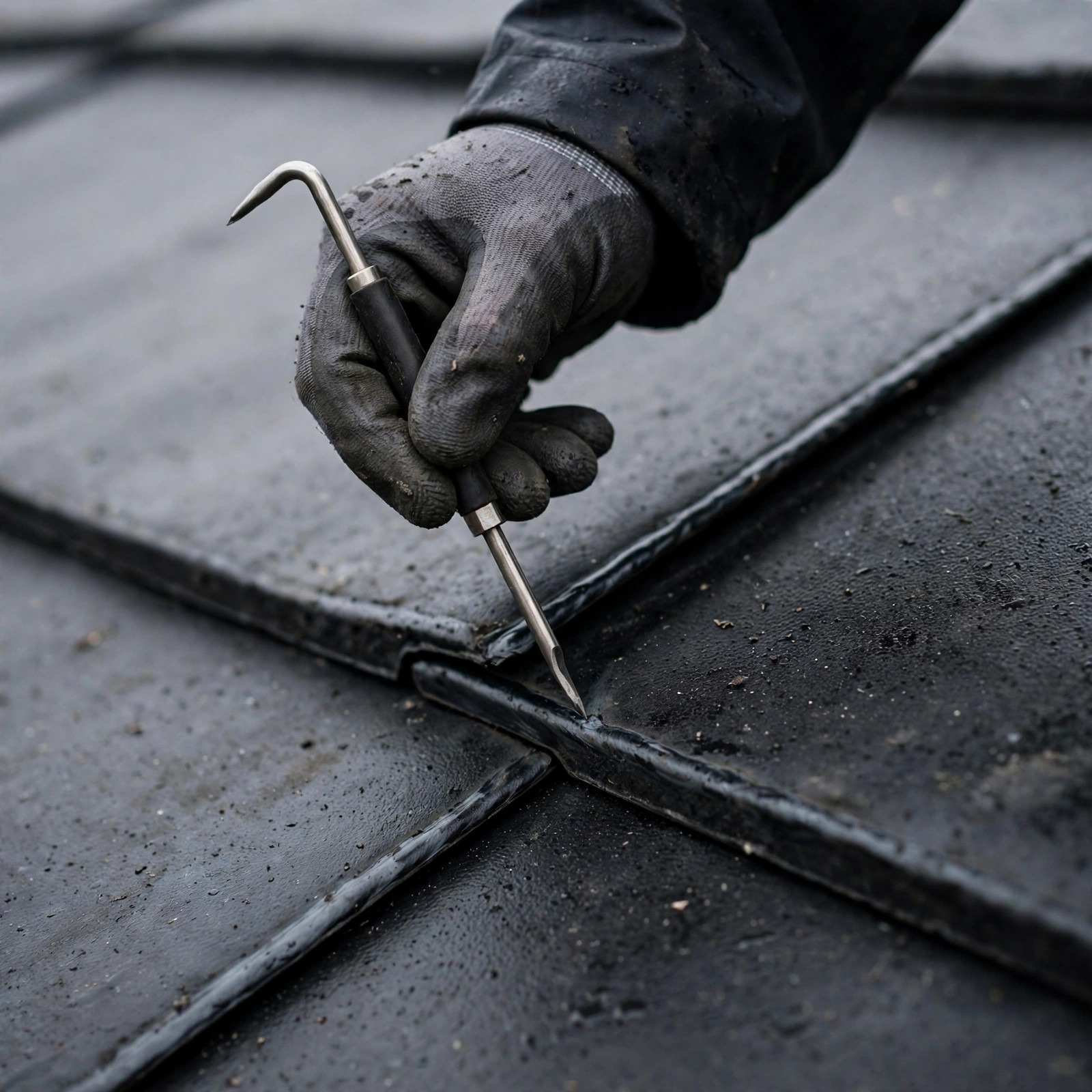
The membrane itself is manufactured under factory control, in wide rolls that cover a roof with far fewer seams than layered systems need. Sheets are fastened down mechanically, glued down fully, or held by ballast, and at every lap one sheet joins the next: heat-welded into a single skin on TPO and PVC, seamed with tapes and adhesives on EPDM. A well-made seam is as waterproof as the sheet itself; a careless one is where the roof will leak first, which is why seam work is inspected weld by weld and seam by seam on every install here.
Under the sheet sit the same decisions as any commercial roof: insulation, cover board, and drainage. Get those right and match the membrane to the building, and a single-ply roof delivers decades of quiet service.
Not sure which membrane your building should wear? Call 469-340-0838 and ask for a membrane consultation.
Roofing services
Services Around the Membranes
Membranes connect to the rest of the commercial line: the dedicated single-ply service, the full systems comparison, inspections that grade what is already installed, and the coating or replacement waiting at the end of a membrane's life.
Meet the membranes
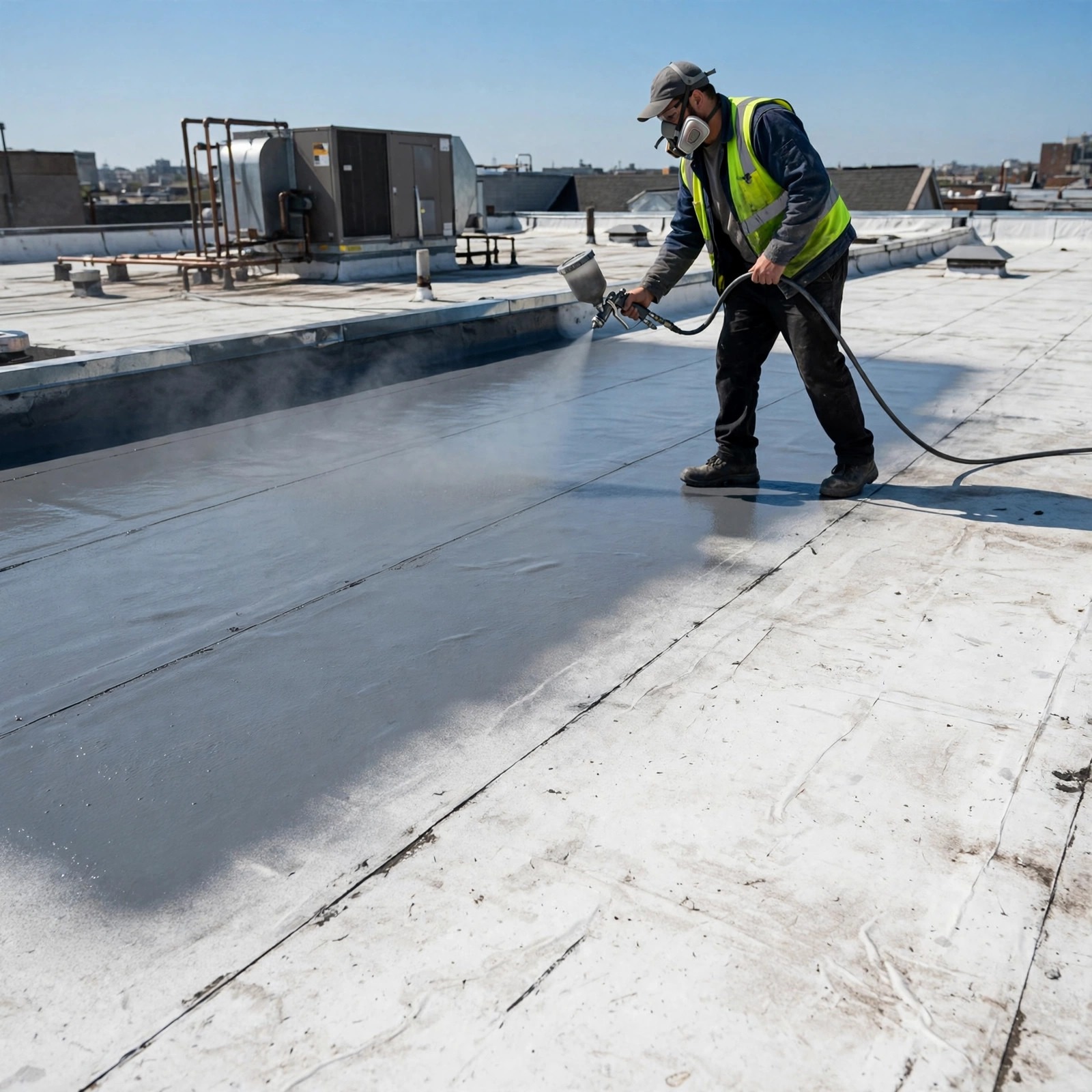
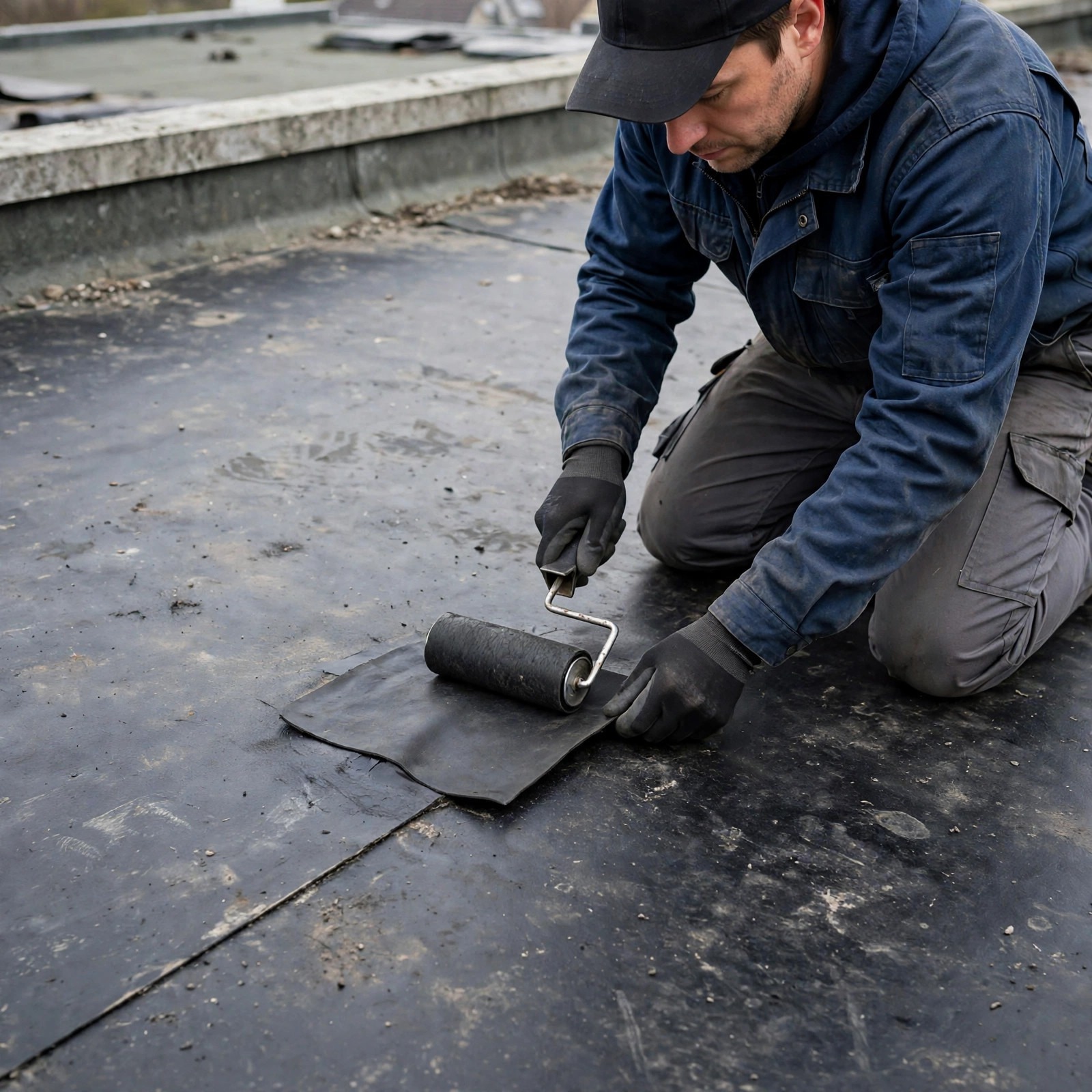
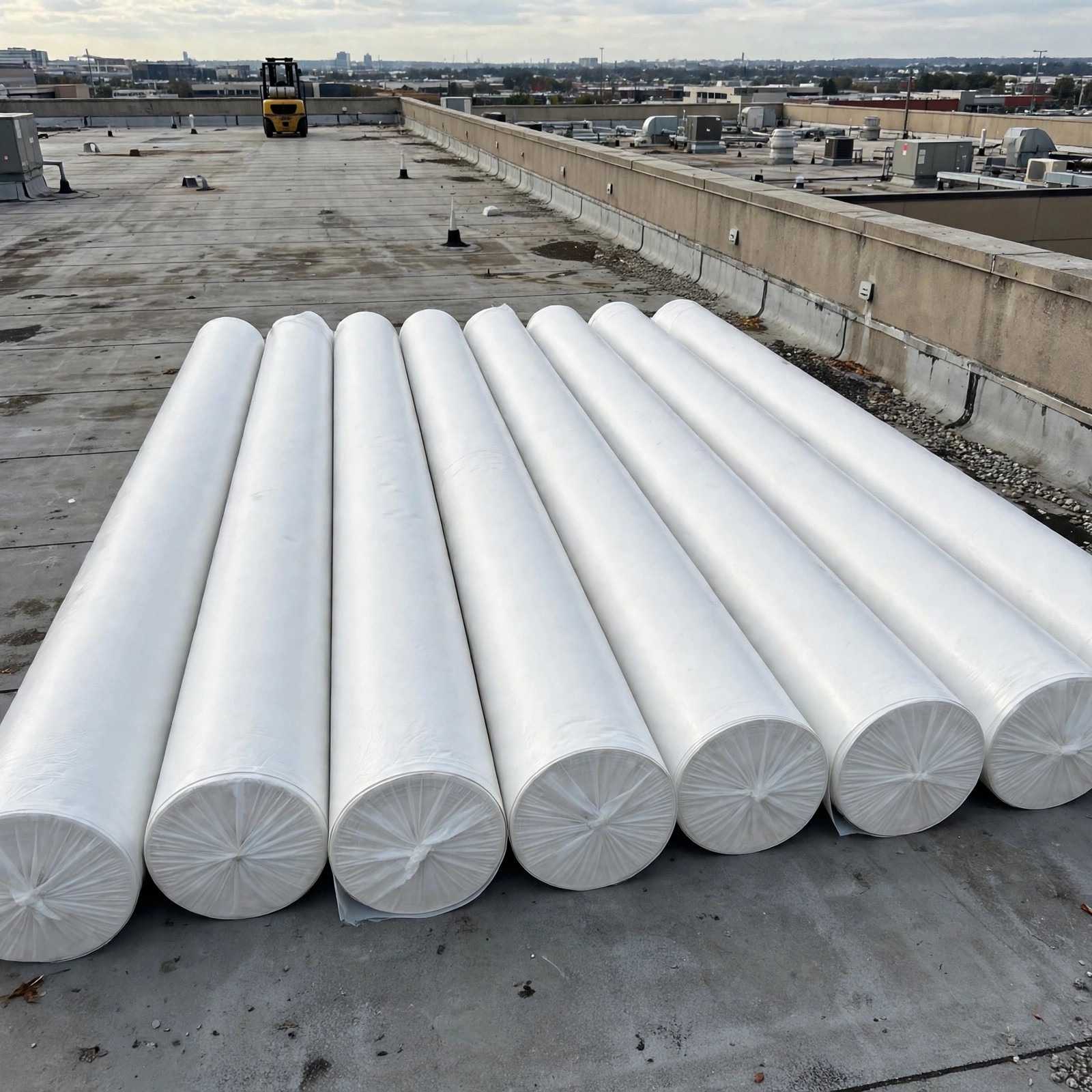
TPO, EPDM, and PVC: Three Membranes, Three Temperaments
Same family, different personalities. Here is what each sheet actually brings to a roof, and the two cross-cutting choices, seams and attachment, that matter as much as the material.
TPO: The Modern Standard
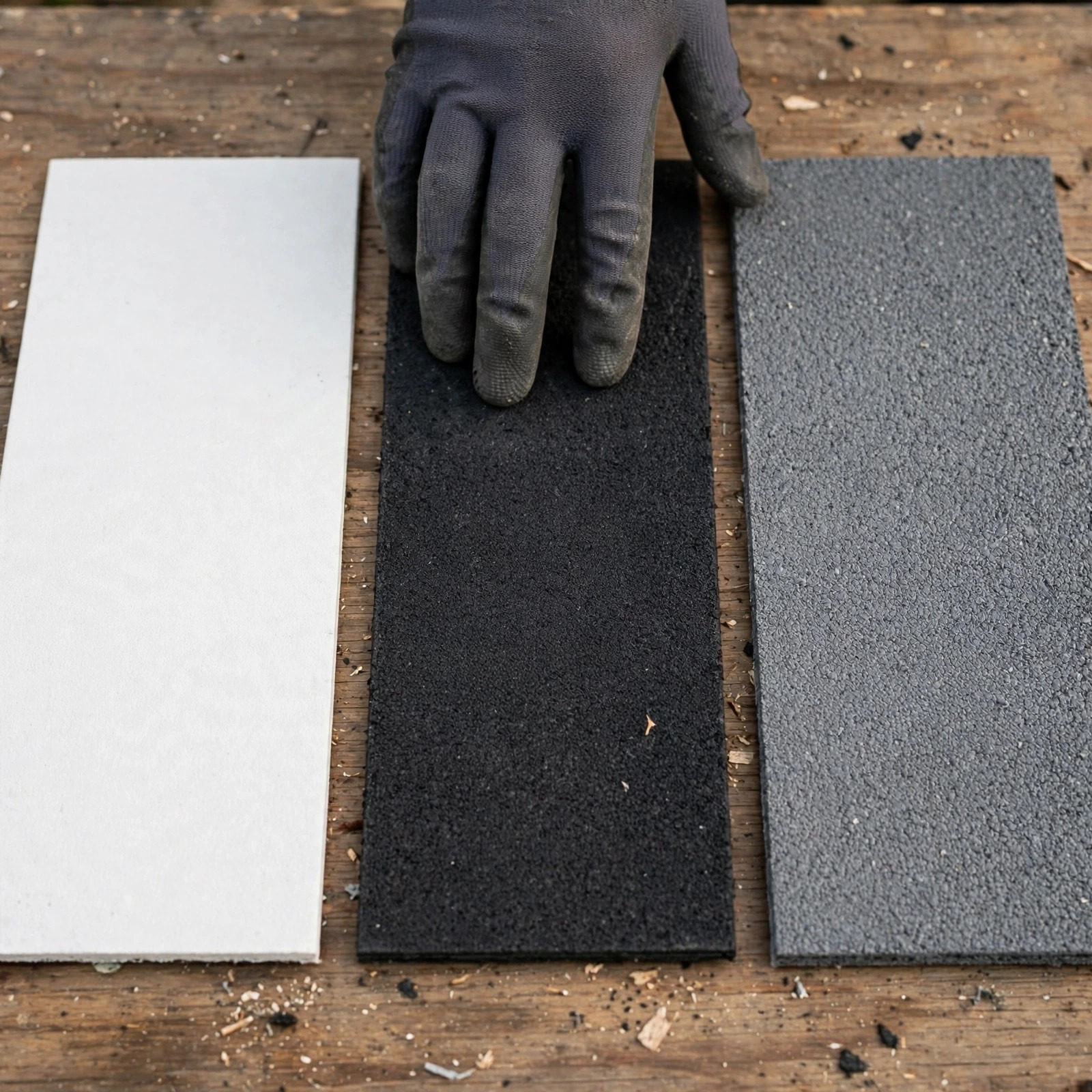
Thermoplastic Polyolefin. A white, heat-reflective sheet that bounces Texas sun off the building, cuts cooling load, and resists punctures from rooftop traffic. Its seams are heat-welded into one continuous skin. TPO is the most popular membrane on modern commercial flat roofs for good reason: balanced cost, energy performance, and durability.
EPDM: The Rubber Veteran
Ethylene Propylene Diene Monomer, a synthetic rubber membrane with decades of roofs behind it. EPDM flexes with building movement and temperature swings better than any rival, lasts, and when damage does happen, repairs are the simplest in the family. Its seams are taped and glued rather than welded, which puts a premium on careful seam work.
PVC: The Specialist
Polyvinyl Chloride. PVC welds its seams with hot air like TPO, then adds the family's strongest resistance to chemicals, grease, and fire. That is why restaurants, food facilities, and industrial buildings so often wear it: the membrane shrugs off what kitchen exhaust and plant processes rain down on a roof.
Seams Decide the Roof
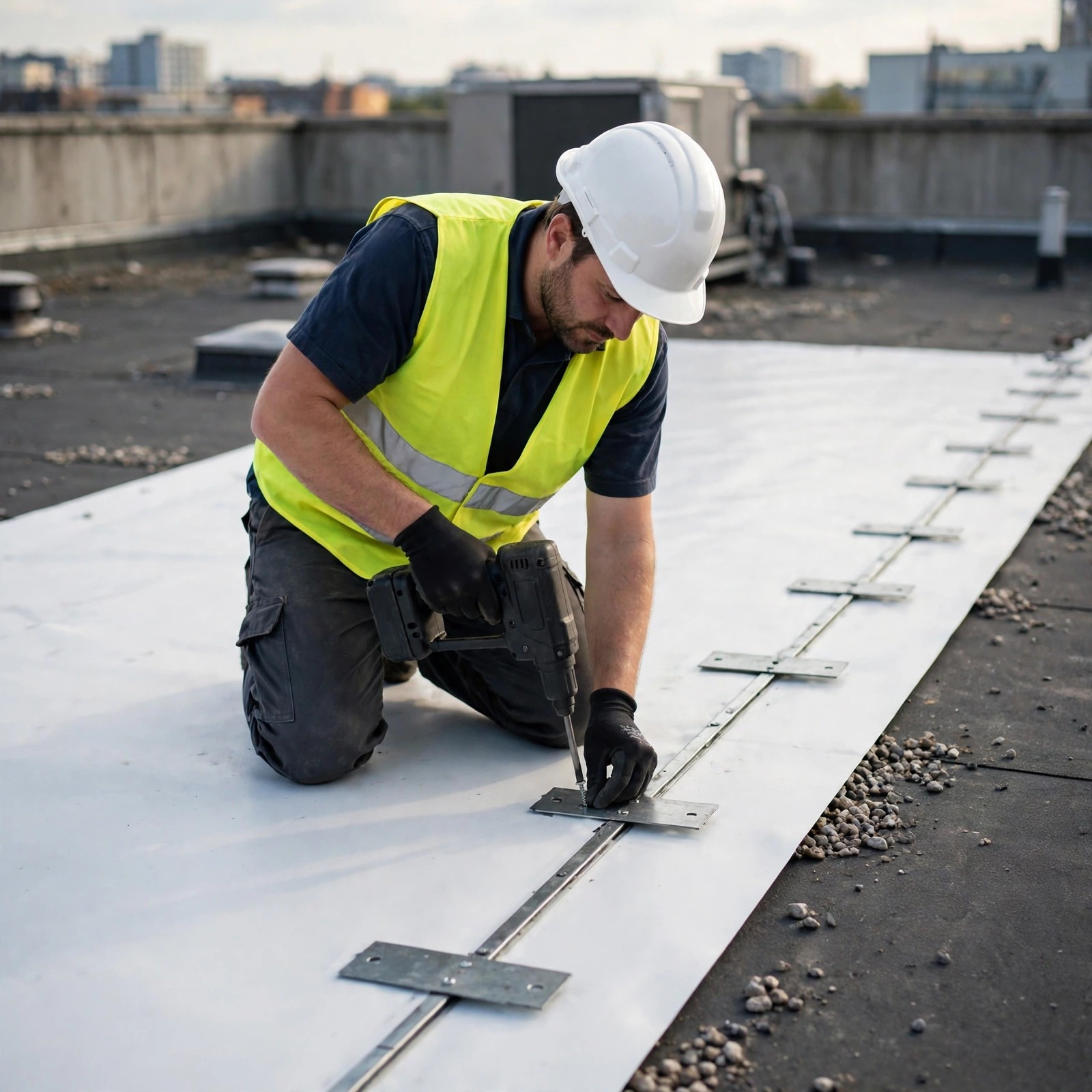
A membrane roof is only as good as its laps. Welded seams on TPO and PVC fuse the sheets into one piece of material. EPDM's taped seams depend on surface prep and pressure, and they earn extra inspection. Either way, every seam on a JBN install gets probed and checked before the crew leaves the roof.
How the Sheet Stays Down
Three attachment methods, chosen per building: mechanically fastened with plates and screws along the seams, fully adhered for a smooth, quiet finish, or ballasted under stone on the buildings that suit it. Wind exposure, deck type, and the owner's plans pick the method.
Repairs and Upkeep
All three membranes repair well in trained hands: patches weld onto TPO and PVC, and EPDM takes patches most simply of all. What they ask in return is a schedule: seams checked, flashings resealed, drains cleared, so the small work stays small for the life of the roof.
Match membrane to building
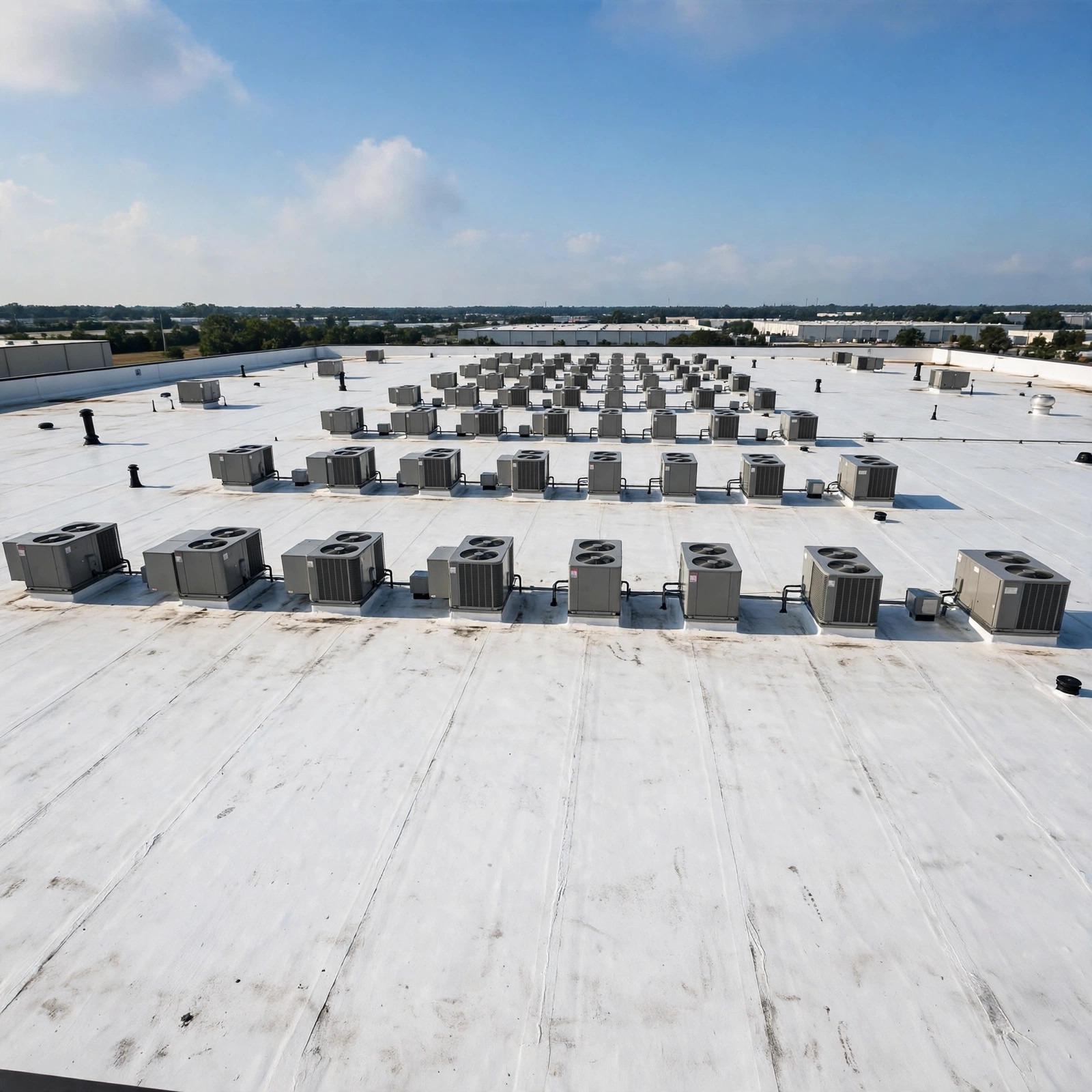
Which Membrane Fits Which Building
Patterns repeat across North Texas, and they are a good starting map before the inspection makes the final call.
Warehouses and distribution buildings usually land on TPO or EPDM: huge fields, modest rooftop abuse, and energy or longevity leading the decision. Retail and office buildings lean TPO for the reflective surface and clean look. Restaurants and food plants point hard at PVC, because grease decides the question before price gets a vote. Buildings planning rooftop solar pair well with welded-seam membranes and walkway protection at the service paths.
Every one of those patterns has exceptions, which is why the recommendation waits for the roof itself to be read.
- Warehouses: TPO or EPDM, by energy and budget
- Retail and offices: TPO's reflectivity leads
- Restaurants and industry: PVC, for grease and chemicals
- Solar planned: welded seams plus walkway pads
The company
JBN Roofing of Texas, a Division of The JBN Group, Inc.
The JBN Group, Inc. is a family-owned general contracting company based at 125 Old Alton Drive in Denton, Texas, founded in 1996. JBN Roofing of Texas is its roofing division, working from Suite 8 at the same address and serving commercial property owners across North Texas. The group carries an A+ rating with the Better Business Bureau, and the roofing division is fully insured. Office hours run Monday through Thursday 9:00 AM to 5:00 PM, Friday 9:00 AM to 4:00 PM, and Saturday 10:00 AM to 2:00 PM Central. Reach the roofing team at 469-340-0838 or sales@jbnroofingoftexas.com.
How the membrane gets chosen
Inspection First, Membrane Second
The right membrane is the output of an inspection, not the input to a sales call.
The crew reads the existing roof first: its system, its moisture condition, the deck, and how the building uses its rooftop. A kitchen exhaust fan, a chemical vent, a forest of service paths: each one votes. So do the owner's horizon and the insulation plan underneath the new sheet.
The recommendation then names the membrane, its thickness grade, and its attachment method, with one written price. When two membranes genuinely fit, both get priced and the tradeoffs are stated side by side, so the owner chooses with the whole picture rather than a preference dressed up as a fact.
- Existing roof, deck, and moisture documented first
- Rooftop exposures: grease, chemicals, traffic
- Membrane, thickness, and attachment named in the quote
- Close calls priced both ways, in writing
- Every seam probed before the job is called done
Read the Roof
The current system, deck, drainage, and moisture condition are documented with photos.
Name the Membrane
TPO, EPDM, or PVC is selected from the building's exposures, with thickness and attachment specified.
Price It in Writing
One written price covers the membrane, insulation work, flashings, and disposal: the whole job, up front.
Install and Probe
Sheets go down, seams are welded or taped, and every seam is probed before the roof is handed over.
The honest fine print
Not All Sheets With the Same Name Are Equal
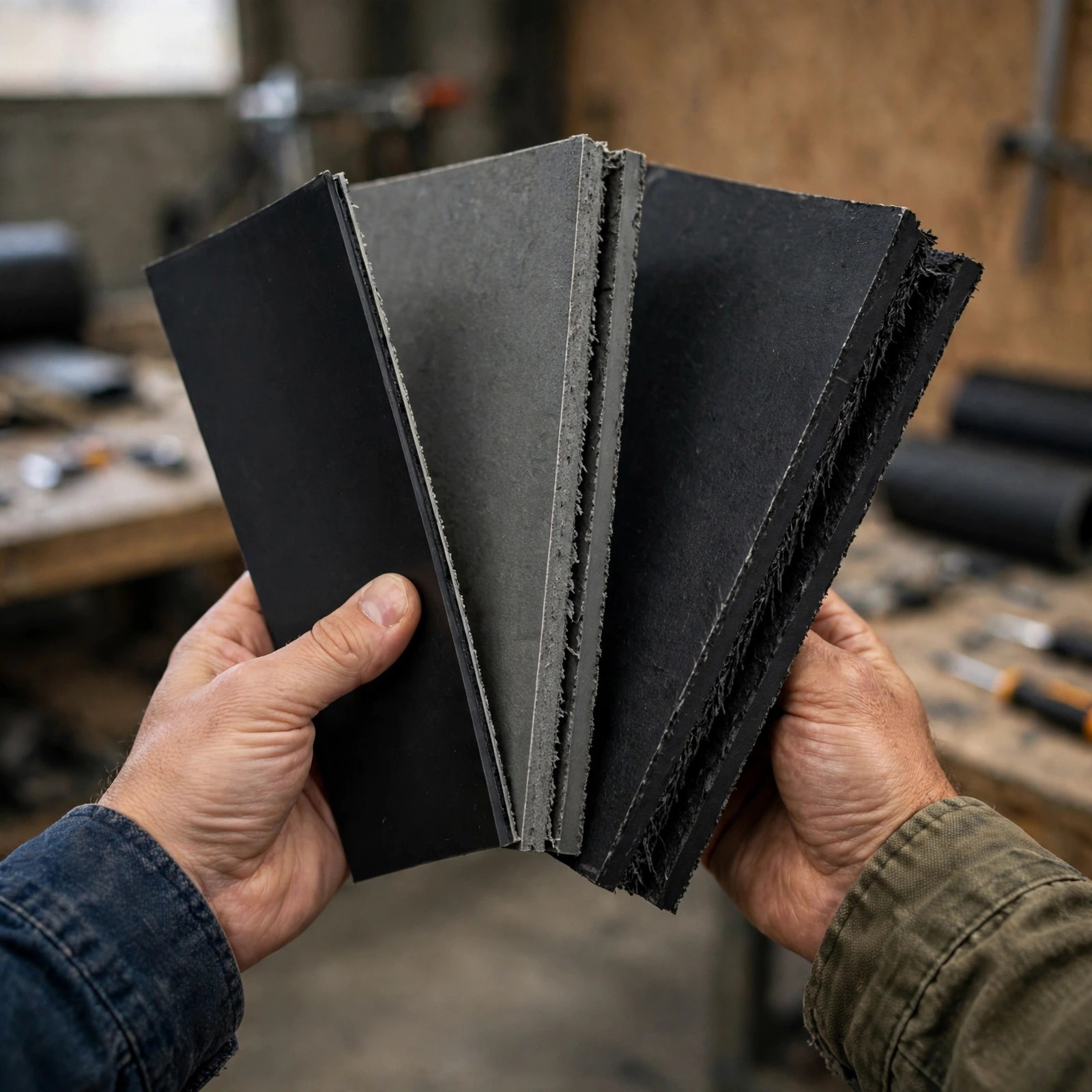
Membranes come in grades. A bargain sheet and a premium sheet share a name and very little else.
Thickness is the headline difference: a 45-mil sheet and an 80-mil sheet are both sold under the same membrane name, and the thicker sheet carries more wear layer against sun, traffic, and time. Reinforcement, formulation, and the manufacturer's track record matter just as much and show up in none of the brochure adjectives. This is why our quotes name the exact membrane and its thickness instead of hiding behind the family name: "TPO" alone is not a specification.
Ask any bidder, us included, which sheet, how thick, and why. The answers separate a roof from a purchase order. Call 469-340-0838 and ask us first.
Where we work
Single-Ply Installs Across North Texas
From our Denton office, JBN Roofing of Texas installs and replaces single-ply membrane roofs for commercial buildings across the northern Dallas-Fort Worth area. TPO over the warehouses, PVC over the restaurants, EPDM where flexibility rules: each building gets the membrane its own roof argues for.
Own or manage a property outside that area? Call 469-340-0838 and ask. If we cannot serve the building well, we will tell you plainly.
What a Membrane Quote Names
- The exact membrane: TPO, EPDM, or PVC
- Its thickness grade, in mils
- Attachment method for this building
- Insulation and cover board scope
- Flashing and edge metal work
- One written price for the whole job
Straight answers
Single-Ply Membranes FAQs
What is a single-ply membrane roof?
It is a commercial roof covered by one layer of a factory-made sheet. The three membranes are TPO, a white heat-reflective thermoplastic; EPDM, a black synthetic rubber; and PVC, a thermoplastic with high chemical and grease resistance. Sheets are mechanically fastened, fully adhered, or ballasted over insulation, and the seams where sheets join are heat-welded on TPO and PVC or taped and glued on EPDM.
Which is better, TPO or EPDM?
Neither, universally. TPO reflects heat, welds its seams, and resists punctures, which suits most modern flat roofs and energy-conscious owners. EPDM flexes better with building movement, has the longest track record of the family, and repairs most simply. The building's exposure, the owner's energy priorities, and budget decide it, and a good quote prices the fitting option, or both, in writing.
Why do restaurants usually get PVC?
Kitchen exhaust rains grease onto the roof, and grease degrades several membrane types. PVC resists chemicals, grease, and fire, and its hot-air welded seams hold up in that environment. For food service, food processing, and similar buildings, PVC is the standard recommendation, confirmed by an inspection of the actual roof.
How long does a single-ply roof last?
Installed well and maintained on a schedule, single-ply roofs commonly serve twenty to thirty years, with thickness grade, attachment method, and rooftop traffic all moving the number. Thicker membranes with more wear layer sit at the long end. Regular seam checks and prompt small repairs are what get a roof to its full term.
Does membrane thickness really matter?
Yes. Membranes are sold in grades, commonly from 45 to 80 mil, and thickness is wear layer: more material between the weather and the reinforcement. Two quotes can both say TPO and describe very different roofs. Our quotes name the exact membrane and its thickness, and owners should ask every bidder to do the same.
Can a single-ply roof be coated later instead of replaced?
Often, yes. A sound, dry single-ply roof is a prime coating candidate: silicone or acrylic restores a sealed, reflective surface and adds service years without a tear-off. If the membrane is failing broadly or the insulation under it is wet, coating only seals in the problems, and replacement is the honest recommendation. An inspection tells which case a roof is.
TPO · EPDM · PVC
One of These Three Sheets Belongs on Your Building
An inspection reads the roof, the recommendation names the membrane and its grade, and the price arrives in writing. That is the whole process, and it starts with a call.