
JBN Roofing of Texas · A Division of The JBN Group, Inc.
Built-Up Roofing (BUR)
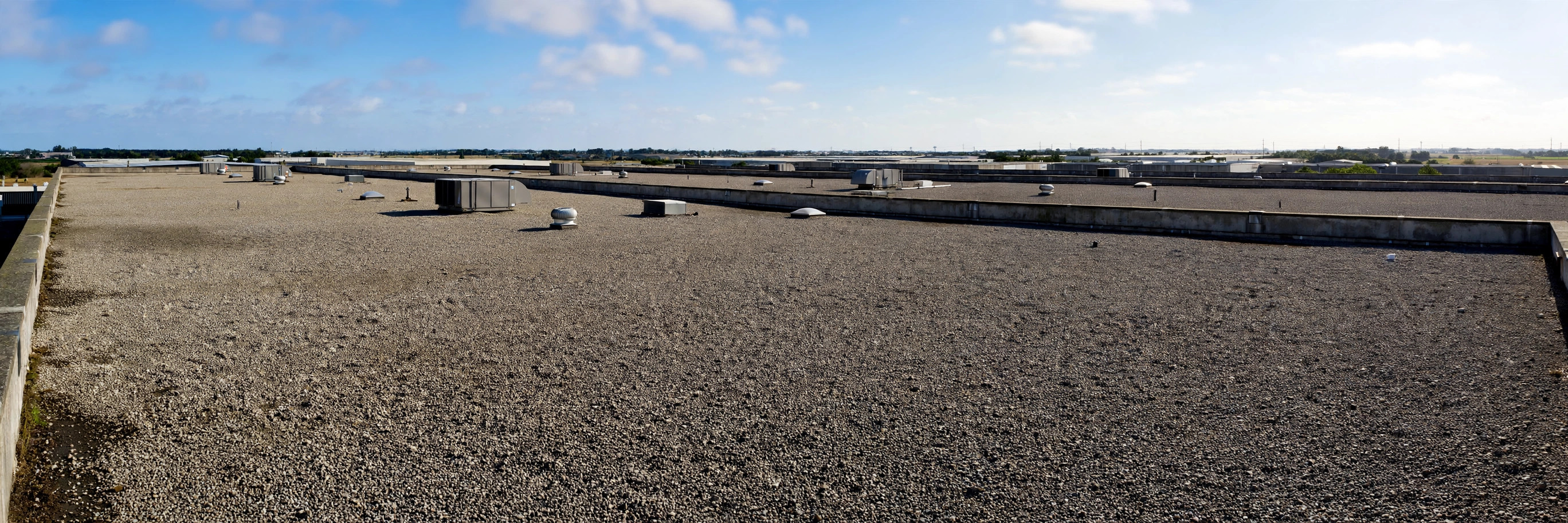
Built-Up Roofing (BUR) is the original tar and gravel roof for commercial buildings. The original tar and gravel roof: layer on layer of waterproofing, built up on the roof itself, the way it has been done for a century.
Built-Up Roofing (BUR) earns its name honestly: the roof is built up on site, in place, from alternating layers of reinforcing felts and hot asphalt, then finished with a cap sheet or a surfacing of gravel. Where a membrane roof trusts one sheet, Built-Up Roofing (BUR) trusts redundancy: three, four, or five plies, each one a full waterproofing layer, so a flaw in one ply still has the others standing behind it. That multi-ply toughness is why built-up roofs have protected warehouses, schools, and industrial buildings for generations, and why owners who think in decades still ask for them. JBN Roofing of Texas builds and restores built-up roofs across North Texas. To price one for your building, call the Denton team at 469-340-0838.
How a BUR is built
Built-Up Roofing (BUR) Stacks Its Strength in Layers
Every ply in a built-up roof does the whole job by itself. The roof works because the plies overlap, back each other up, and bury every seam under the next layer of hot asphalt.
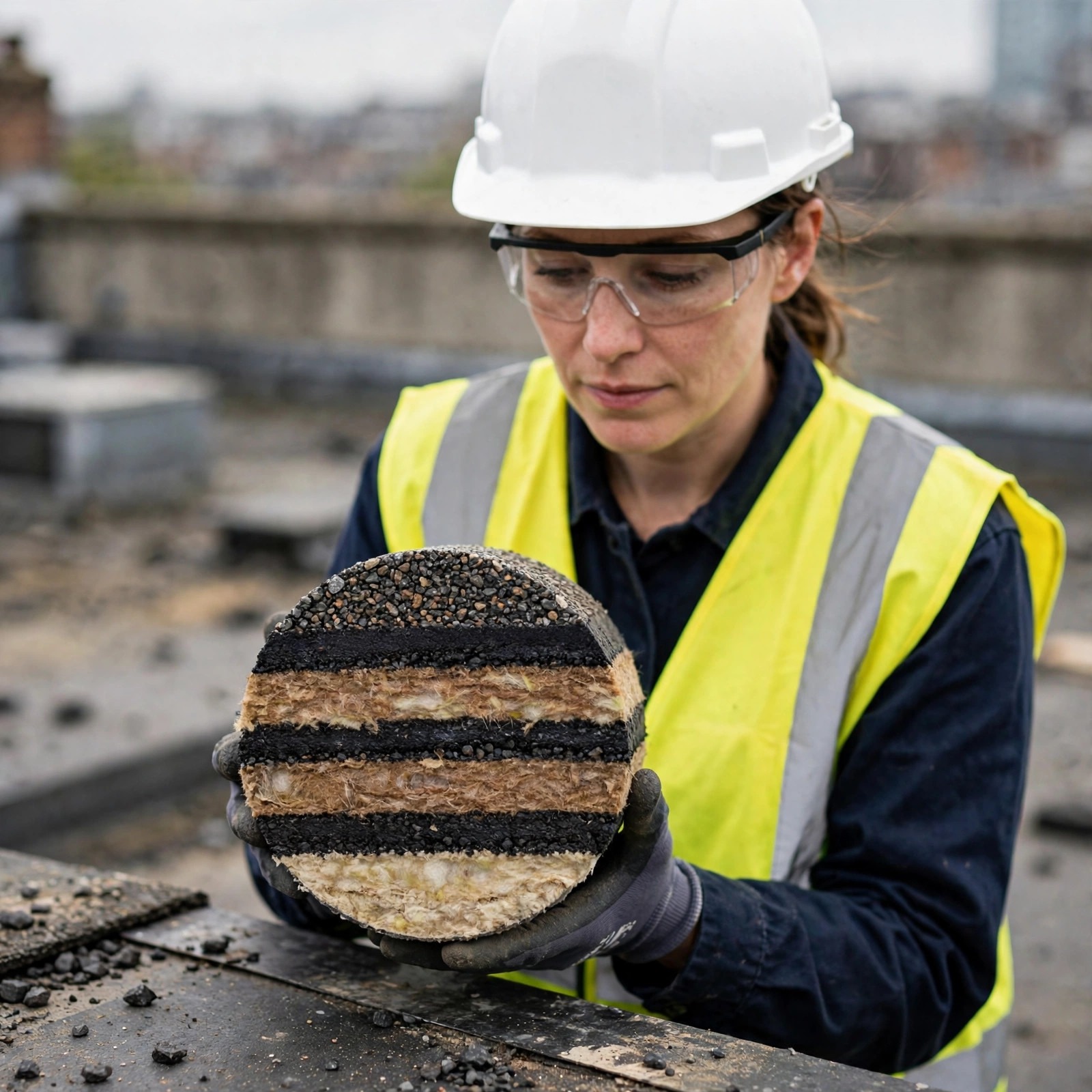
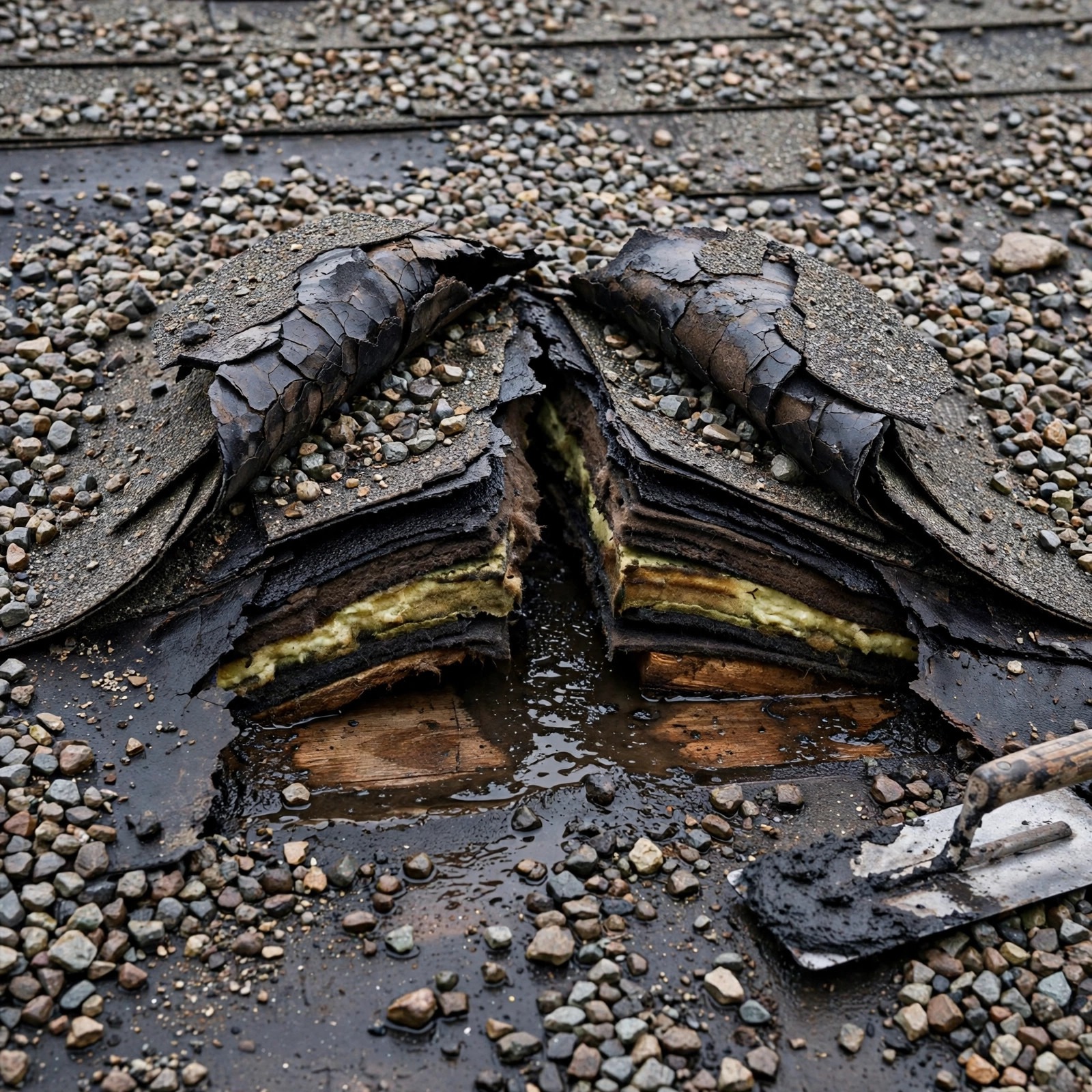
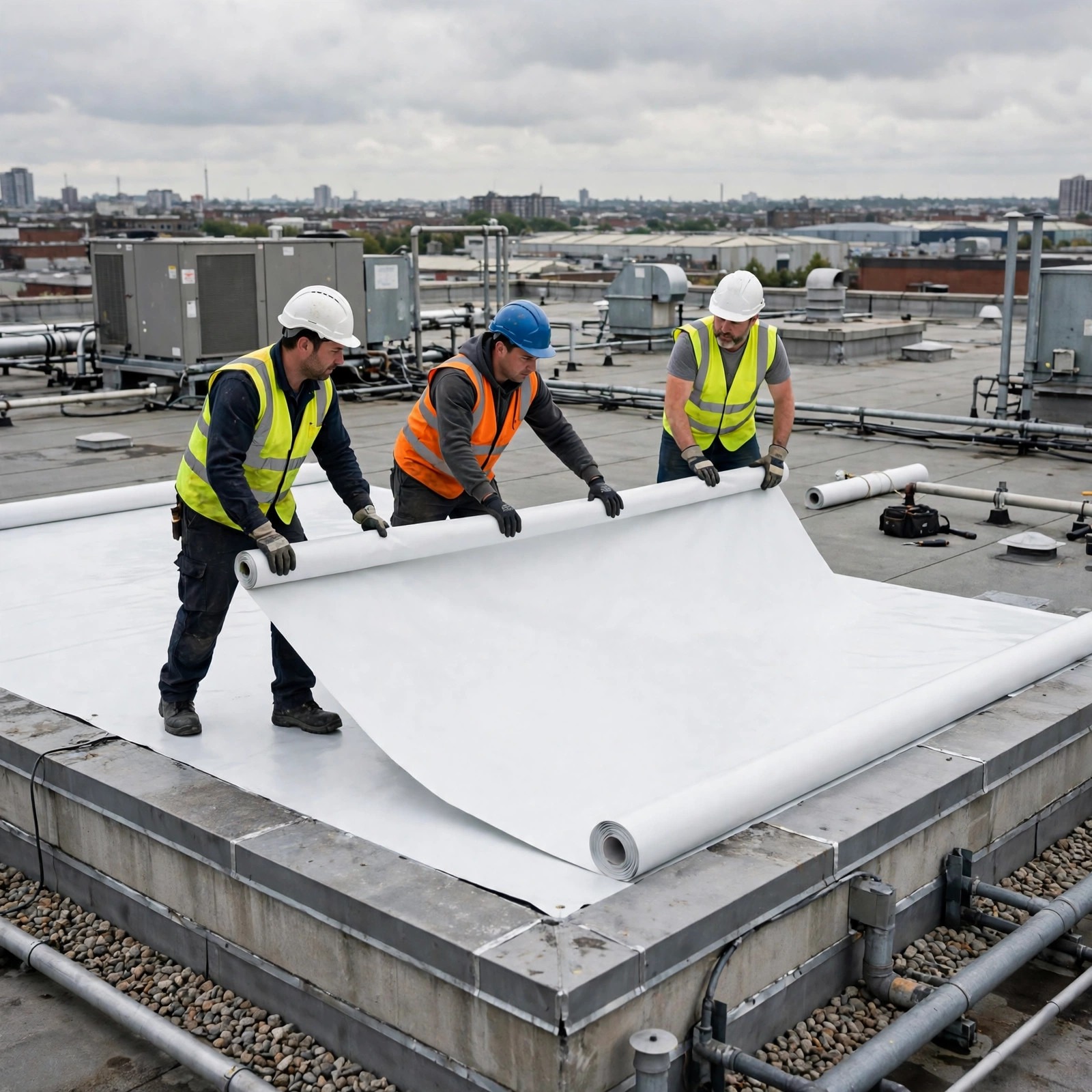
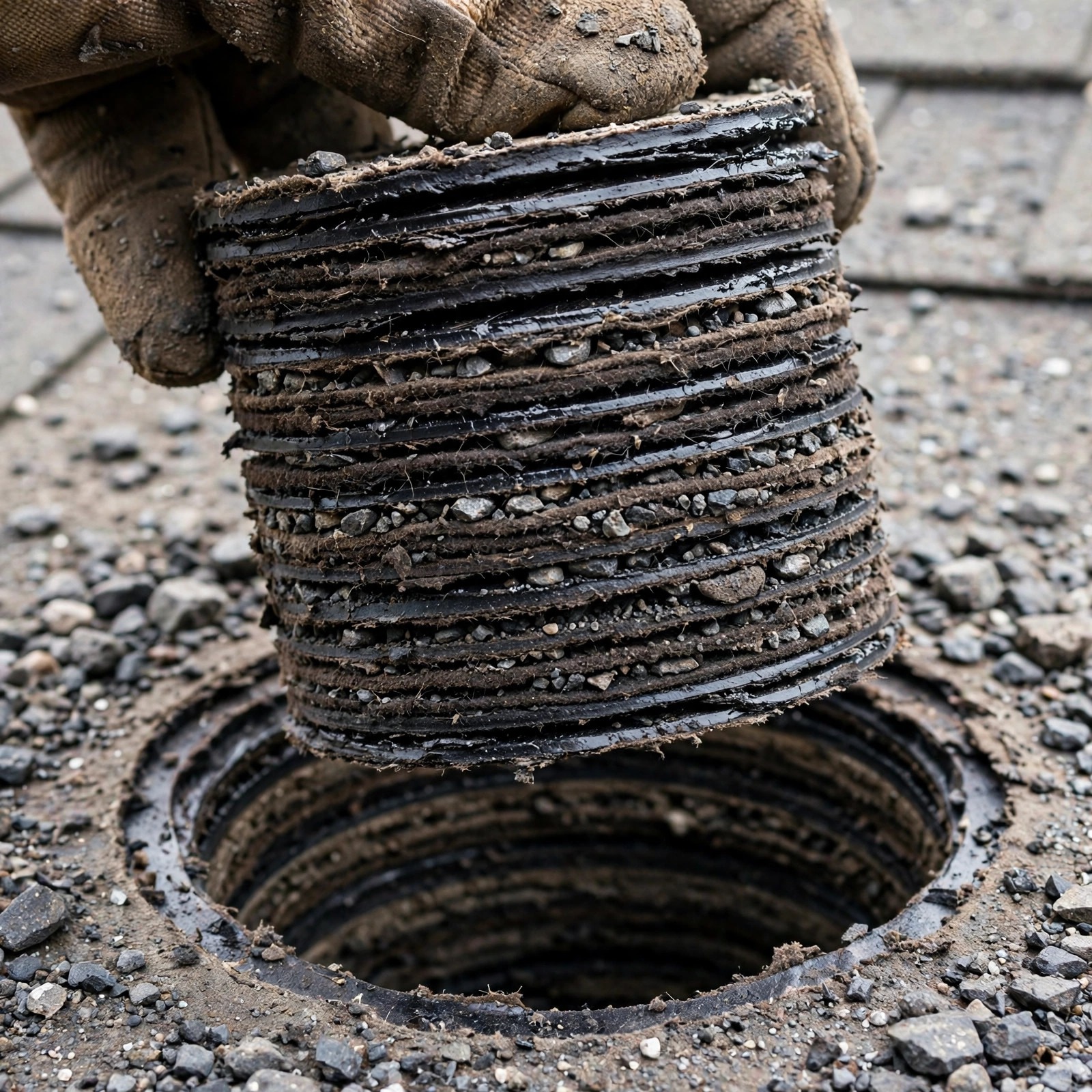
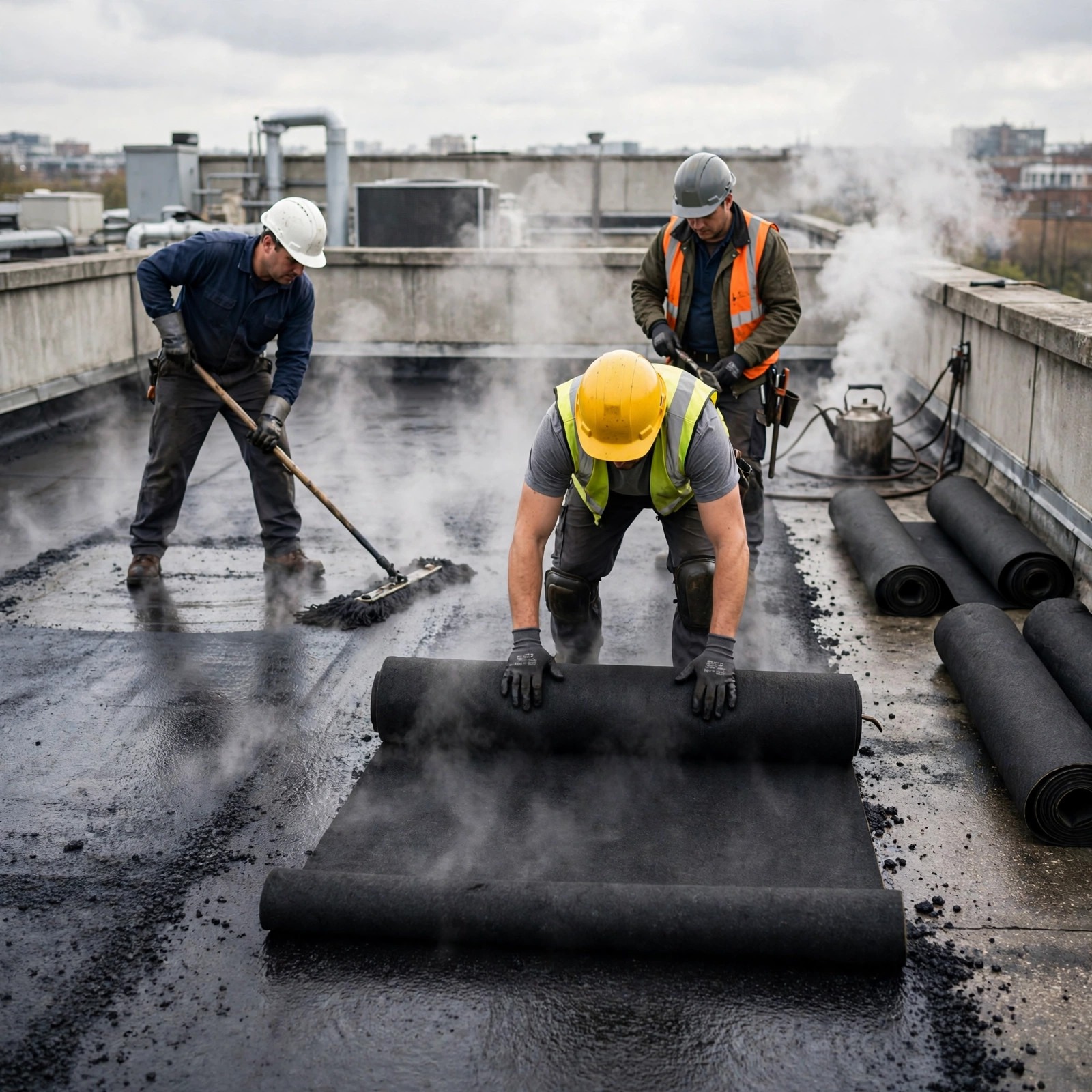
It starts with a base sheet fastened over the deck and insulation. Then the kettle work begins: hot asphalt is mopped down, a felt ply is rolled into it while it is still hot, and the sequence repeats, ply over ply, each layer offset so no two seams ever line up. The finished stack is a single laminated sheet of asphalt and fabric several plies thick, far heavier and harder to puncture than any single layer. A flood coat of asphalt and an embedment of gravel, or a mineral cap sheet, armors the top against sun, hail, and foot traffic.
The craft lives in the temperatures and the timing: asphalt too cool will not bond, felt rolled too slow wrinkles, and a built-up crew works as one organism around the kettle. When it is done right, a Built-Up Roofing (BUR) assembly shrugs off the abuse that concentrates where roofs fail.
Want the layered answer for your building? Call 469-340-0838 and ask for a built-up roofing consultation.
Roofing services
Services Around the Built-Up Roof
Built-up work connects to the rest of the commercial line: the full systems comparison, inspections that core-sample what is already down, the coatings that restore aging BUR, and the single-ply and replacement paths when a roof's run ends.
The build, ply by ply
What Goes Into a Built-Up Roofing (BUR) Assembly
Six decisions make the roof: the ply count, the felt, the asphalt, the surfacing, and how the whole stack meets the building. Here is each one in plain terms.
The Ply Count
Three, four, or five plies is the central choice. More plies mean more independent waterproofing layers, more puncture resistance, and more years, at more material and labor. Industrial roofs and heavy-traffic roofs earn the extra plies; a quiet warehouse roof may not need them. The quote names the count and the reasoning behind it.
The Reinforcing Felts
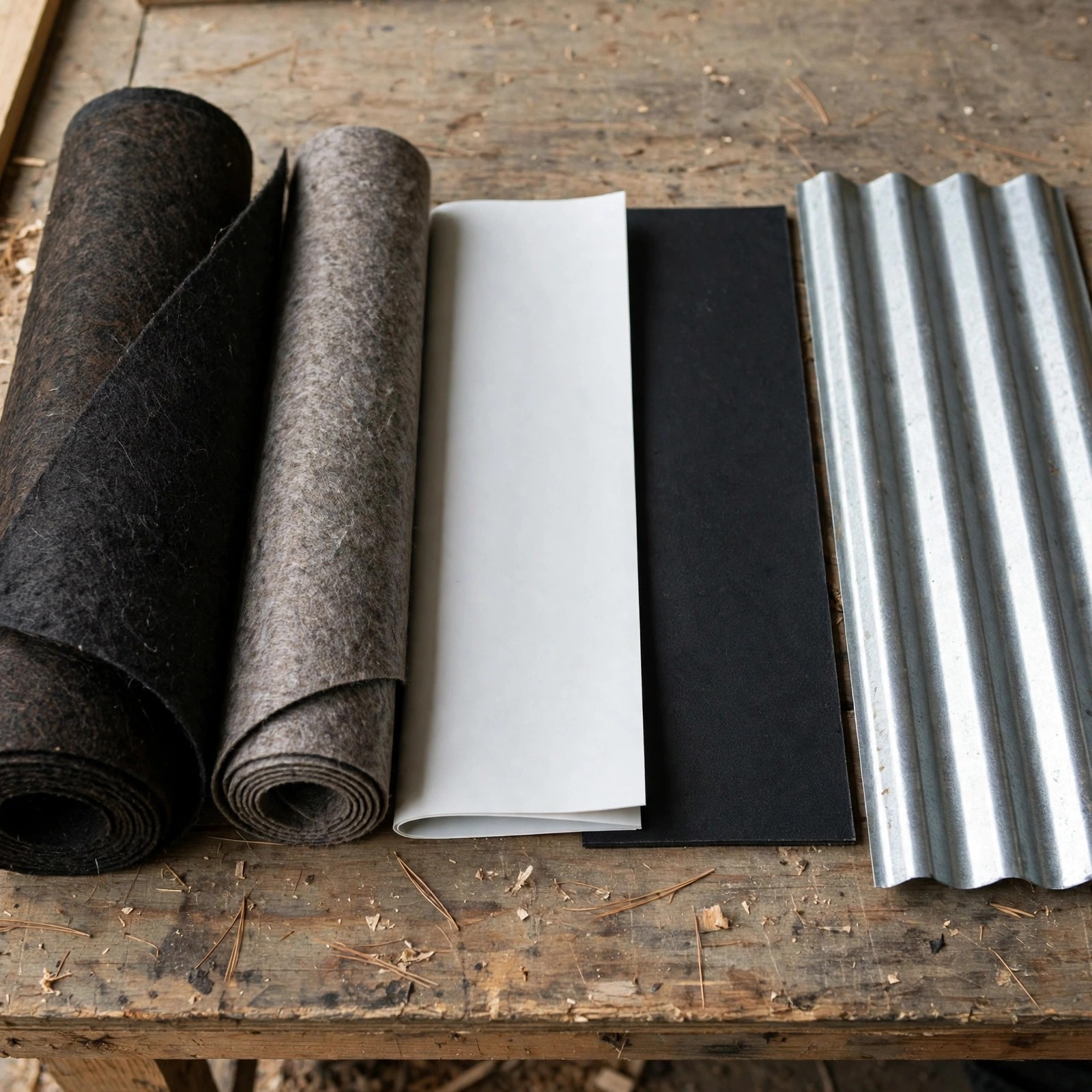
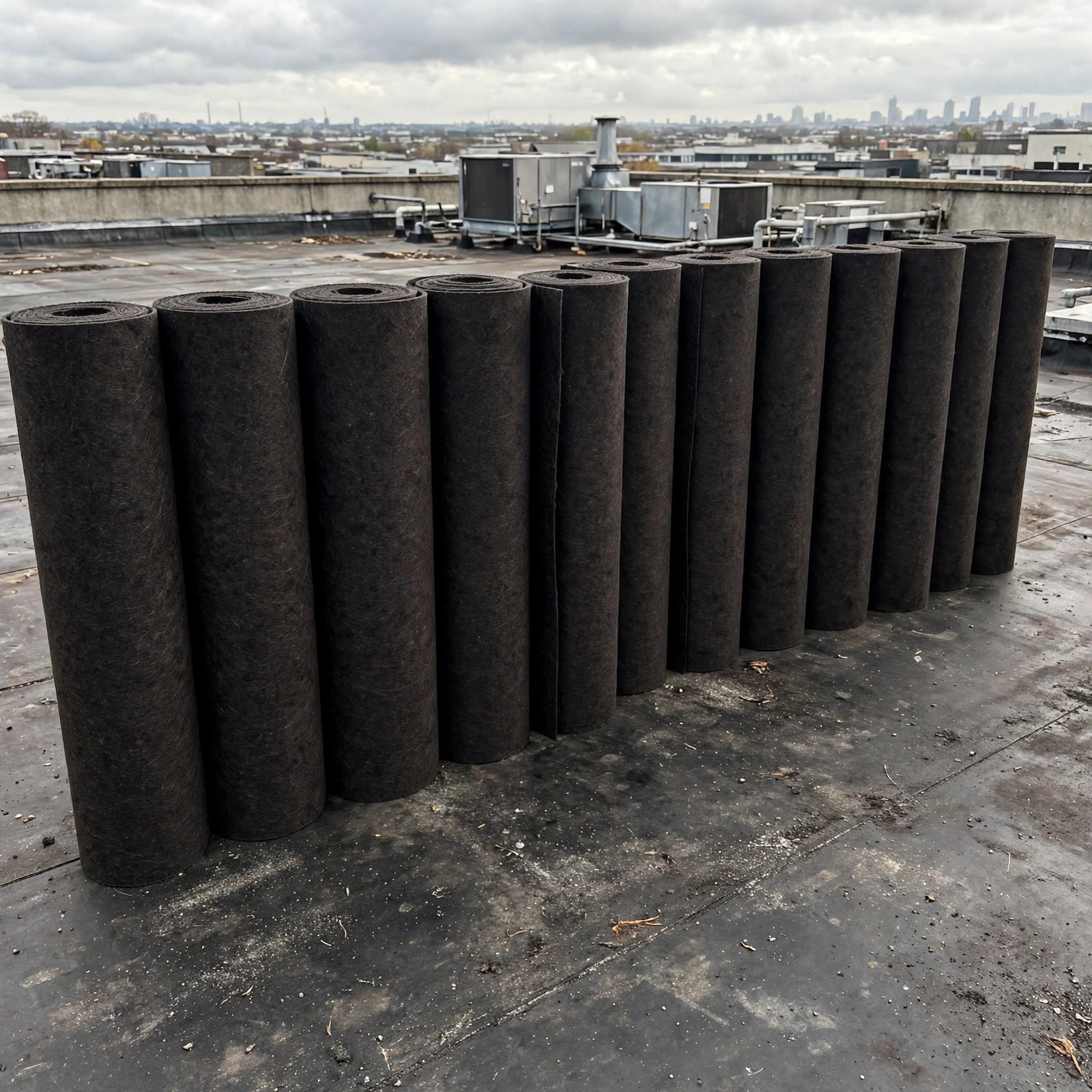
The felts are the roof's skeleton: fiberglass or polyester fabrics that give the asphalt its tear strength and dimensional stability. Modern fiberglass felts resist the rot that plagued the organic felts of the tar-paper era, which is one reason a modern Built-Up Roofing (BUR) assembly outlasts its ancestors.
The Hot Asphalt
Asphalt is both the glue and a waterproofing layer in its own right. It is heated in the kettle, mopped between every ply at the right temperature and the right rate, and it self-heals small wounds in a way sheet goods cannot. Asphalt grade is matched to the roof's slope so the layers stay where they were put in August heat.
Gravel or Cap Sheet
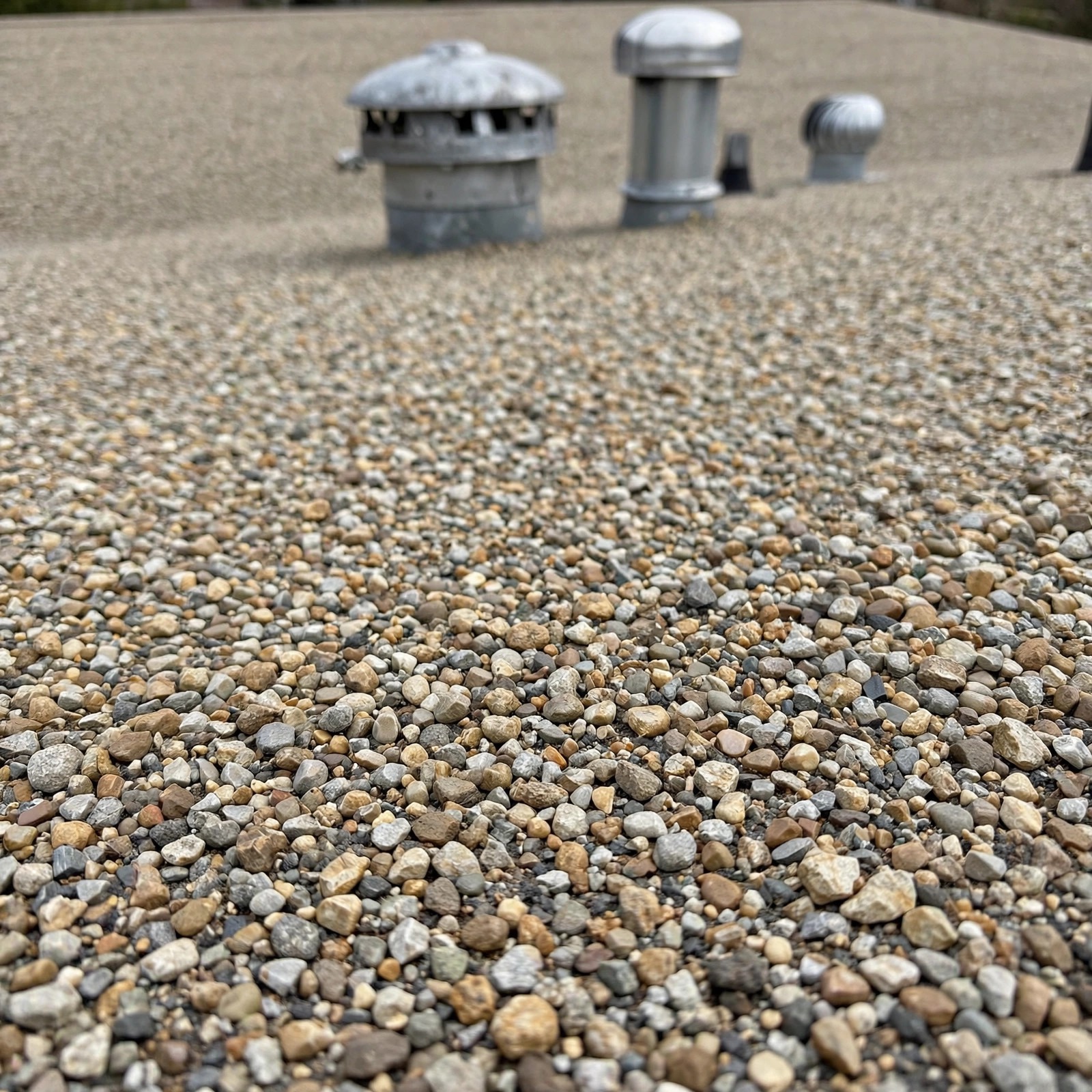
The finish is armor. Gravel embedded in a flood coat of asphalt shields the plies from ultraviolet light, hail, dropped tools, and foot traffic, and it is heavy, proven, and quiet. A mineral-surfaced cap sheet trades some of that armor for less weight and a cleaner finish. The building's structure and traffic pick the finish.
Flashings in Plies
Where the field of the roof meets curbs, pipes, and walls, the layering continues: flashing plies run up and over every transition so the details carry the same redundancy as the field. Most roof leaks in any system start at details; in a BUR they get the same multi-ply defense as everything else.
Repairs and Restoration
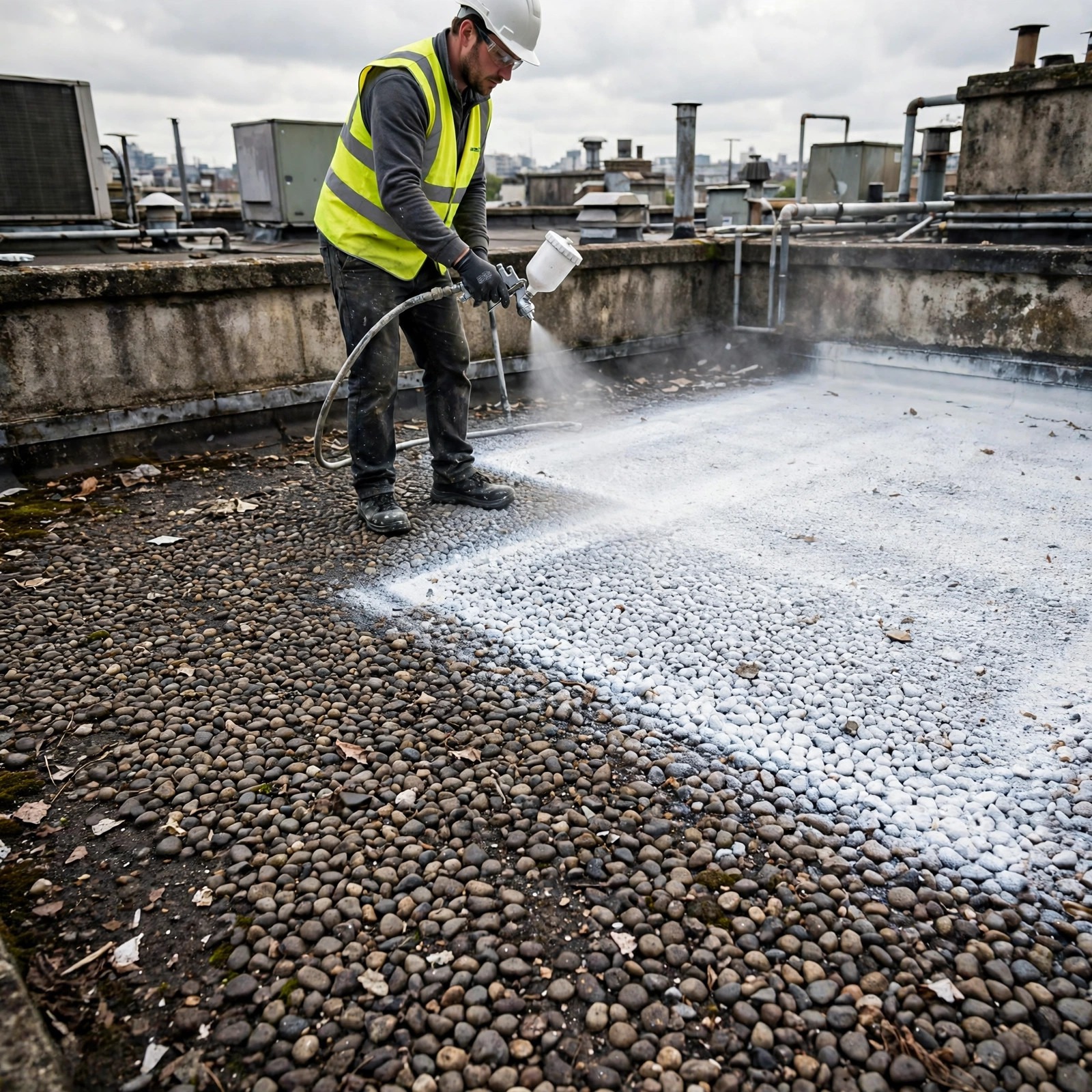
A built-up roof repairs in kind: damaged areas are cut out and rebuilt ply for ply, and blisters and splits are opened, dried, and re-layered. And because the stack is so sound, an aging Built-Up Roofing (BUR) surface is a prime candidate for a restorative coating that renews the top without disturbing the plies below.
Match BUR to building
Which Buildings Still Belong Under Built-Up Roofing (BUR)
The oldest system in the line still wins certain buildings outright, and the patterns repeat across North Texas.
Warehouses and industrial plants with heavy rooftop traffic, equipment service paths, and dropped-tool realities take gravel-surfaced BUR because the armor is the point. Schools and institutions with thirty-year horizons take it for the service life and the repair-in-kind upkeep. Buildings whose owners distrust single-layer anything take it for the redundancy itself. Membranes win other buildings on weight, speed, or reflectivity, and an honest quote says which case a building is.
The system debate ends where it should: on the roof, with the building's own facts.
- Heavy rooftop traffic: gravel BUR's armor leads
- Long institutional horizons: multi-ply service life
- Redundancy-first owners: layers over single sheets
- Weight or speed constraints: membranes get their hearing
The company
JBN Roofing of Texas, a Division of The JBN Group, Inc.
The JBN Group, Inc. is a family-owned general contracting company based at 125 Old Alton Drive in Denton, Texas, founded in 1996. JBN Roofing of Texas is its roofing division, working from Suite 8 at the same address and serving commercial property owners across North Texas. The group carries an A+ rating with the Better Business Bureau, and the roofing division is fully insured. Office hours run Monday through Thursday 9:00 AM to 5:00 PM, Friday 9:00 AM to 4:00 PM, and Saturday 10:00 AM to 2:00 PM Central. Reach the roofing team at 469-340-0838 or sales@jbnroofingoftexas.com.
How the build gets scoped
Inspection First, Kettle Second
A built-up roof is the heaviest decision in commercial roofing, literally. The structure gets a vote before the plies do.
The crew reads the building first: the deck and structure that will carry a multi-ply, gravel-surfaced assembly; the existing roof and whether any of it can stay; drainage, because a layered roof still has to shed water; and the traffic the finished roof will take. On an existing BUR, a core sample counts the plies already down and finds the moisture hiding between them.
The recommendation then names the ply count, the felt, and the surfacing, with one written price. When a membrane would serve the building better, that gets priced and stated too, because the right answer matters more than the traditional one.
- Structure and deck checked for the assembly's weight
- Existing plies core-sampled on re-roof projects
- Drainage read before ply count is proposed
- Ply count, felt, and surfacing named in the quote
- Membrane alternatives priced honestly when they fit
Read the Building
Structure, deck, drainage, and the existing roof are documented, with core samples where layers already exist.
Name the Assembly
Ply count, felt type, and surfacing are selected from the building's facts and traffic.
Price It in Writing
One written price covers tear-off, plies, surfacing, flashings, and disposal: the whole job, up front.
Build It Up
Plies are mopped and rolled layer over layer, seams offset, surfacing embedded, and details flashed in plies.
The honest fine print
What Built-Up Roofing (BUR) Asks of Its Owner
The system's virtues are real, and so are its costs. Both belong in the conversation before the kettle is lit.
A built-up roof is heavy: structure has to be confirmed, not assumed. It is built slowly, by a skilled crew working with hot material, and it costs accordingly. When it does leak, finding the entry point takes patience, because water can travel between plies before it shows inside. Against all that stands the record: roofs that take decades of weather, traffic, and neglect-in-the-small and keep the building dry, repaired in kind whenever they are wounded.
Ask any bidder, us included, for the ply count, the felt, and the surfacing in writing. Vague answers about layers are how thin roofs get sold as thick ones. Call 469-340-0838 and ask us first.
Where we work
Built-Up Roofing Across North Texas
From our Denton office, JBN Roofing of Texas builds and restores built-up roofs for commercial buildings across the northern Dallas-Fort Worth area. Gravel over the plants and warehouses, cap sheet where weight rules, plies wherever the building's horizon runs long: each property gets the assembly its own facts argue for.
Own or manage a property outside that area? Call 469-340-0838 and ask. If we cannot serve the building well, we will tell you plainly.
What a BUR Quote Names
- The ply count: three, four, or five
- The felt type in every ply
- Asphalt grade matched to slope
- Gravel surfacing or cap sheet finish
- Flashing and edge work in plies
- One written price for the whole job
Straight answers
Built-Up Roofing (BUR) FAQs
What is built-up roofing?
It is a roof built on site from alternating layers of reinforcing felt and hot asphalt, finished with gravel or a cap sheet. The traditional name is tar and gravel. Each felt-and-asphalt layer is a complete waterproofing ply, and a finished roof stacks three to five of them, which is why Built-Up Roofing (BUR) is called multi-ply: the waterproofing is redundant by design.
How long does a built-up roof last?
Well-built and maintained, built-up roofs commonly serve twenty to thirty years and beyond, with the gravel surfacing protecting the plies from sun and traffic the whole way. Ply count, asphalt quality, and drainage all move the number, and restorative coatings later in life can renew the surface and extend the run further.
Why choose BUR over a single-ply membrane?
Redundancy and armor. A membrane is one sheet thick; a built-up roof is several full layers thick, so punctures and flaws have to defeat multiple plies in the same spot to leak. Gravel surfacing also takes foot traffic, dropped tools, and hail better than exposed sheet. The tradeoffs are weight, build time, and cost, which is why the inspection weighs both for each building.
Can an old built-up roof be repaired or coated?
Yes to both, when the plies underneath are sound and dry. Repairs are made in kind, cutting out damage and rebuilding the plies. A coating can restore an aging surface and add years without a tear-off. If core samples find wet insulation or failed plies through the stack, coating would seal in the problem, and replacement becomes the honest recommendation.
Is a built-up roof too heavy for my building?
It is the heaviest system in the line, especially gravel-surfaced, so the structure is checked before anything is proposed. Many commercial buildings were designed with exactly this roof in mind. Where the structure says no, a cap-sheet finish or a membrane system carries the day, and the quote says so plainly.
What does the ply count in a quote mean?
It is the number of felt-and-asphalt layers in the finished roof, and it is the single clearest measure of what you are buying. Three plies is a real roof; five is a fortress. Our quotes name the count, the felt, and the surfacing, and owners should ask every bidder to do the same, because two quotes can both say built-up and describe very different roofs.
Ply Over Ply · Built to Last
The Roof That Backs Itself Up, Layer After Layer
An inspection reads the building, the recommendation names the ply count and surfacing, and the price arrives in writing. That is the whole process, and it starts with a call.