
Warehouses · Plants · Distribution · Denton, Texas
Industrial Roofing Services Denton TX
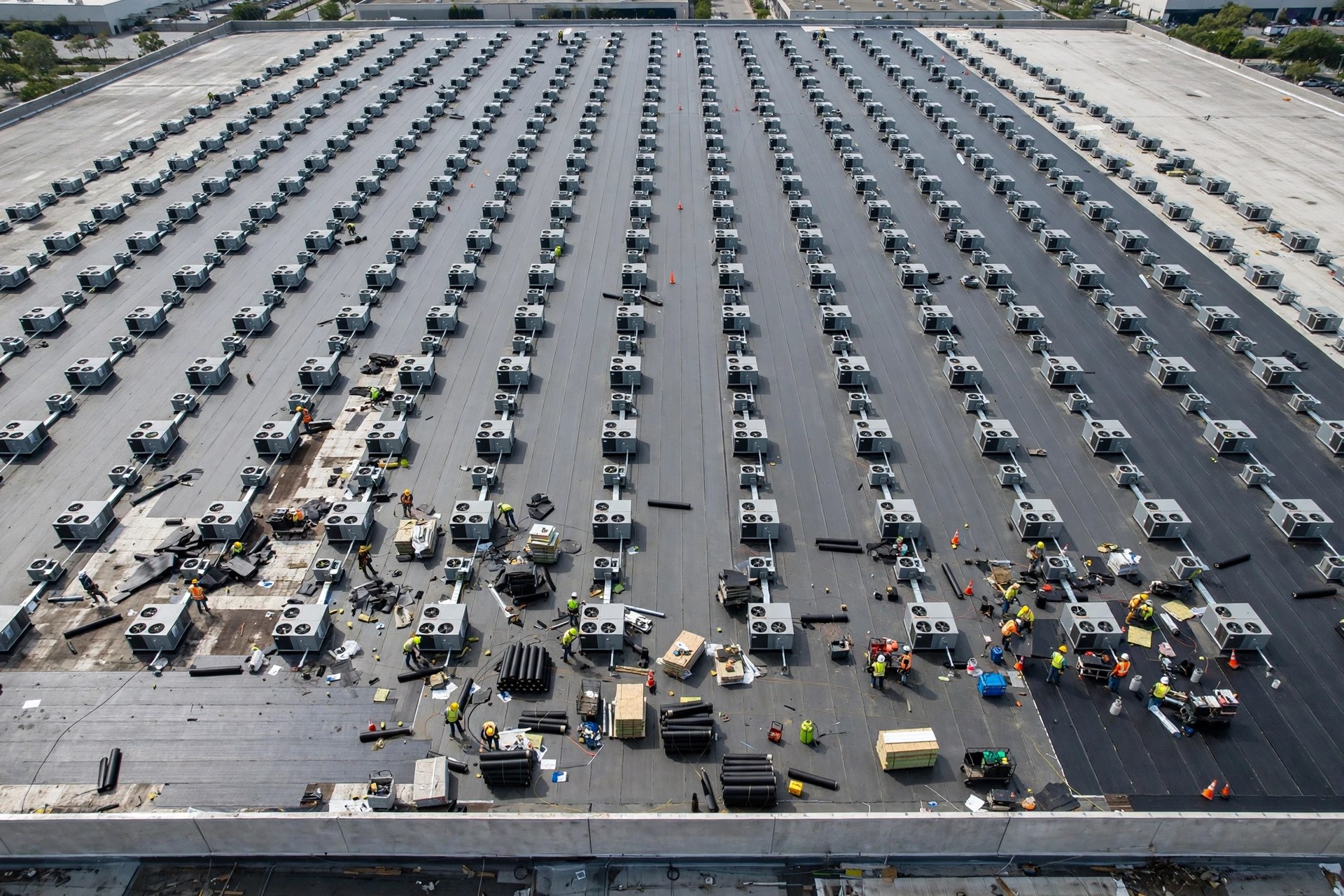
Industrial roofing is commercial roofing at operating scale: acres of flat and metal roof over warehouses, plants, and distribution buildings, where a leak is measured in damaged inventory and stopped lines, and the roof work has to be planned around the operation under it.
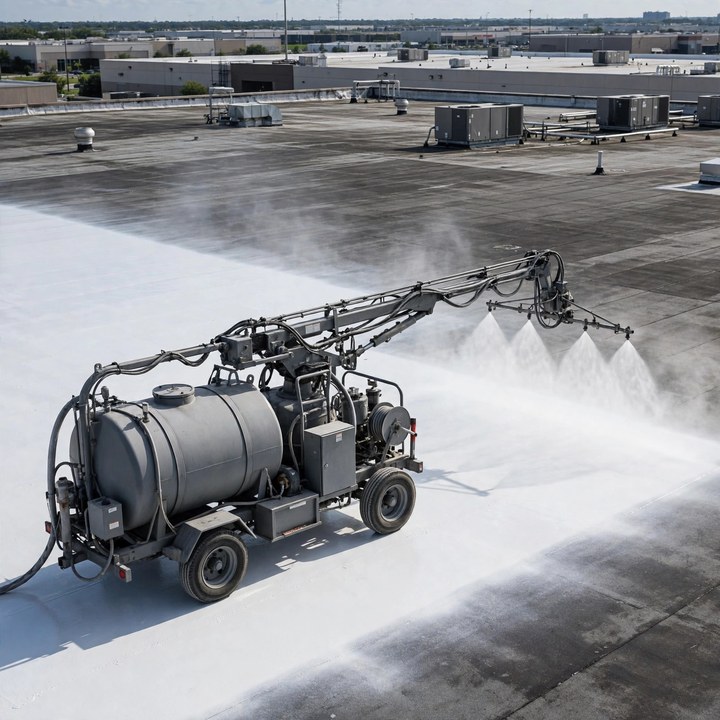
Industrial roofing services at JBN Roofing of Texas cover the full range for those buildings: inspection with cores, repair, coatings, single-ply and metal systems, and full replacement, each scoped in writing with the phasing, staging, and safety plan the facility requires before the first section opens.
Scale changes the work
Why Industrial Roofs Are Their Own Trade
An industrial roof is not a bigger version of a store roof. Hundreds of curbs, long drainage runs, steel or concrete decks, and rooftop equipment in rows change how every stage is planned.
Drainage alone makes the case: water on an industrial roof travels a long way to a drain, so slope, cricket work, and drain condition decide whether the new system sheds or ponds across whole sections. Add the logistics — staging material without blocking docks, sequencing tear-off so the building is never left exposed, coordinating with the facility's own safety rules — and the planning becomes as much of the product as the membrane. Industrial roofing priced without that planning is priced to improvise.
For an industrial inspection and a phased written scope, call 469-340-0838.
Industrial services
Industrial Roofing Services, Whole
Six services cover the life of an industrial roof, from the cores that describe it today to the replacement that renews it. Each is scoped and priced in writing.
Before the scope
Six Questions an Industrial Roof Has to Answer
The inspection answers these at facility scale, because each one changes what the written scope can honestly propose.
What Is Stacked on the Deck?
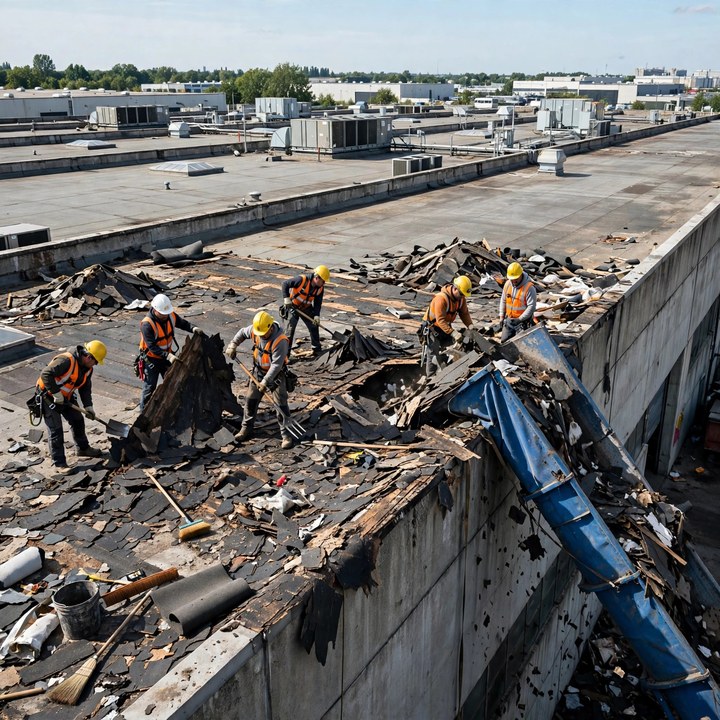
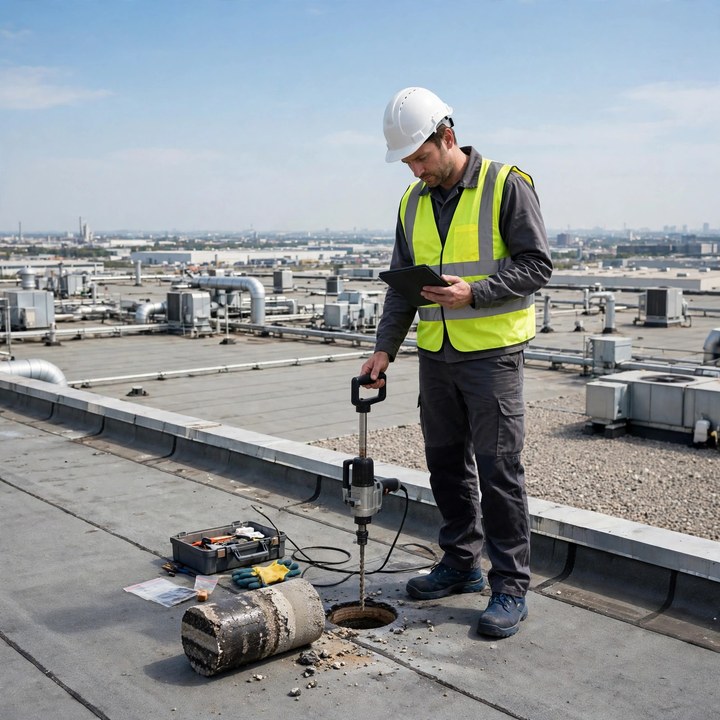
Cores across the roof count the existing layers and find the wet ones. On a roof this size, one corner's sample proves nothing about the far sections.
What Deck Is Under It?
Steel, concrete, and wood decks each take fastening and attachment differently, and each fails differently. The system is chosen for the deck that is actually there.
Where Does the Water Go?
Long runs to drains, sagging between them, and drain condition are mapped section by section. Drainage decides more industrial roof outcomes than any membrane choice.
What Runs Under the Roof?
Inventory, production, and people below shape the phasing, the tear-off sequence, and the protection plan. The scope is written around the operation, honestly and in advance.
Which System Fits the Building?
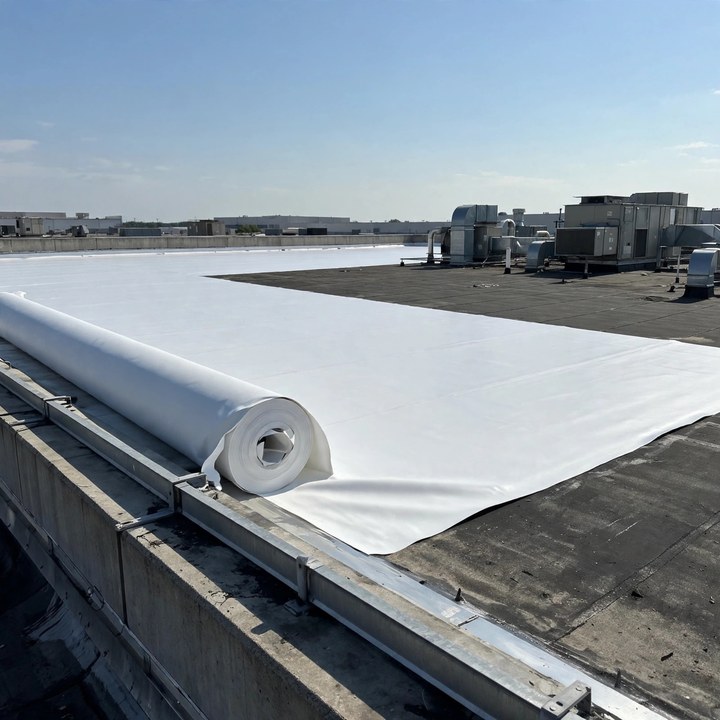
Single-ply, metal, coating, and foam each have industrial buildings they suit and buildings they do not. The cores, deck, and drainage make the call.
Repair, Restore, or Replace?
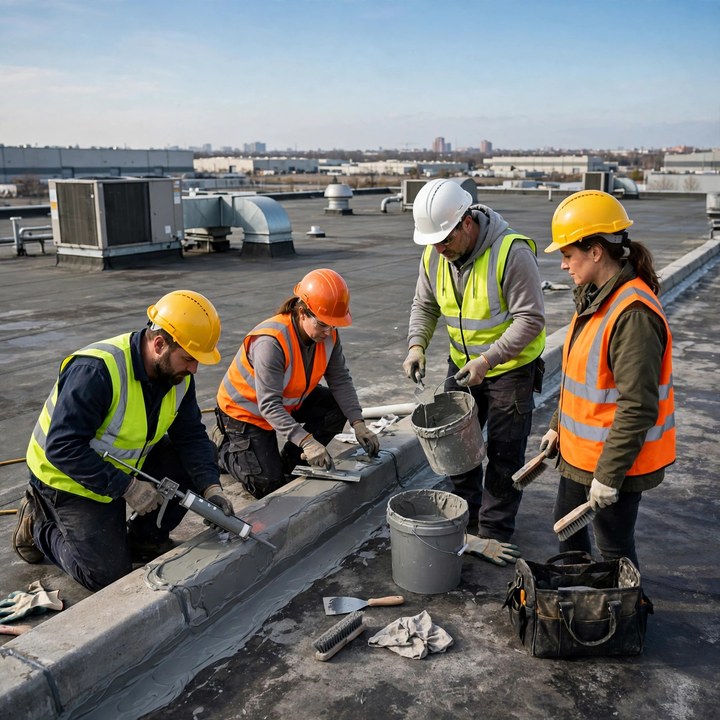
At this scale the three paths differ enormously in cost and disruption, so all three are priced from the same evidence where more than one is honest.
The result
Order, Across the Whole Field
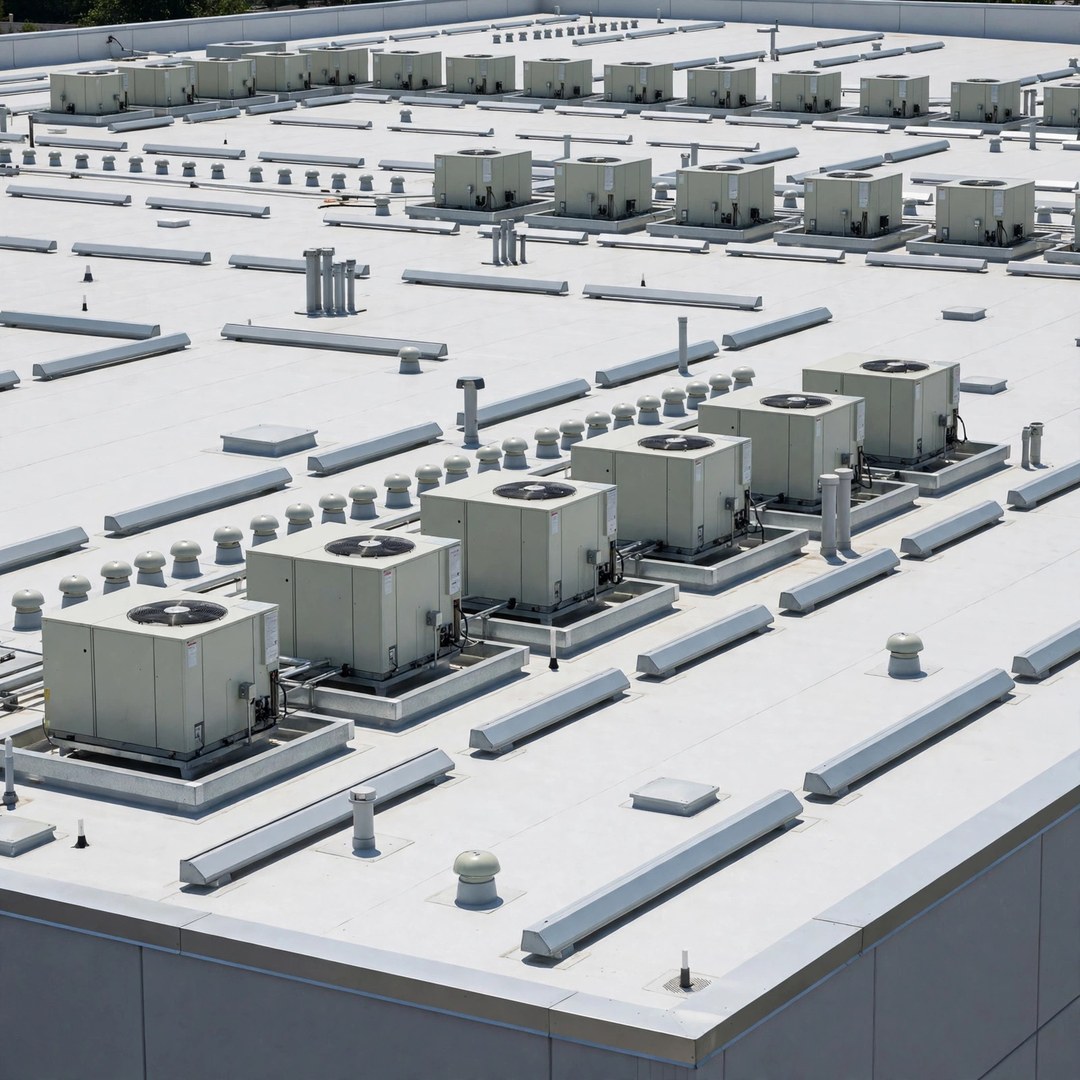
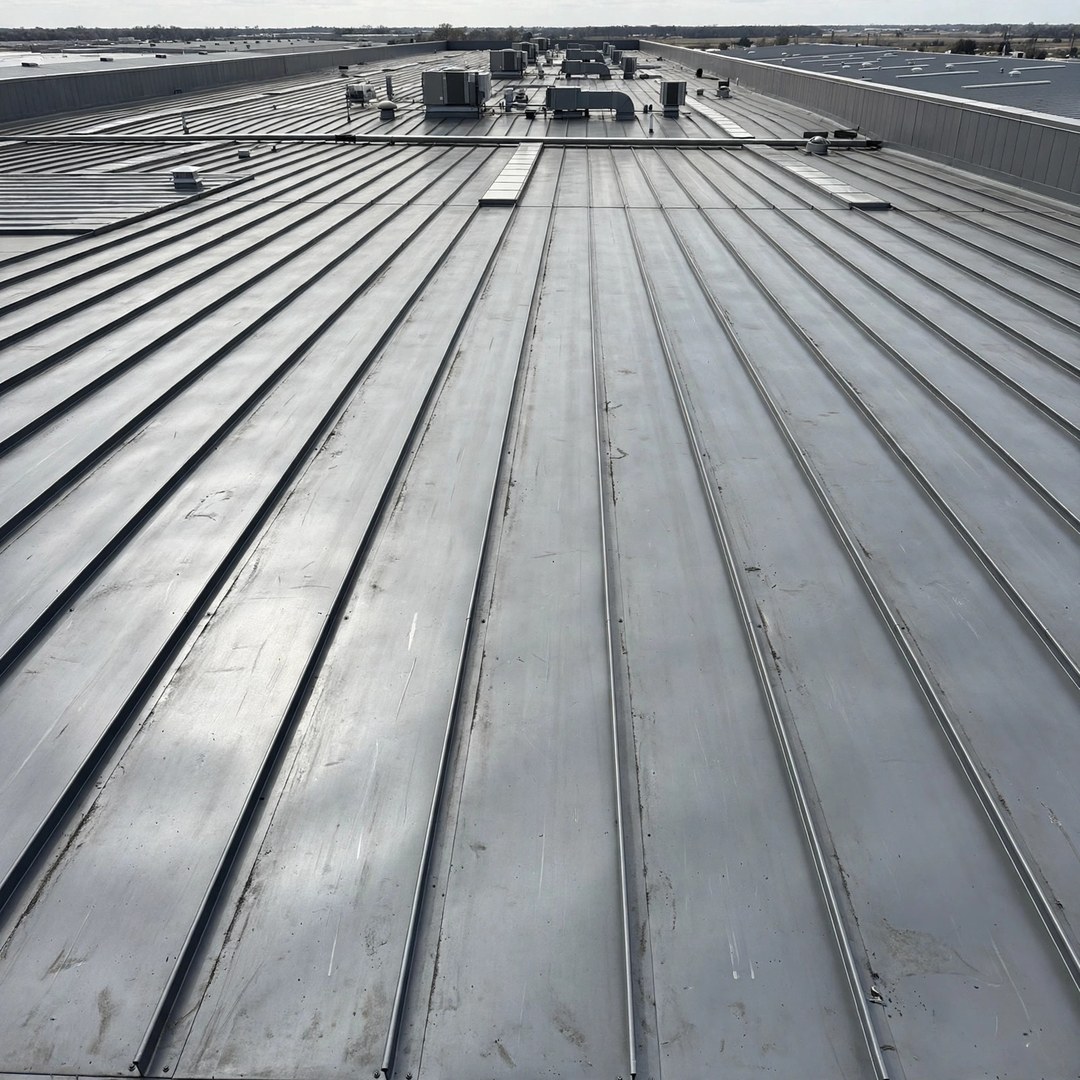
A finished industrial roof reads as order: rows of units on flashed curbs, seams running true, drains clear, and every section documented in the facility file.
That order is what the planning buys. Under it sits a roof whose layers are known, whose wet material is gone, and whose system was chosen for its deck and drainage, which is the difference between an industrial roof that serves for decades of inspections and one that becomes a recurring emergency.
Call 469-340-0838 to put yours on the inspection schedule.
The industrial roofing company
JBN Roofing of Texas
Industrial roofing services are performed by JBN Roofing of Texas, a division of The JBN Group, Inc., the family-owned Denton general contractor founded in 1996. Crews are based at Suite 8, 125 Old Alton Drive in Denton, and the parent company's general contracting background shows in how facility work is planned: phased, documented, and coordinated with the people running the building.
Reach the office at 469-340-0838 or sales@jbnroofingoftexas.com: Monday through Thursday 9:00 AM to 5:00 PM, Friday 9:00 AM to 4:00 PM, and Saturday 10:00 AM to 2:00 PM Central, closed Sunday.
Long panels, real movement
Metal at Industrial Scale
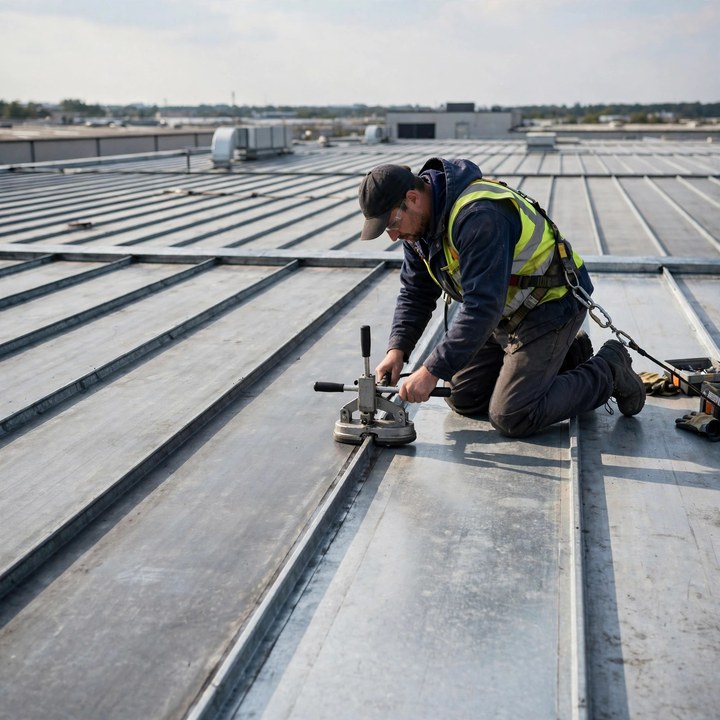
Industrial metal roofs run panels longer than a house is wide, and metal that long moves with temperature. The details have to let it.
Floating clips, slotted connections, and expansion joints are planned into industrial metal work from the start, and panel runs are seamed on site to the building's actual length. It is the same standing seam craft as a residence, engineered for distances and movement a residence never sees, over buildings that cannot afford a seam failure anywhere along the run.
- Panels formed and seamed on site
- Floating clips for thermal movement
- Expansion joints at long transitions
- Curbs flashed for equipment rows
- Seams checked along the full run
Inspect and Core
The whole roof is walked and cored by section; drainage and decks are mapped before any system is chosen.
Plan the Phases
Sections, staging, tear-off sequence, and the facility's safety requirements are written into the scope.
Install by Section
Each section is completed and dried in before the next opens, with seams tested and details photographed.
Walk and Document
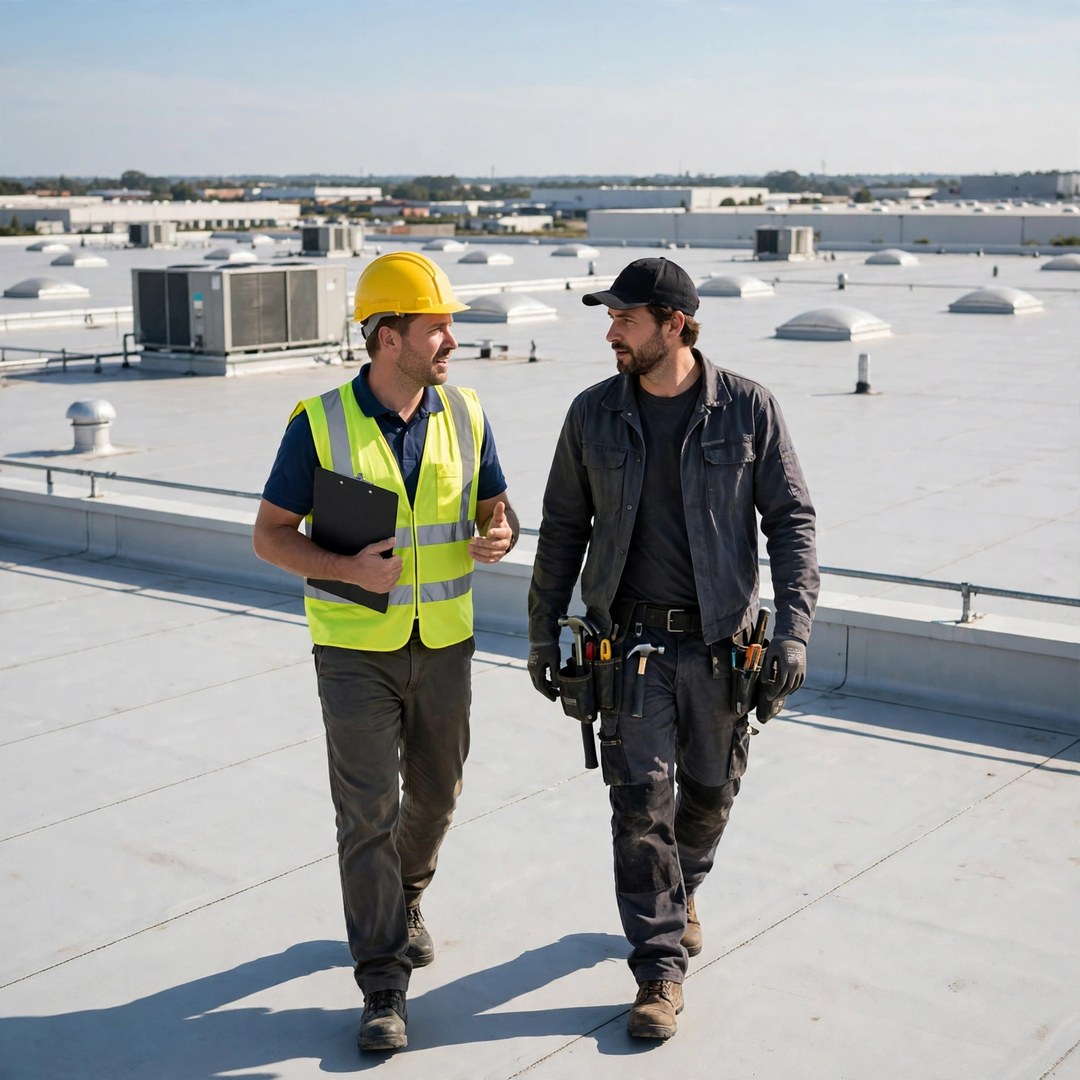
The finished roof is walked with the facility manager, and the full record goes into the building's file.
Walked at handover
The Facility File Gets the Whole Story
At completion, the facility manager walks the roof while the section photographs are reviewed: cores, tear-off findings, seams, details, and the finished field.
For industrial buildings that file matters beyond the project. It is what the next roof decision, the next buyer, and the next insurer will ask for, and it is assembled as the work happens rather than reconstructed afterward.
Call 469-340-0838 to start with the inspection.
Service area
Industrial Roofing Across North Texas
Industrial crews work from 125 Old Alton Drive in Denton throughout Corinth, Argyle, Flower Mound, Highland Village, Lewisville, Carrollton, Frisco, Allen, Lantana, Sanger, Bedford, and Bartonville. Facility roofs in that circle get the same roof-wide inspection and written phasing, whatever their size.
For facilities beyond that circle, call 469-340-0838 and ask. If we cannot serve your building well, we will say so plainly.
Industrial Roofing Work We Take On
- Warehouse and distribution roof replacement
- Plant and manufacturing roof systems
- Single-ply, metal, coating, and foam systems
- Industrial leak repair and documentation
- Phased projects over operating facilities
- Roof-wide inspections with core programs
Straight answers
Industrial Roofing FAQs
Can roof work run while our facility operates?
Industrial projects are planned in phases around the operation: sections are scheduled, staging is placed where it does not block the facility's work, and tear-off is sequenced so the building is dried in at the end of every stage. The phasing is agreed with the facility in writing before work starts. What we will not do is promise that a major roof project is invisible to operations — the honest plan is the one written down together.
Which system suits an industrial building?
It depends on the deck, the drainage, the existing layers, and what runs under the roof. Single-ply covers large fields efficiently, metal suits buildings that can take its detailing and movement, coatings restore sound roofs, and foam builds slope and insulation in one system. The inspection with cores is what turns that menu into a recommendation for your building.
How are leaks handled on a roof this size?
By tracing, not guessing. On an industrial roof the stain inside can sit a long way from the entry point, because water travels along decks and laps. The repair scope documents the traced path, photographs the entry point, and repairs the source — seams, curbs, drains, or penetrations — at a written price.
Do you take core samples on industrial roofs?
Yes, across sections rather than in one spot. A roof measured in acres can carry different layers and different moisture in different areas, and the cores are how the scope avoids discovering that mid-project. Cuts are patched the same visit, and the samples are photographed into the facility file.
Can an industrial roof be restored instead of replaced?
Where the existing roof is dry and sound, yes — coating restoration and foam systems exist for exactly that case, at industrial scale. Where cores find saturation or the deck is compromised, restoration would seal in the failure, and the honest scope is replacement, phased to the facility. The evidence decides, and it is shown to you.
What does the facility receive at the end?
A walked handover and the project file: inspection and core photographs, tear-off findings by section, seam and detail photographs during installation, and the finished roof documented section by section. For a facility, that record supports budgeting, future roof decisions, and any insurer or buyer questions down the road.
Free inspection · Written price
Industrial Roofing, Planned Like Industrial Work
Cores across the roof, drainage mapped, phases written around your operation, and one fixed price for the system your building actually needs. It starts with the roof-wide inspection, from the Denton company doing this work since 1996.