
JBN Roofing of Texas · A Division of The JBN Group, Inc.
Hail Damage Restoration
Hail leaves receipts. We read every one.
Hail damage restoration starts with proof: strikes tested by hand and by mat, every confirmed hit mapped and photographed across the whole roof, and the scope, repair or replacement, drawn from what the testing shows rather than what the storm looked like from the ground. Start with the call: call 469-340-0838.
After the hail stops
Hail Damage Restoration Starts with Proof, Not Impressions
Hail is the most argued-about damage in roofing. A storm can pepper a roof and hurt nothing that matters, or crack mats invisibly under a surface that looks untouched. Guessing either way wastes money.
So strikes get tested: sample squares marked and counted, mats checked for the fractures that shorten a roof's life, soft metals read as supporting evidence, never as the verdict by themselves.
Confirmed damage is mapped strike by strike, so the restoration scope covers what the hail actually broke, field by field, and nothing it did not.
Hail hit your building? Call 469-340-0838 and get the strikes tested.
Roofing services
Where Hail Damage Restoration Leads.
These pages cover the work a hail scope turns into.

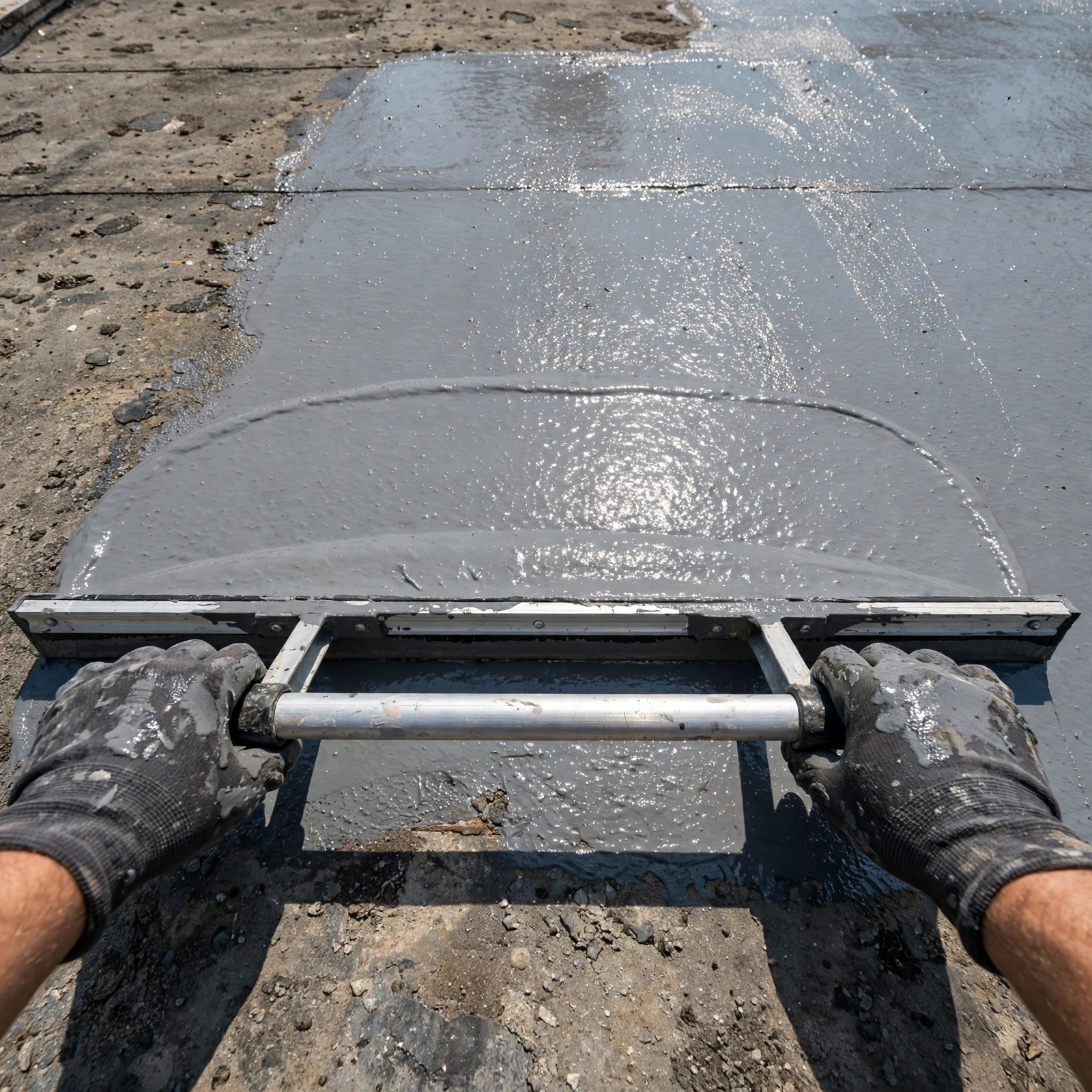

How hail work runs
The Six Steps of Hail Damage Restoration
Hail work runs in this order, testing before any talk of scope.
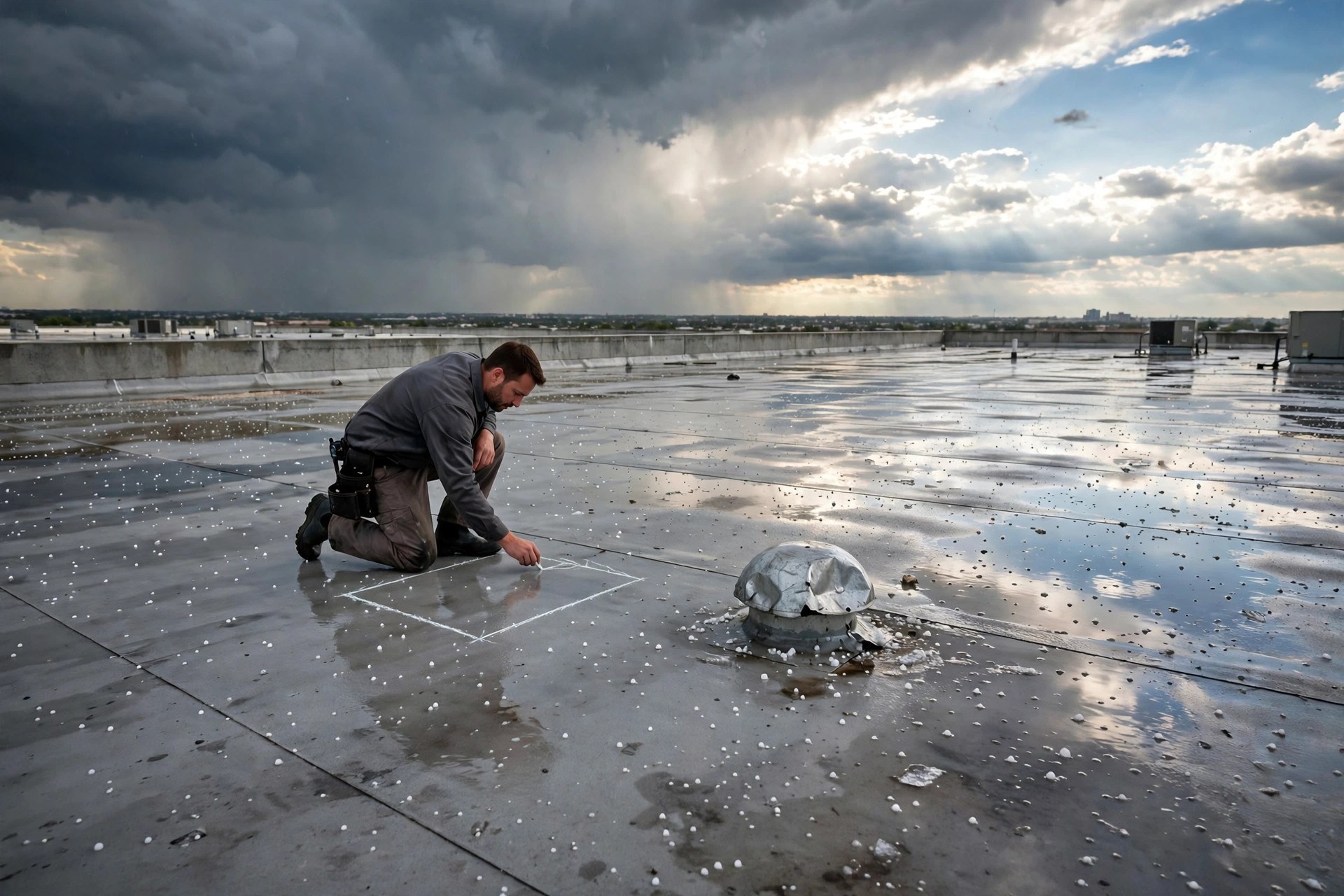
Mark the Test Squares
Sample squares are marked in each roof field, the standard way hail damage is measured, so counts from different fields can be compared honestly.
Test Every Strike
Hits inside the squares are checked by hand for mat fracture, the damage that actually ends a roof's life, and separated from marks that are only cosmetic.
Map the Confirmed Damage
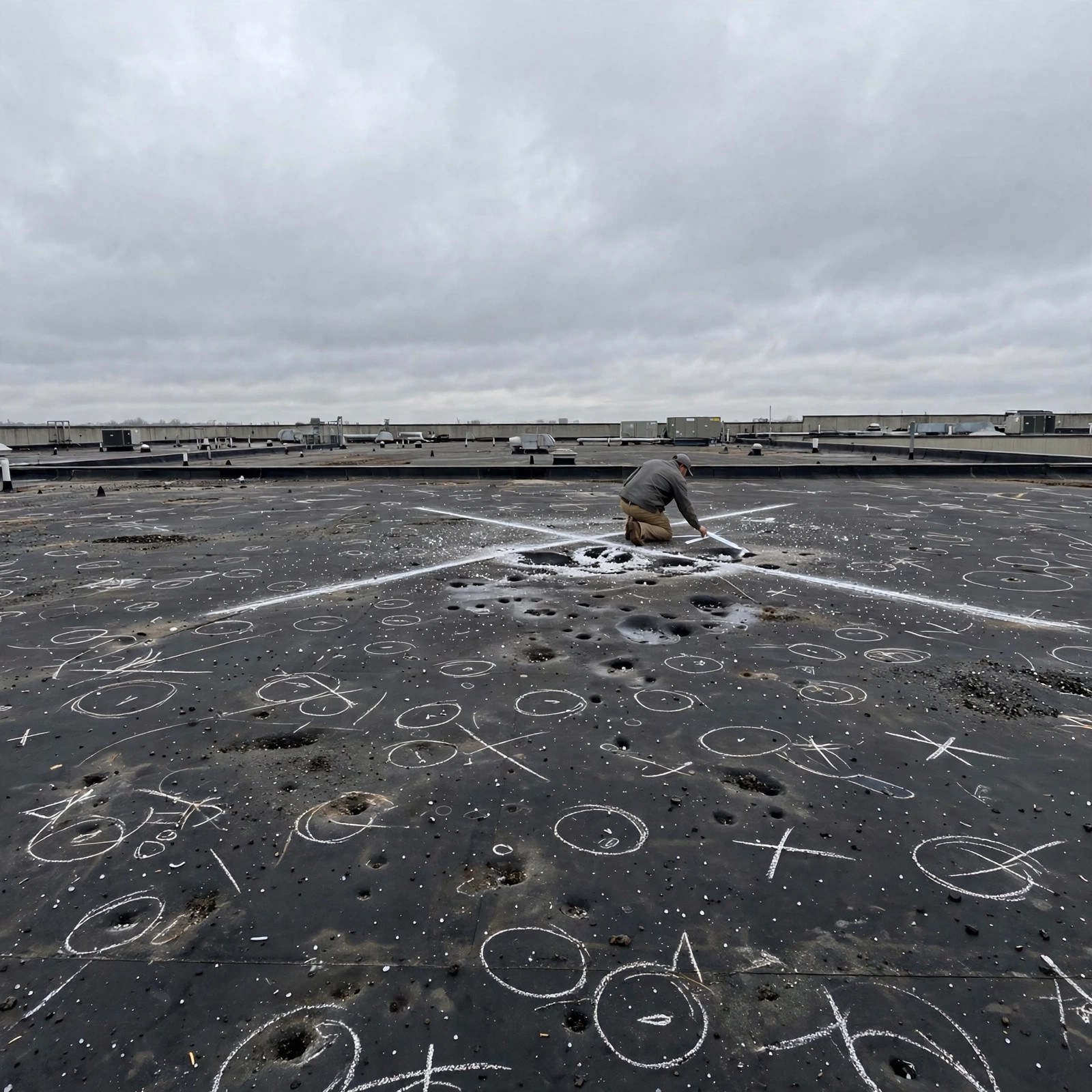
Strikes that pass the test are chalked, photographed, and placed on a roof map, field by field, so the pattern of the storm is visible at a glance.
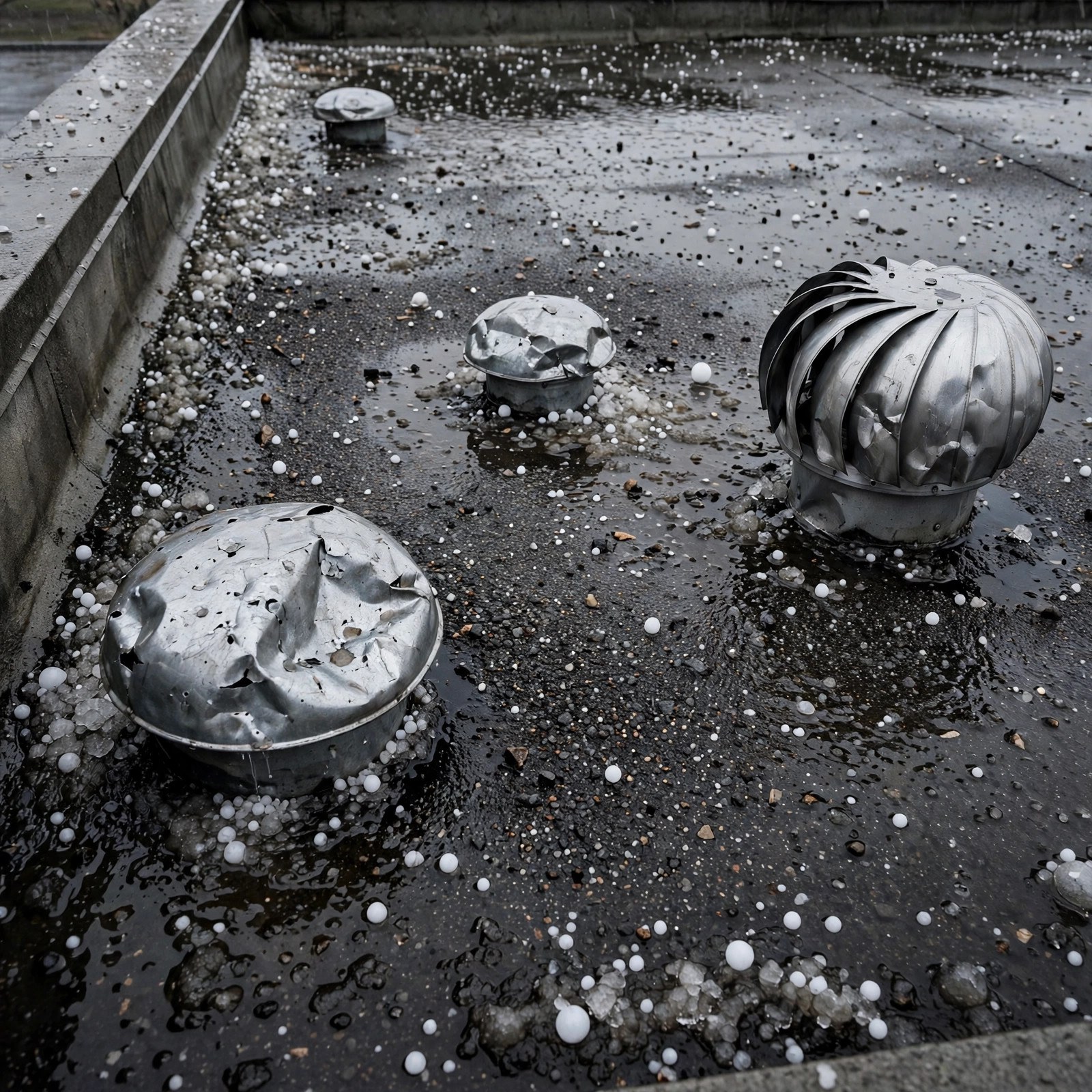
Check the Soft Metals
Vent caps, coping, and flashing are read as supporting evidence of hail size and direction, corroborating the test squares rather than replacing them.
Scope from the Map
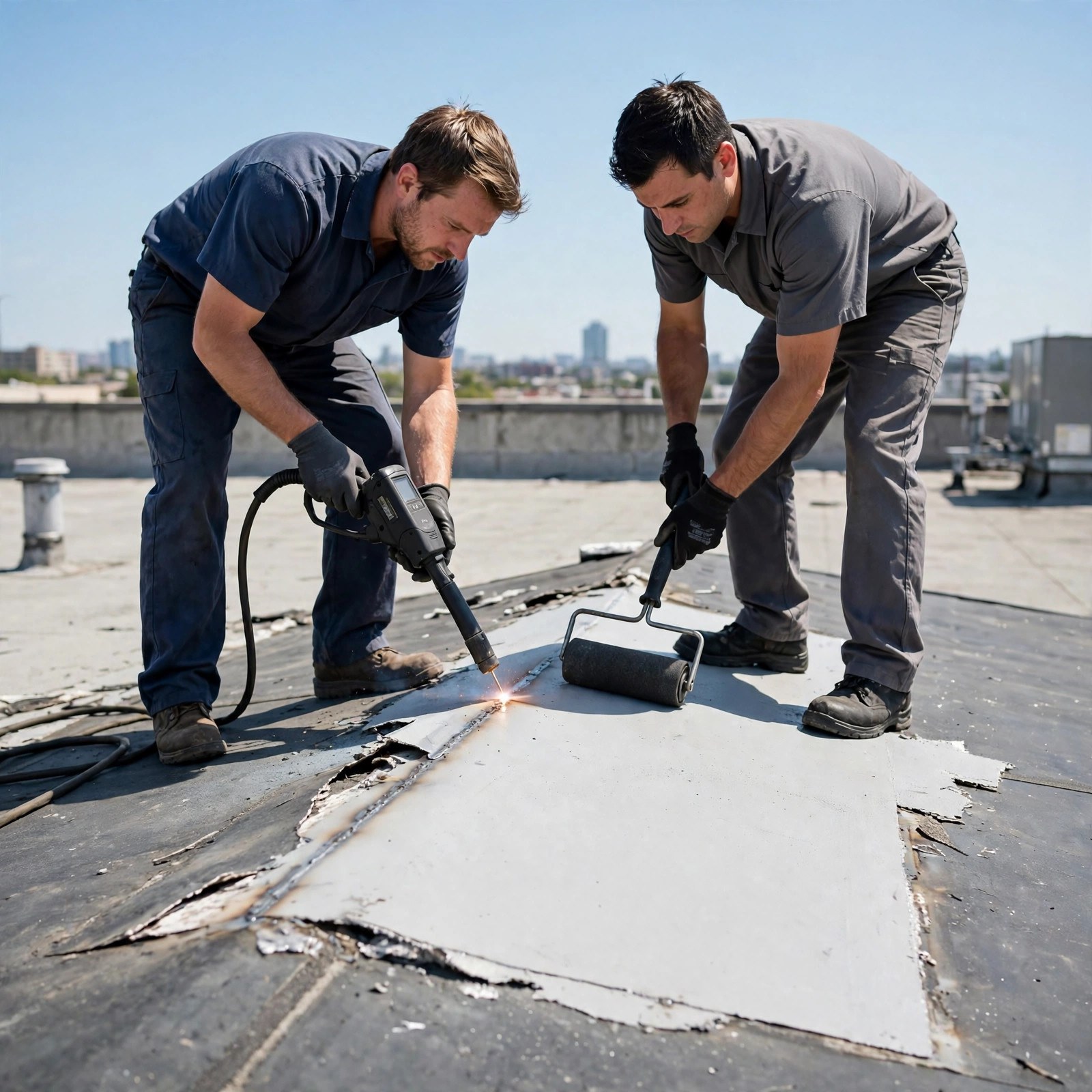
Scattered functional damage points to targeted repairs; dense damage across fields points to replacement. The scope is drawn from the map and priced once, in writing.
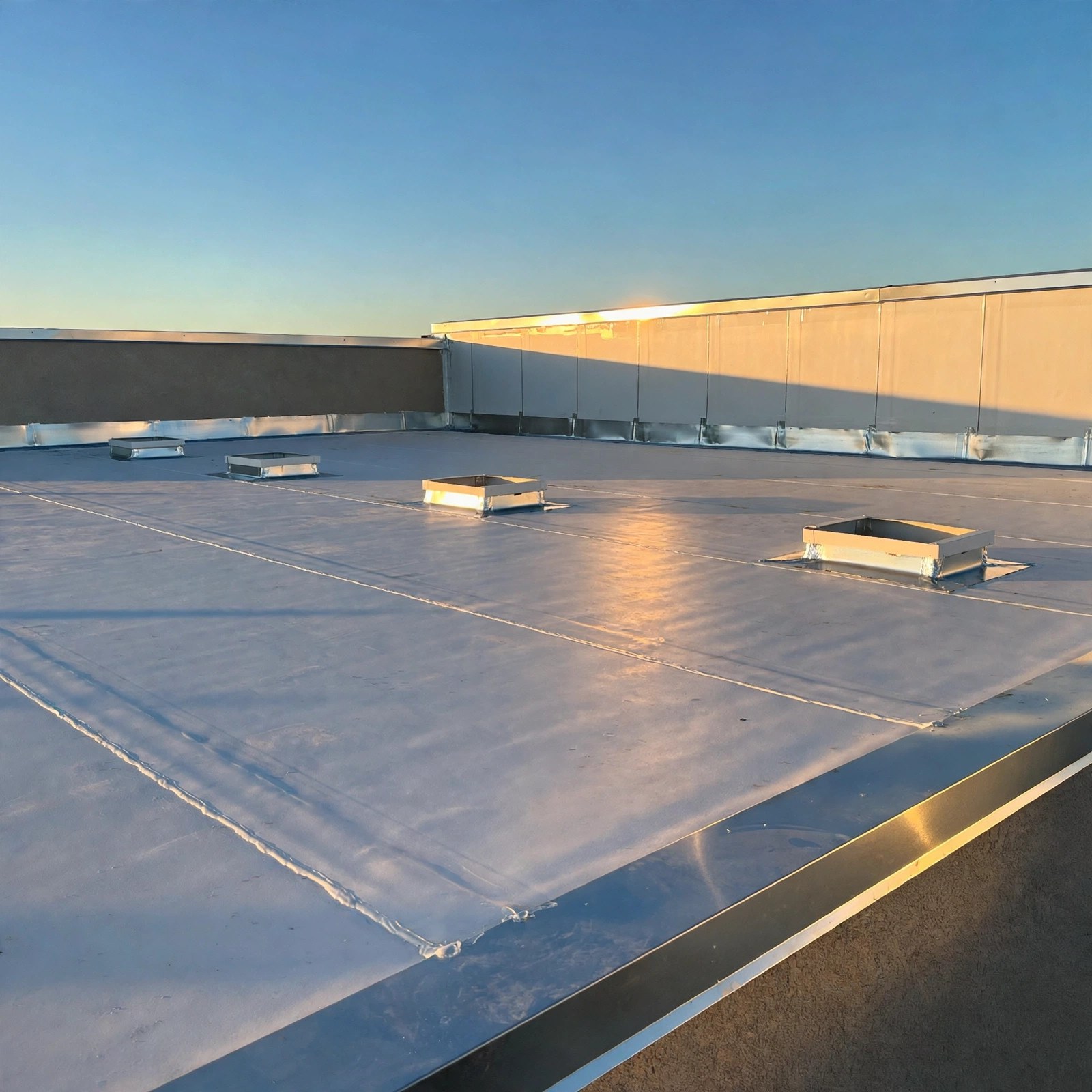
Restore and Verify
The scoped work is completed, test areas are rechecked, and the restored roof is walked and verified sealed at handover.
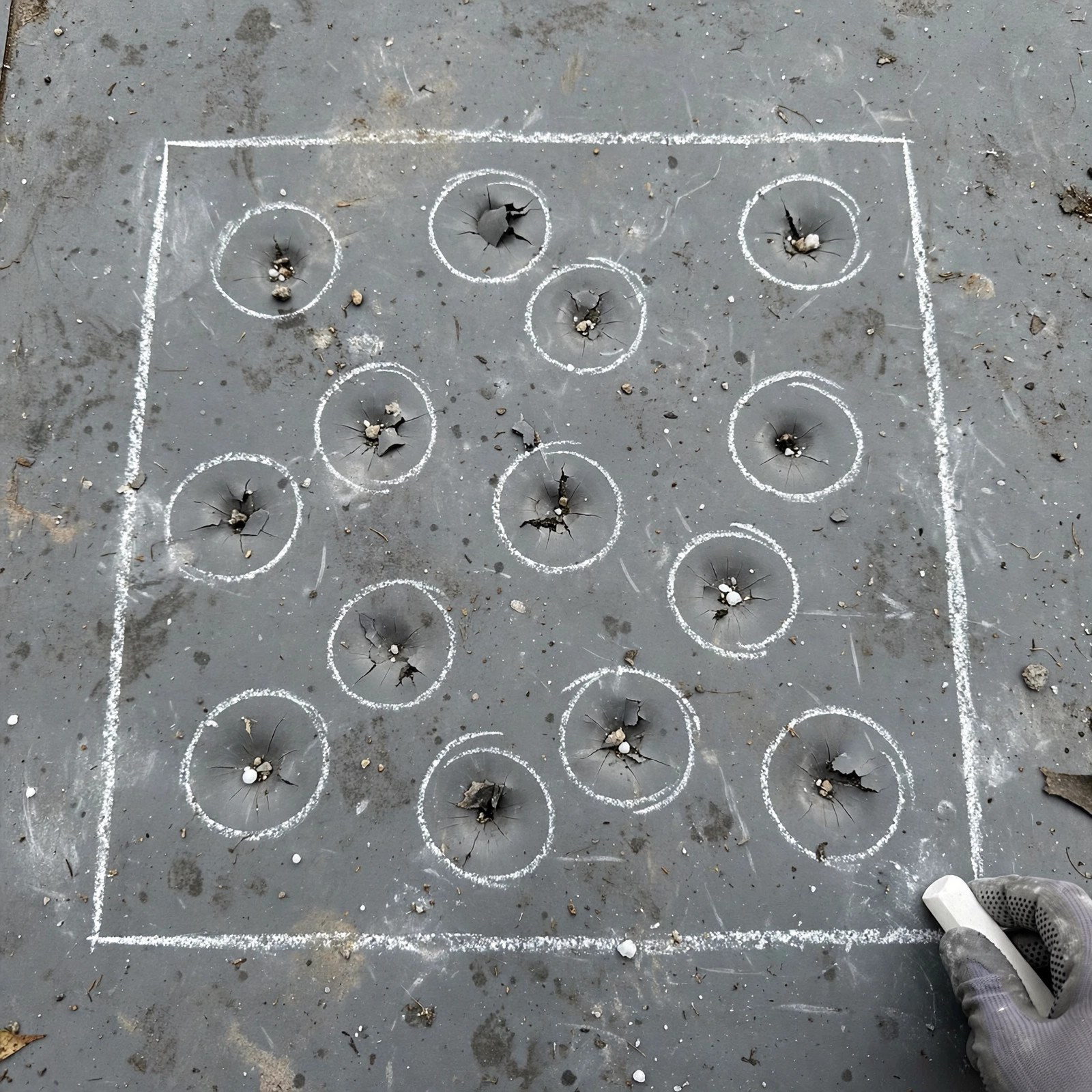
The cosmetic question
Not Every Dent Is Damage, and Not Every Crack Shows
Hail argues both ways. Soft metals dent easily, so a battered vent cap can make a sound roof look destroyed; it proves hail fell, not that the roof failed.
The opposite hides better: a strike can fracture the mat under the surface while the top looks nearly clean, and that fracture is what lets water in over the seasons that follow.
Testing separates the two. Hail damage restoration is scoped on fractures and function, so the scope never inflates dents into damage, and never waves real fractures away as marks.
- Mat fractures tested by hand
- Dents read as evidence only
- Cosmetic marks named cosmetic
- Scope built on function
The company
JBN Roofing of Texas, a Division of The JBN Group, Inc.
The JBN Group, Inc. is a family-owned general contracting company based at 125 Old Alton Drive in Denton since 1996. Its roofing division, JBN Roofing of Texas in Suite 8, tests and restores hail-damaged commercial roofs across North Texas. The company carries an A+ Better Business Bureau rating and is fully insured. The roofing line is 469-340-0838 or sales@jbnroofingoftexas.com.
The honest fine print
What Hail Damage Restoration Cannot Promise
Hail work sits next to insurance work, so two limits get stated before the first test square is marked.
Coverage first: whether hail damage is covered is the carrier's decision, and no roofer can promise an outcome. What this company controls is evidence an adjuster can test the same way: marked squares, fracture checks, photographs, and a map.
Certainty second: a test square samples its field; it does not X-ray the whole roof. Where fields differ in age or material, each is tested on its own, and the scope says plainly which findings are measured and which are read from the pattern.
- Coverage is the carrier's call
- Evidence an adjuster can retest
- Each field tested on its own
- Cosmetic never sold as damage
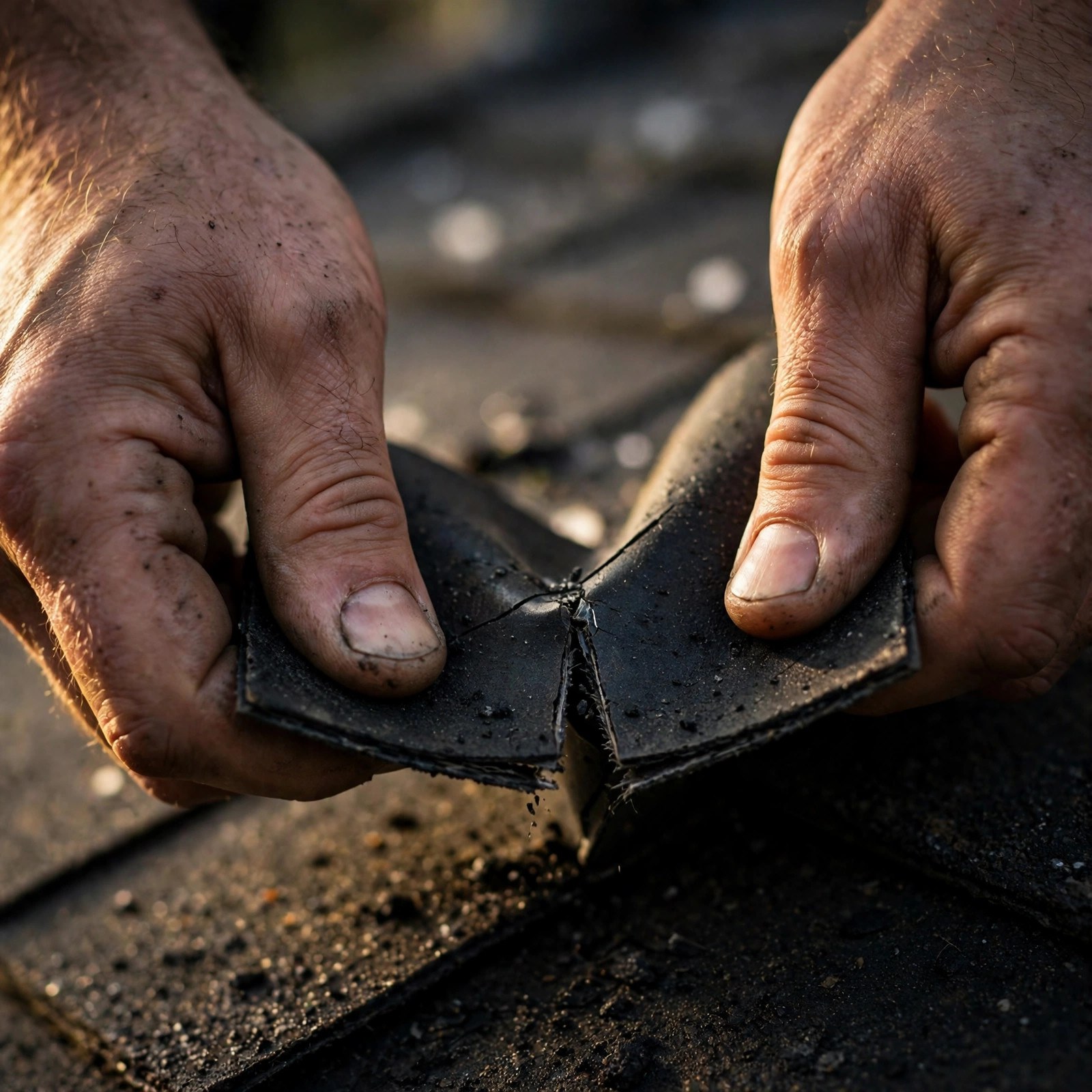
Mark the Squares
Test squares are marked in every field so counts compare honestly.
Test the Strikes
Each hit is checked by hand for the fracture that matters.
Map What Is Proven
Confirmed strikes are chalked, photographed, and mapped field by field.
Scope and Restore
The scope follows the map, is priced in writing, and the work is verified.
The honest fine print
The adjuster question
Hail Claims Run on Testable Evidence
An adjuster does not have to take a roofer's word, and on hail work should not have to. The visit record is built to be retested: the marked squares stay identifiable, the fracture findings are photographed where they were found, and the roof map ties counts to fields. Your file holds all of it, so the conversation with the carrier starts from shared evidence instead of competing impressions.
Hail damage to prove? Call 469-340-0838 and start with the test squares.
Where we work
Hail Damage Restoration Across North Texas
From Suite 8 in Denton, JBN Roofing of Texas tests and restores hail-hit roofs on warehouses, retail centers, offices, and industrial buildings across the northern Dallas-Fort Worth corridor.
Your building outside that area? Call 469-340-0838 and ask. If we cannot take it on properly, we will tell you plainly.
What the Hail Visit Includes
- Test squares in every field
- Fracture checks by hand
- Strike map and photographs
- Written restoration scope
- Verified work at handover
Straight answers
Hail Damage Restoration FAQs
How do you tell real hail damage from marks?
By testing. Strikes in marked test squares are checked by hand for mat fracture, the break that shortens a roof's life and lets water in later. Dents in soft metals show that hail fell and how big it was, but they are supporting evidence, never the whole case.
Our roof looks fine from the ground. Can hail still have hurt it?
Yes. The fractures that matter sit under the surface and rarely show from the ground or even from a quick walk. That is why the test squares come first: they turn a guess about the storm into a count of what it actually did to each field.
Does hail damage mean the whole roof needs replacement?
Not usually. Where functional strikes are scattered, targeted repairs restore the field. Replacement enters the scope when confirmed damage runs dense across fields, or the roof was already near the end of its life. The map decides, and the scope is priced once, in writing.
Will our insurance cover the restoration?
That decision belongs to the carrier, and no honest roofer will promise it. What you get from the visit is evidence that holds up either way: marked test squares, fracture findings photographed in place, and a strike map, so an adjuster can verify the same facts.
What does hail damage restoration cost?
It is priced from the tested scope, once, in writing. Repairing scattered strikes and replacing a field are very different numbers, and neither can be quoted honestly before the squares are marked and the strikes tested.
How soon after a hailstorm should the roof be tested?
Soon, while the evidence is fresh and before traffic and weather wear the strikes down. Fresh fractures read clearly; old ones blur into ordinary wear, and that blur is where arguments with carriers start. Early testing keeps the record clean.
Tested · Mapped · Restored
Prove the Strikes. Then Scope the Fix.
One call starts the test squares, the strike map, and the written restoration scope.