
Spray foam roofing · Denton, Texas
Foam Roofing Denton TX
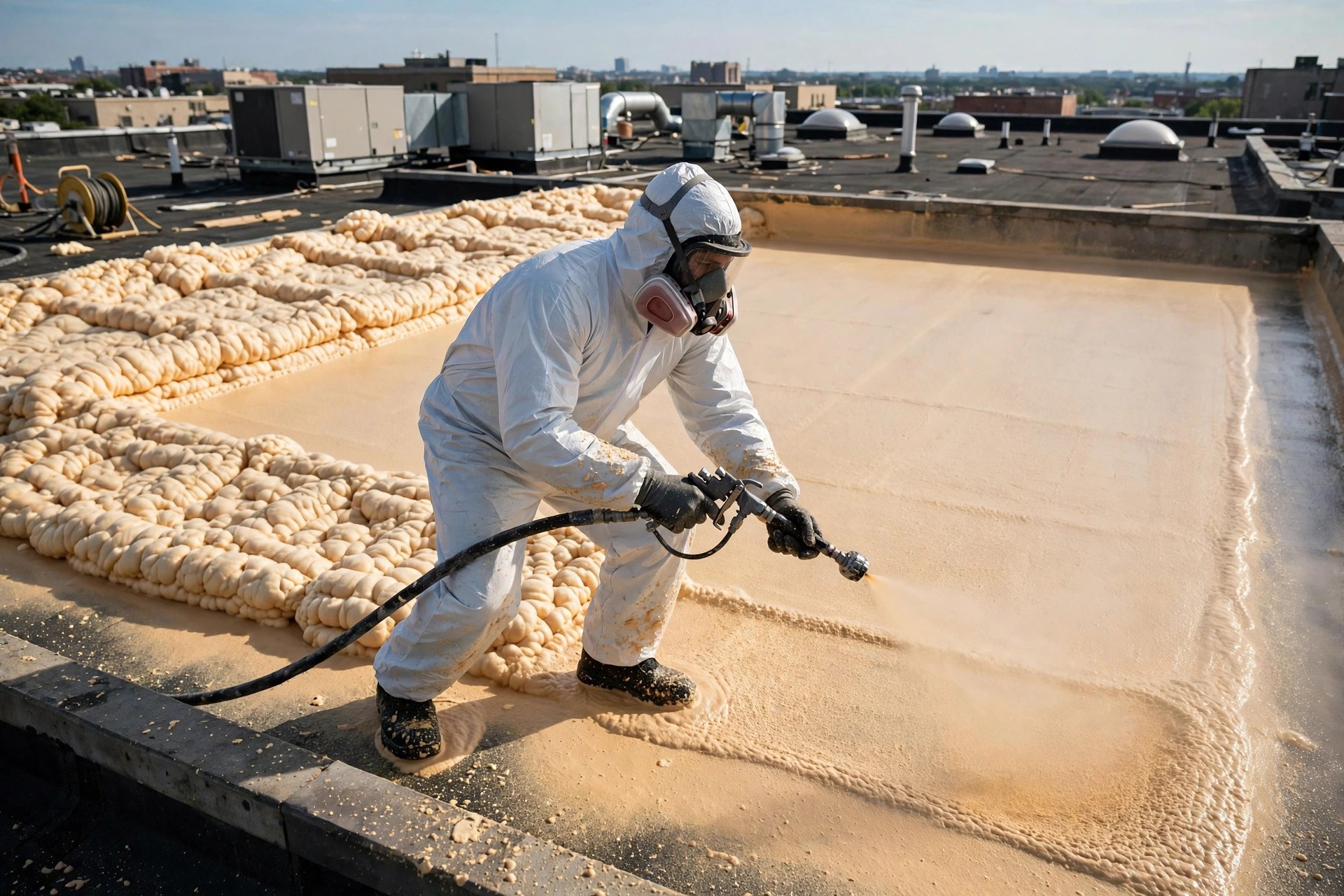
Foam roofing sprays a flat or low-slope commercial roof into one seamless piece: closed-cell polyurethane foam is applied in place, building insulation and waterproofing together, then sealed under a protective coating that shields it from the sun.
Done right, a foam roof has no seams to split, no fasteners to back out, and foam that flashes itself around every curb and pipe. Done wrong — sprayed over a wet roof, or left uncoated — it fails fast. Foam roofing at JBN Roofing of Texas starts with the inspection that decides whether your building is a candidate at all, and the coating is quoted as part of the system, never as an optional extra.
Passes, not sheets
How a Foam Roof Gets Built
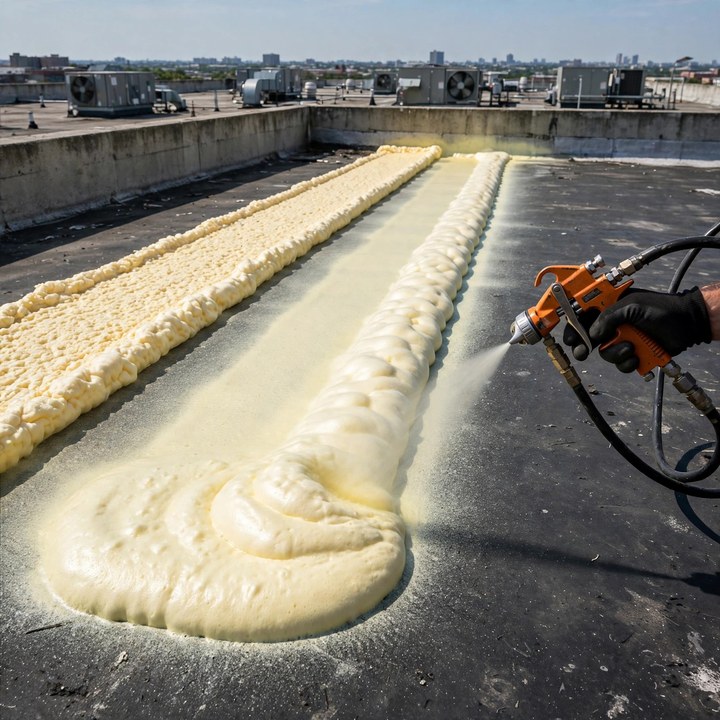
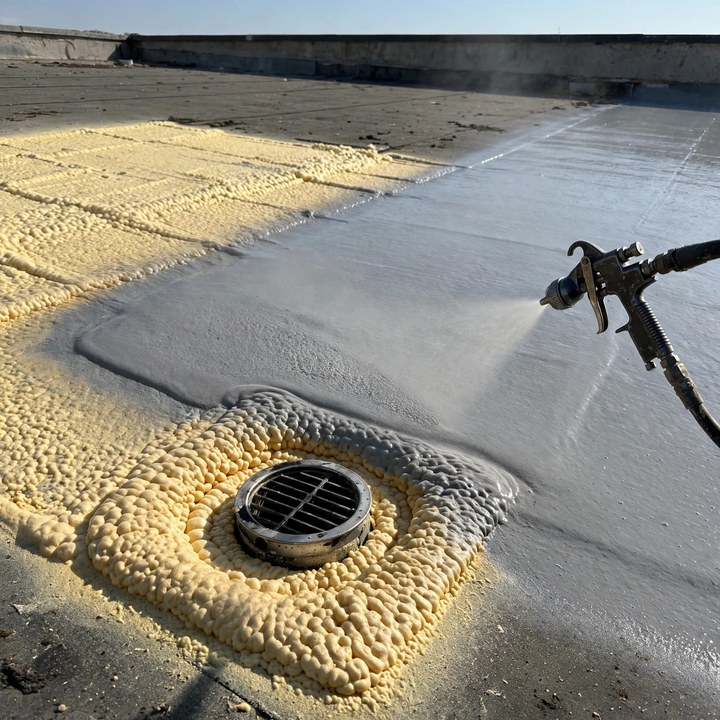
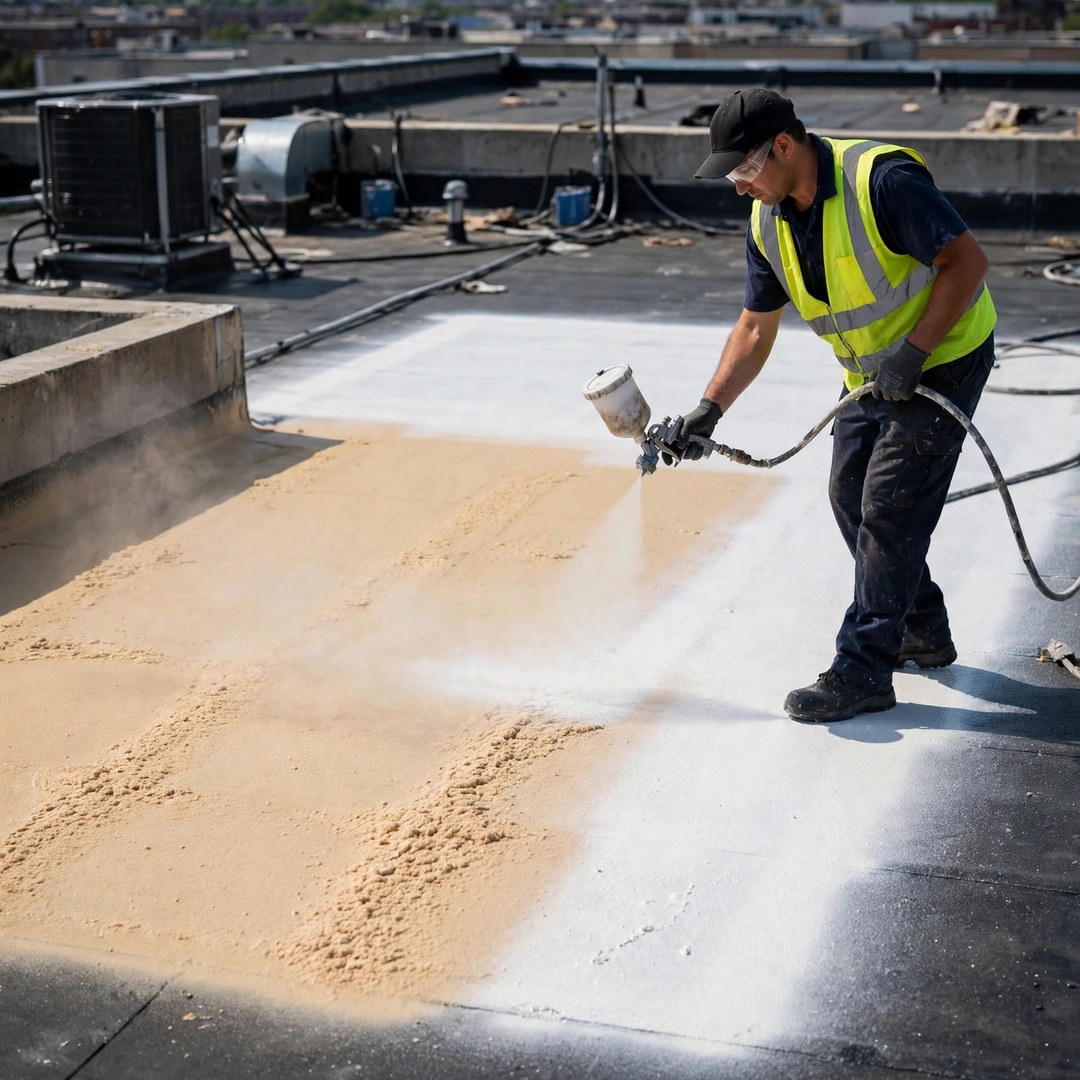
The applicator lays foam in overlapping passes, each one expanding and curing into the last, building the roof up to its specified thickness across the whole field.
Thickness is checked as the work goes, and extra passes can be feathered toward the drains to improve how the roof sheds water — slope built into the roof itself rather than added under it. Once the foam cures, the protective coating goes on in its own passes to its specified thickness. The result is a roof that was formed on your building, fitted to its curbs and drains exactly, with no cut edges and no seams anywhere in the field. It is a different kind of system from a sheet roof, and it asks for an applicator who treats the passes as the product.
For a foam inspection and a written scope, call 469-340-0838.
The foam system, whole
What a Foam Roofing Job Includes
Six parts make up a foam system, and the coating stands equal with the foam itself. A scope missing any of the six is a shortcut, and it will read that way in a few years.
Candidacy first
Six Questions Before Foam Goes on a Roof
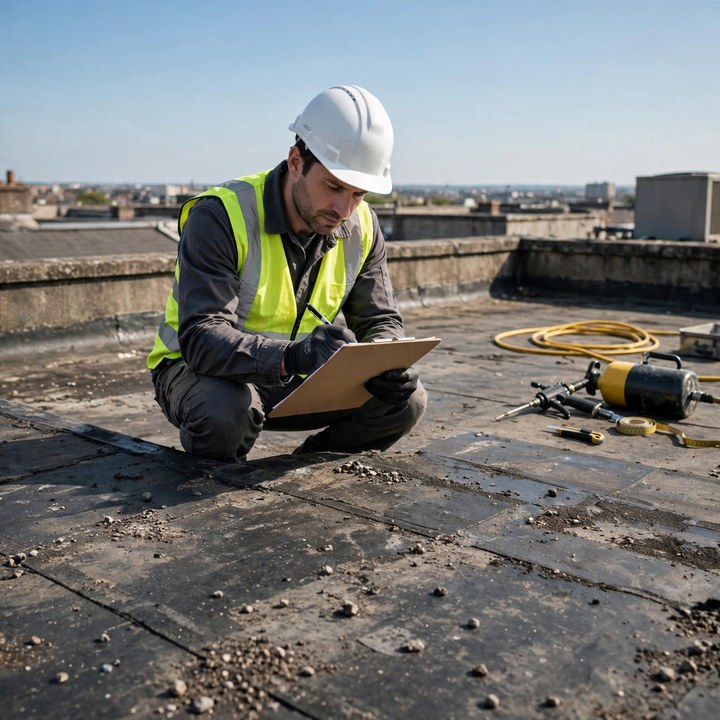
Foam is an excellent system on the right building and a poor one on the wrong building. The inspection answers these six questions before anyone talks price.
Is the Existing Roof Dry?
Wet insulation and saturated areas cannot be foamed over. They are cut out and replaced first, or the building is not a foam candidate yet, and the report says which.
What Is the Deck?
Foam bonds to most common decks and many existing roofs, but the surface has to hold it. Deck type and condition are verified in person, never assumed from the ground.
How Does Water Move?
Foam roofing can add slope in passes toward drains, which fixes mild ponding honestly. Severe drainage problems get corrected structurally first, not buried under foam.
How Much Foot Traffic?
Foam is strong but not a walkway surface. Roofs with heavy service traffic get walk pads at the traffic paths, planned in the scope rather than worn in later.
What Does the Coating Need to Be?
The coating is matched to the foam and the building's exposure, and its thickness is specified and checked. It is the foam's weather skin and its ultraviolet shield in one.
What Happens in Fifteen Years?
The honest plan: inspect periodically, repair any coating damage promptly, and recoat when the coating weathers. The foam underneath a maintained coating does not need replacing to renew the roof.
The result
A Roof With Nothing to Unzip
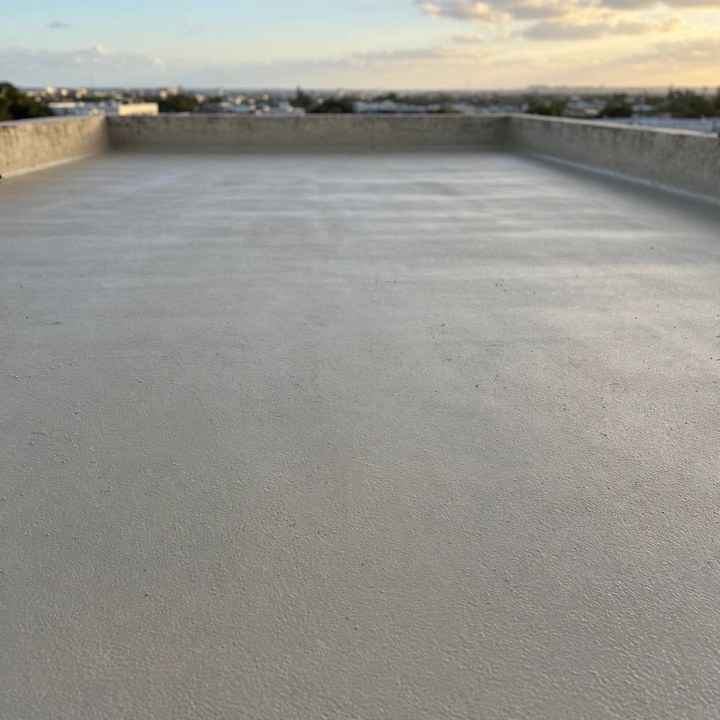
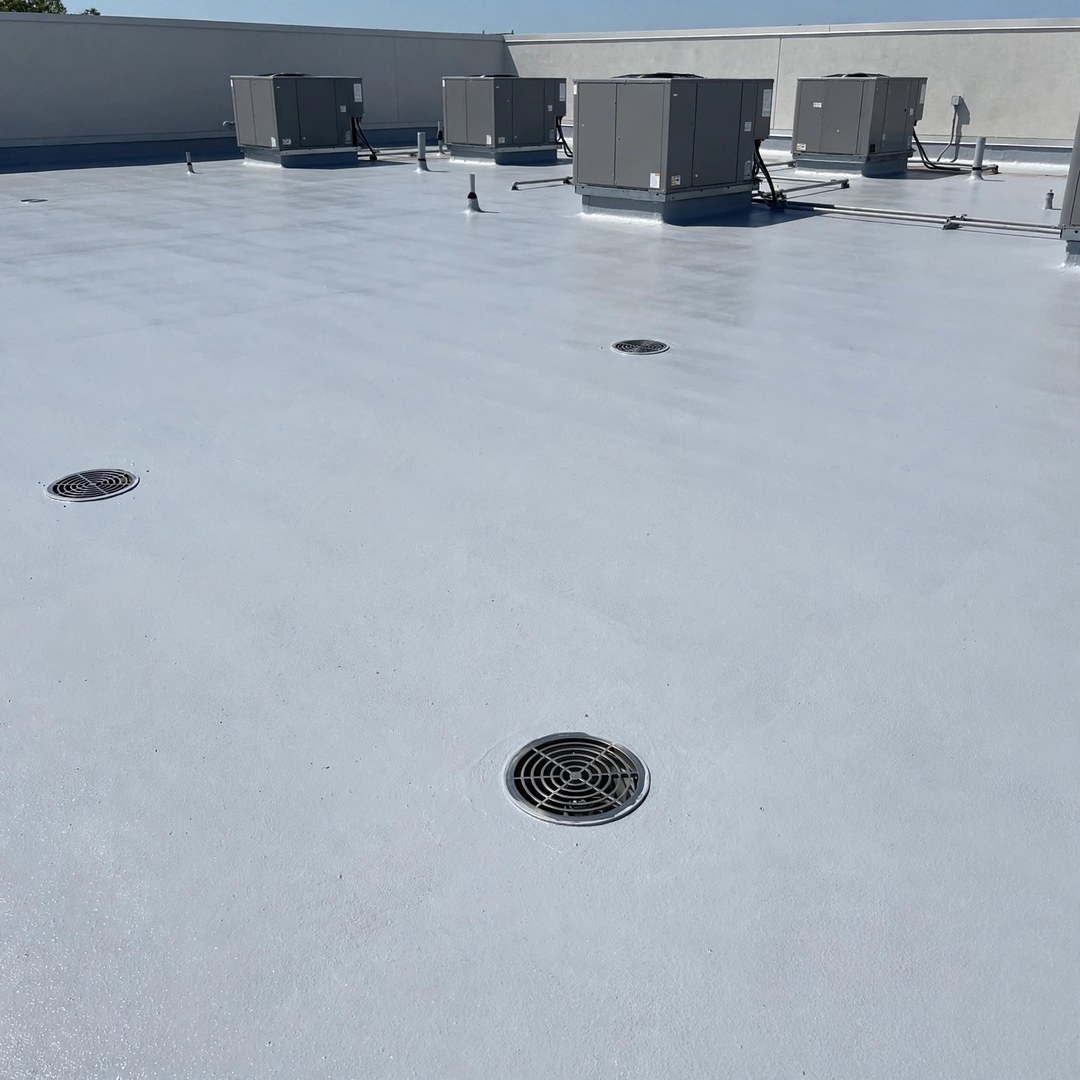
Most flat roof leaks start at a seam, a fastener, or a flashing joint. A foam roof removes those starting points from the field entirely.
What remains is a single formed surface that insulates as it waterproofs, sheds water toward drains it was sloped to find, and can be renewed decades on by recoating rather than replacement. For the right building, that combination is why owners choose foam, and the inspection exists to make sure yours is the right building before the choice is made.
Call 469-340-0838 to schedule the inspection.
The foam roofing company
JBN Roofing of Texas
Foam roofing is installed by JBN Roofing of Texas, a division of The JBN Group, Inc., the family-owned Denton general contractor founded in 1996. The crews work from Suite 8, 125 Old Alton Drive in Denton, and the same company installs the membrane and metal systems foam competes with, so a foam recommendation here is a judgment call, not the only tool in the truck.
Reach the office at 469-340-0838 or sales@jbnroofingoftexas.com: Monday through Thursday 9:00 AM to 5:00 PM, Friday 9:00 AM to 4:00 PM, and Saturday 10:00 AM to 2:00 PM Central, closed Sunday.
Where foam earns its keep
Details Other Roofs Bolt on, Foam Forms in Place
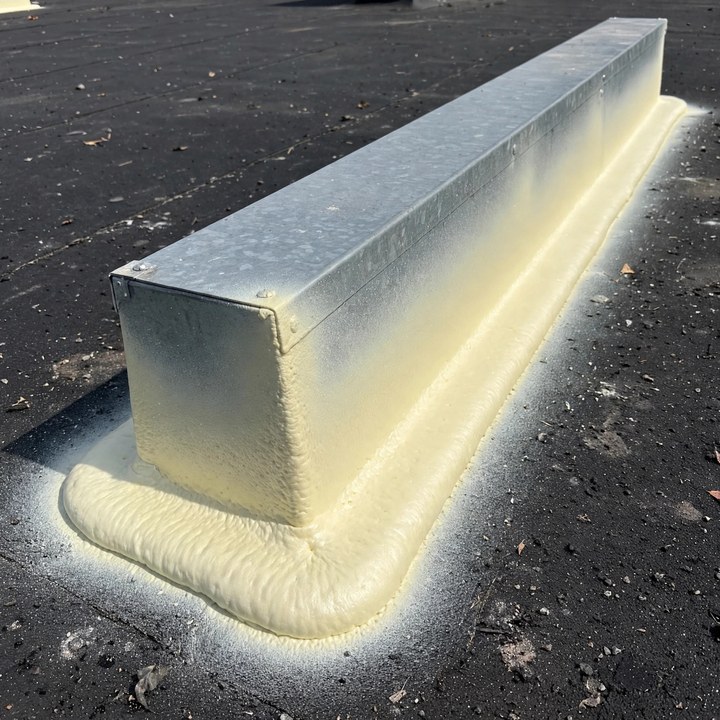
On a sheet roof, every curb and pipe is a separate flashing assembly. On a foam roof, the foam itself climbs the curb and wraps the pipe, and the coating seals it over.
That is the practical heart of the system: the points where roofs leak most are the points foam handles most simply. It also means foam crews are judged at the details — clean terminations, coating carried fully over every foamed detail, drains kept clear and dished toward. Those are the photographs in your project file when the job is done.
- Foam carried up curbs and parapets
- Pipes and vents foamed and coated in place
- Drains dished toward with tapered passes
- Walk pads at heavy service paths
- Coating thickness checked during application
Inspect
The existing roof is walked and probed; moisture and candidacy are documented with photos.
Prep and Prime
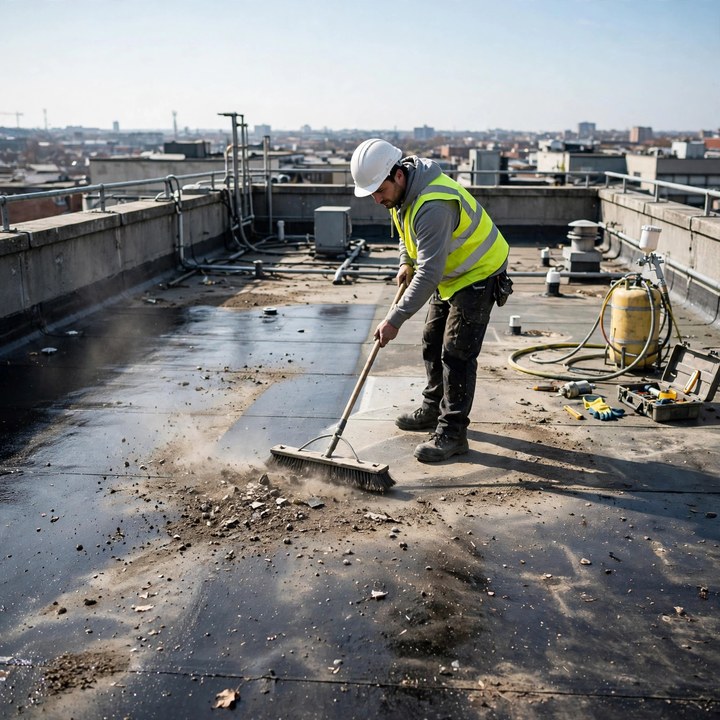
Failed areas come out, the surface is cleaned, and primer goes where the system requires it.
Spray in Passes
Foam is built to the specified thickness, feathered toward drains, details foamed in the same operation.
Coat and Walk
The protective coating is applied to spec, and the finished roof is walked with the owner.

Walked at handover
Checking Thickness, Slope, and Details
At handover the owner walks the finished foam roof and sees the three things that decide its future: full thickness, water moving toward drains, and details foamed and coated clean.
The project file carries the inspection photos, the mapped wet areas that were removed, thickness checks, and the coating record. Years later, when a recoat is due, that file is what the next inspection starts from — which is exactly how a renewable roof system is supposed to work.
Call 469-340-0838 to start with the inspection.
Service area
Foam Roofing Across North Texas
Foam roofing crews work from 125 Old Alton Drive in Denton across Corinth, Argyle, Flower Mound, Highland Village, Lewisville, Carrollton, Frisco, Allen, Lantana, Sanger, Bedford, and Bartonville. Candidacy is decided the same way everywhere: on the roof, with the moisture findings written down.
For buildings beyond that circle, call 469-340-0838 and ask. If we cannot serve your building well, we will say so plainly.
Foam Roofing Work We Take On
- Full spray foam systems on qualified roofs
- Foam over sound existing flat roofs
- Slope-building passes for ponding roofs
- Foam and coating renewals and recoats
- Walk pads and traffic-path protection
- Candidacy inspections with moisture mapping
Straight answers
Foam Roofing FAQs
Does a foam roof have to be coated?
Yes. Ultraviolet light breaks foam down, so the protective coating is not an upgrade or an option — it is half the system. Every foam scope from JBN Roofing of Texas includes the coating, specified for thickness and matched to the foam, and any quote that prices foam without coating should be treated as incomplete.
Can foam go over our existing roof?
Often, yes — foam bonds to many existing flat roof surfaces, which is one of its practical advantages. The conditions are that the existing roof is dry inside, sound, and able to hold the new system. Wet or failed areas are cut out first. The inspection establishes all of that with moisture findings before the foam is proposed.
How does foam handle ponding water?
Foam can be built up in tapered passes to add slope toward drains, which corrects the mild ponding that flat roofs commonly develop as buildings settle. Where ponding comes from a structural problem, that gets corrected first — foam is a roof system, not a way to bury a drainage failure.
What happens when a foam roof gets damaged?
Damage to the coating or foam is cut out and repaired with new foam and coating in that spot — one of the system's genuine conveniences, because the repair material is the roof material. What foam roofs cannot survive is neglected coating damage left open to the sun, which is why periodic inspections are part of owning one.
Can a foam roof be renewed instead of replaced?
Yes, and that is the system's long-term case. When the protective coating eventually weathers, a sound foam roof is cleaned, any damage is repaired with new foam, and a fresh coating is applied — renewing the roof without tearing anything off. The foam itself stays in service under each new coating.
Is foam right for every flat roof?
No. Buildings with saturated existing roofs, structural problems, or very heavy rooftop traffic may be better served by a membrane or metal system, and foam demands an owner who will keep up with inspections and recoats. The candidacy inspection exists to make that call honestly, and the written findings support whichever answer comes out.
Free inspection · Written price
One Roof, Formed on Your Building
No seams, no fasteners, foam that flashes itself, under a coating specified as part of the system. If your building qualifies, foam is the most renewable roof in commercial work. It starts with the candidacy inspection, from the Denton company doing this work since 1996.