
JBN Roofing of Texas · A Division of The JBN Group, Inc.
PVC Roofing
The grease-proof single-ply.
PVC roofing is a thermoplastic single-ply system with hot-air welded seams and one talent the other membranes cannot match: it stands up to grease, oils, and chemicals that eat lesser roofs. JBN Roofing of Texas installs it where the exposure demands it, probes every seam, and prices the whole system once, in writing. Start with the call: call 469-340-0838.
The exposure question
PVC Roofing Earns Its Keep Where Grease Falls
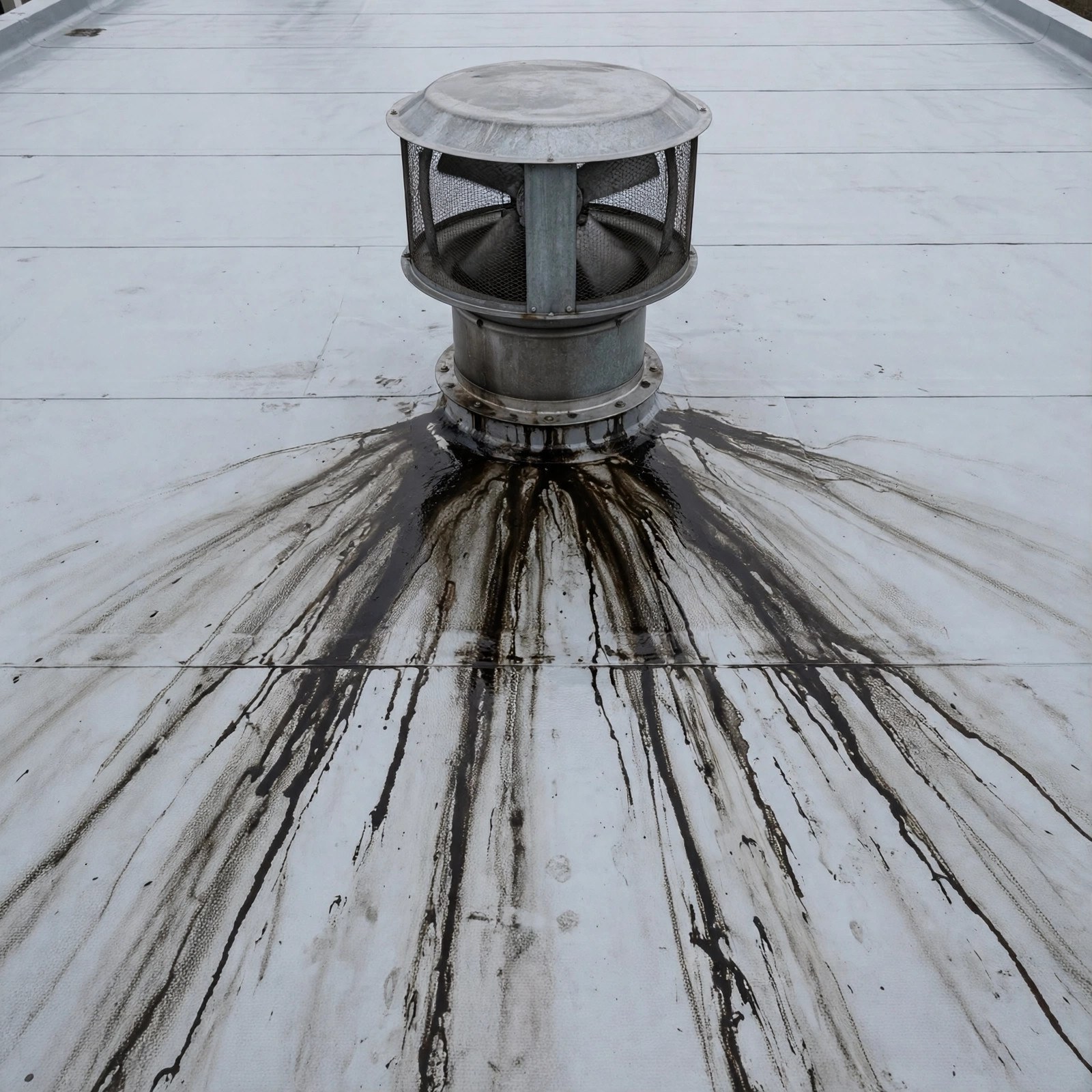
Kitchen exhaust rains grease on a restaurant roof day after day. On most membranes that grease is a slow solvent: it softens rubber, attacks asphalt, and turns a sound roof into a stained, failing one years early.
PVC is built for exactly that exposure. Its chemistry shrugs off animal fats, oils, and a long list of industrial chemicals, and its seams are welded, not glued, so there is no adhesive joint for grease to undermine.
That is why this page exists separately from the other single-plies: where the roof's enemy is chemical, PVC is the honest answer, and where it is not, this page will say so too.
Running a greasy roof? Call 469-340-0838 and get the exposure read honestly.
Roofing services
PVC Roofing Within the Full Commercial Line.
Companion services for a PVC project, each covered on its own page.
How a PVC roof goes on
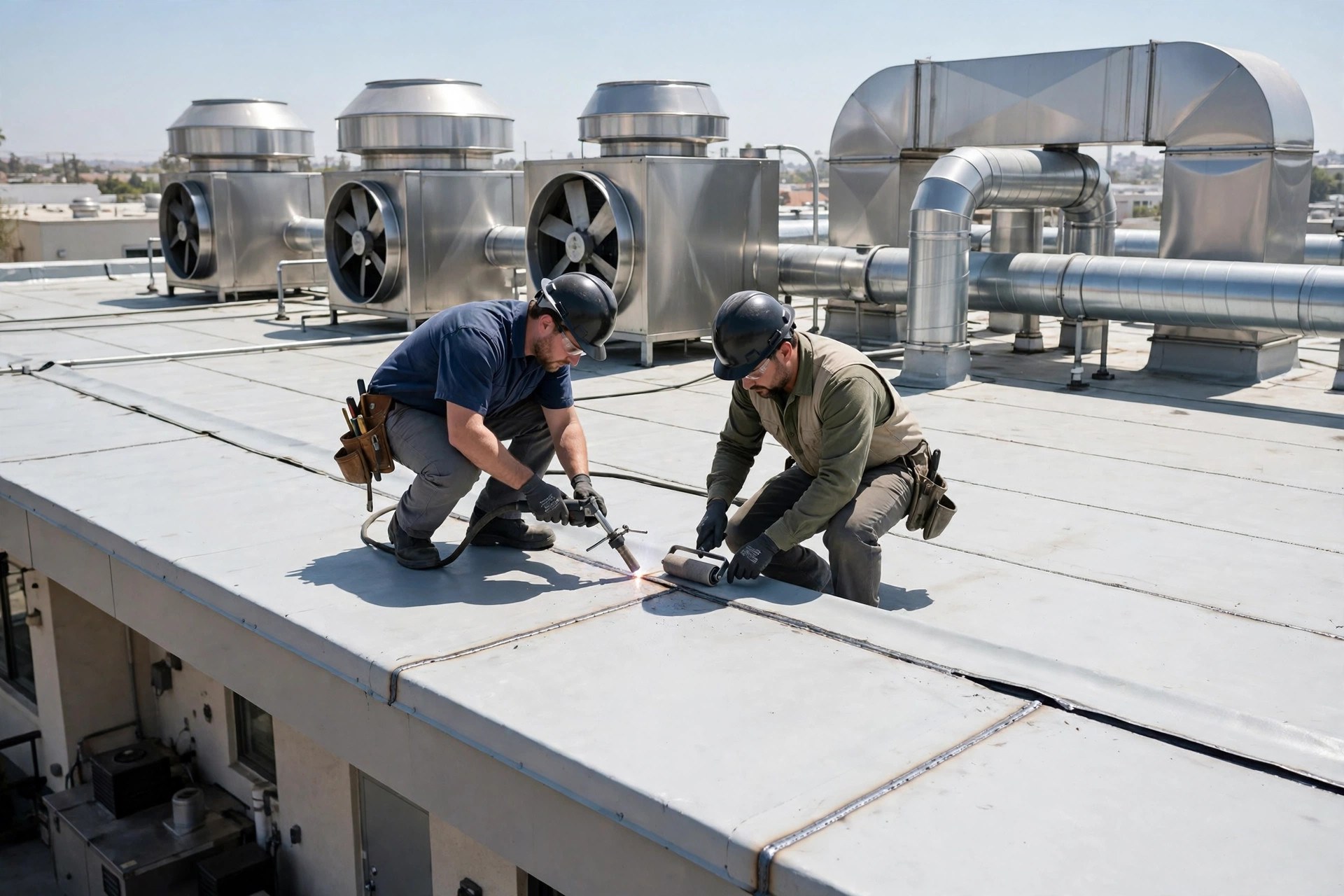
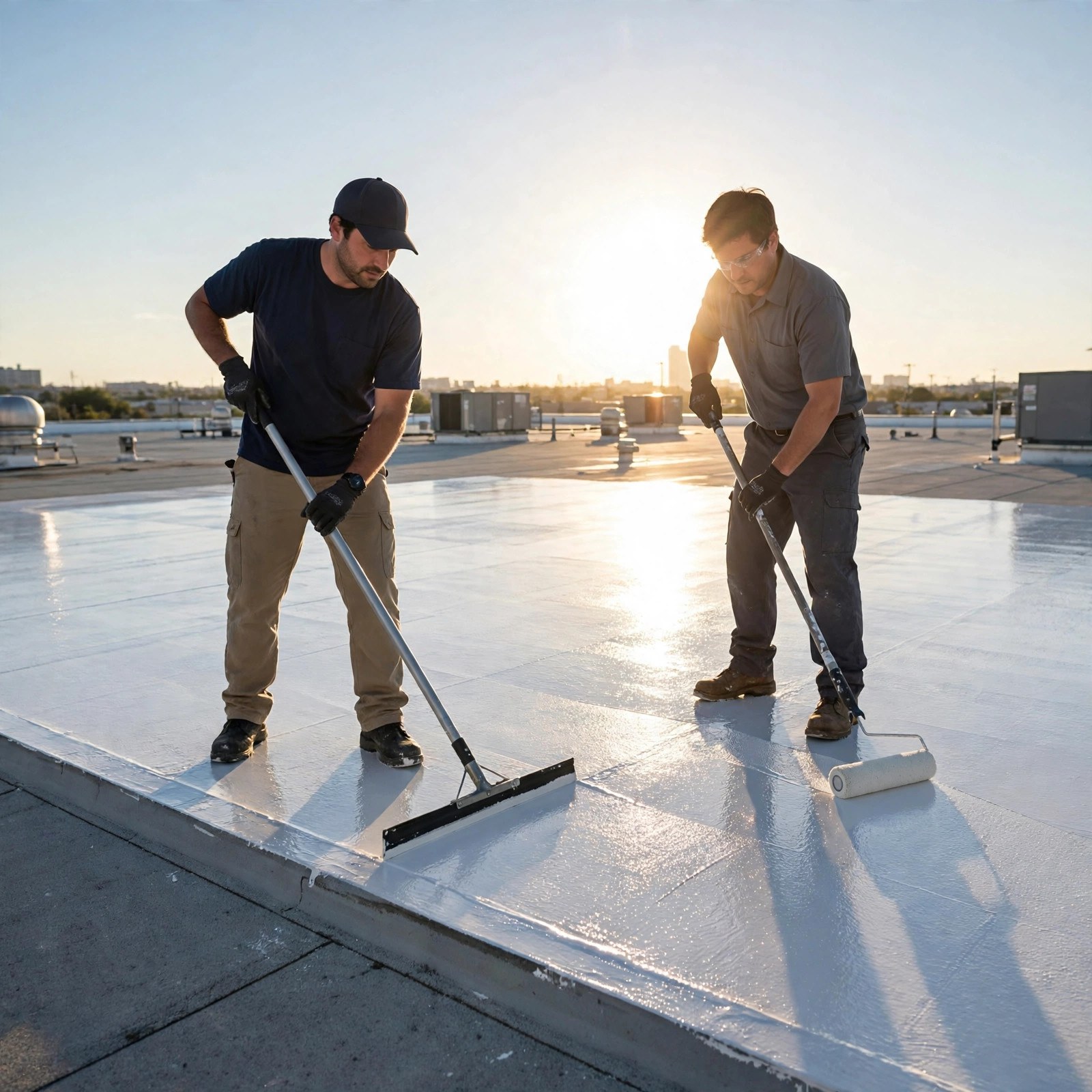
Six Steps of a PVC Roofing Installation
Deck first, exposure mapped, seams welded and proven last.
Read the Building
What the building cooks, makes, or vents decides whether PVC is even the right call, and that answer comes before any material is quoted.
Set the Insulation
Insulation matched to the deck is laid tight and secured to the pattern the attachment design calls for, with grease-path areas planned around exhaust points.
Roll the Membrane
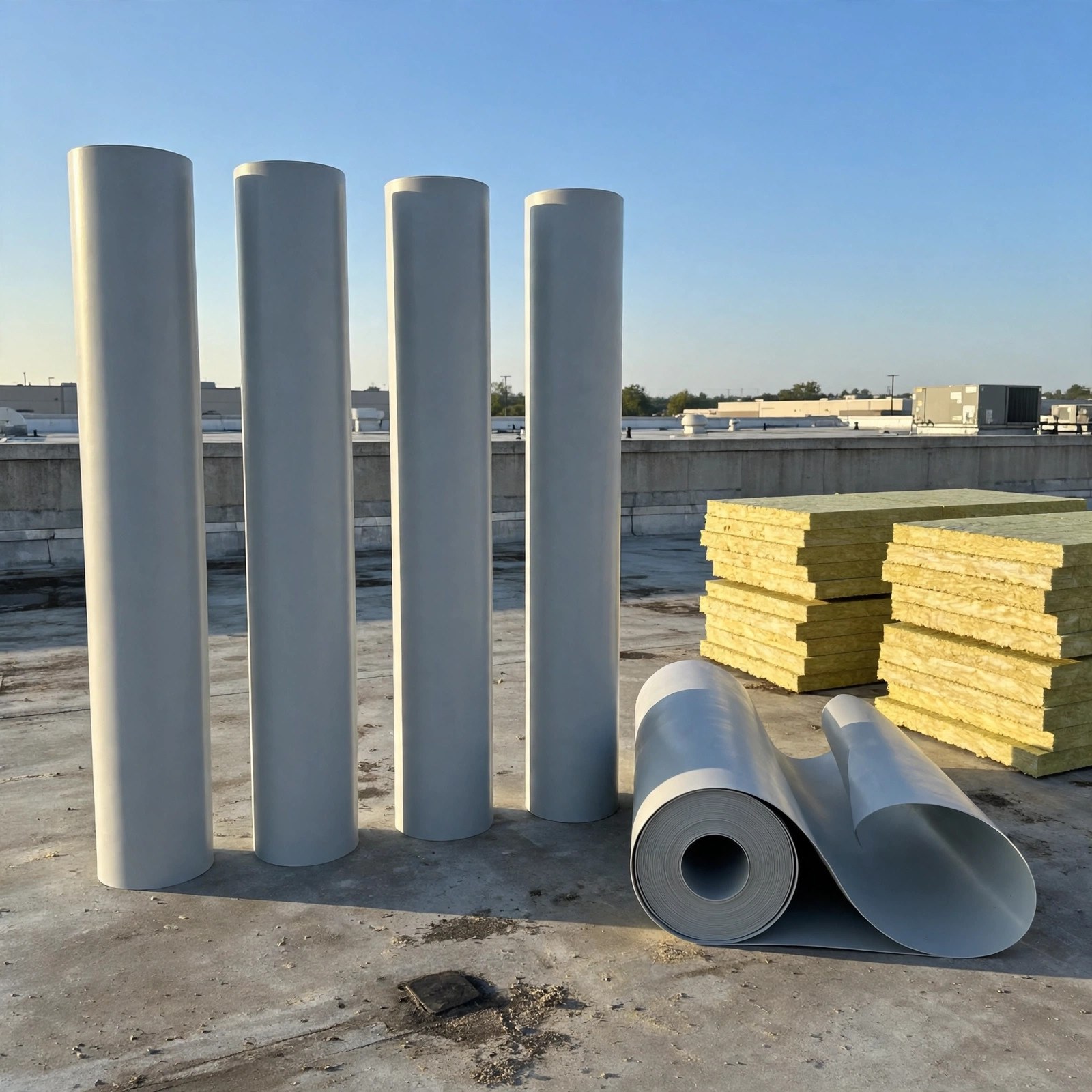
Reinforced PVC sheets are rolled out square, seams overlapped to spec, and the field secured so the surface stays tight and drains as drawn.
Weld the Seams
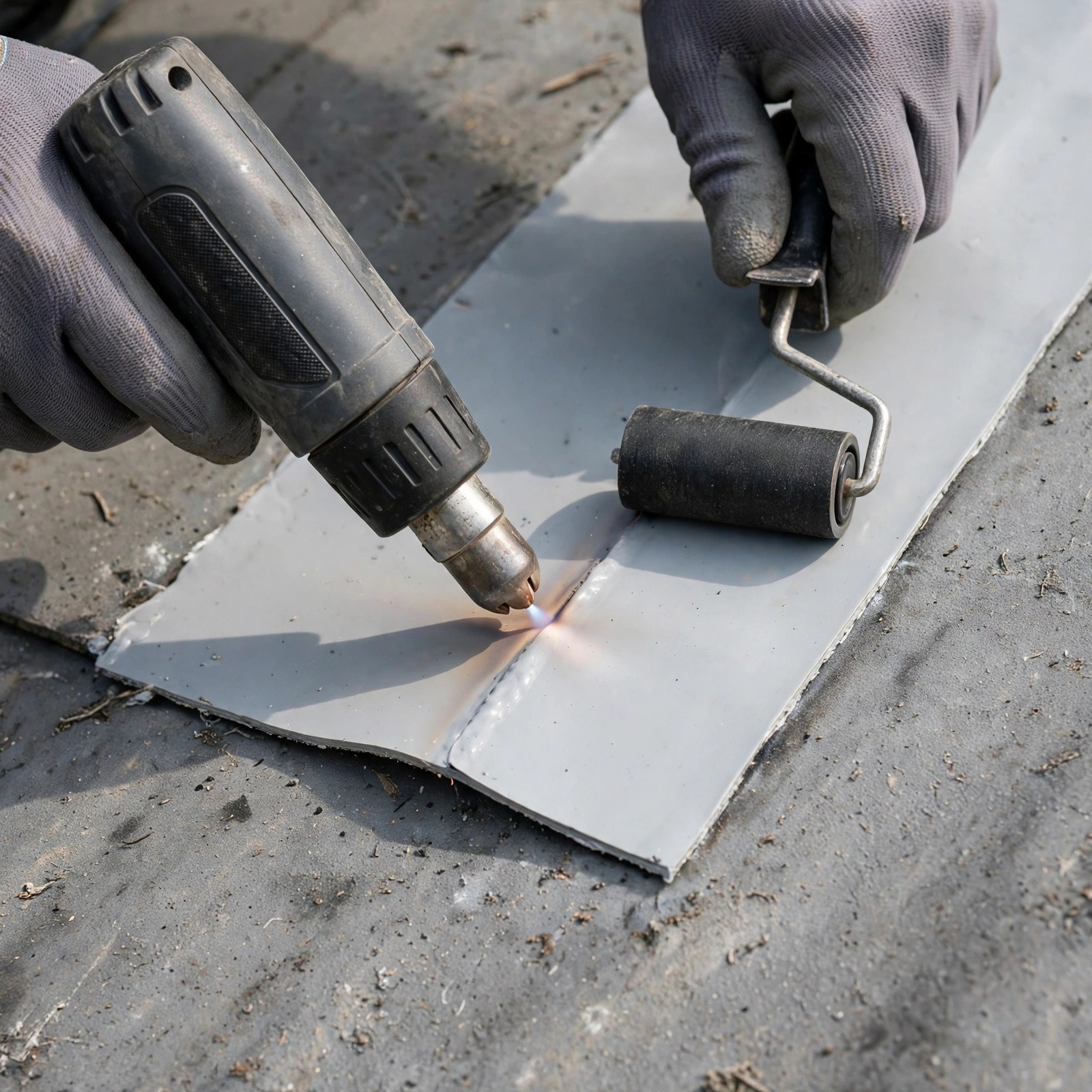
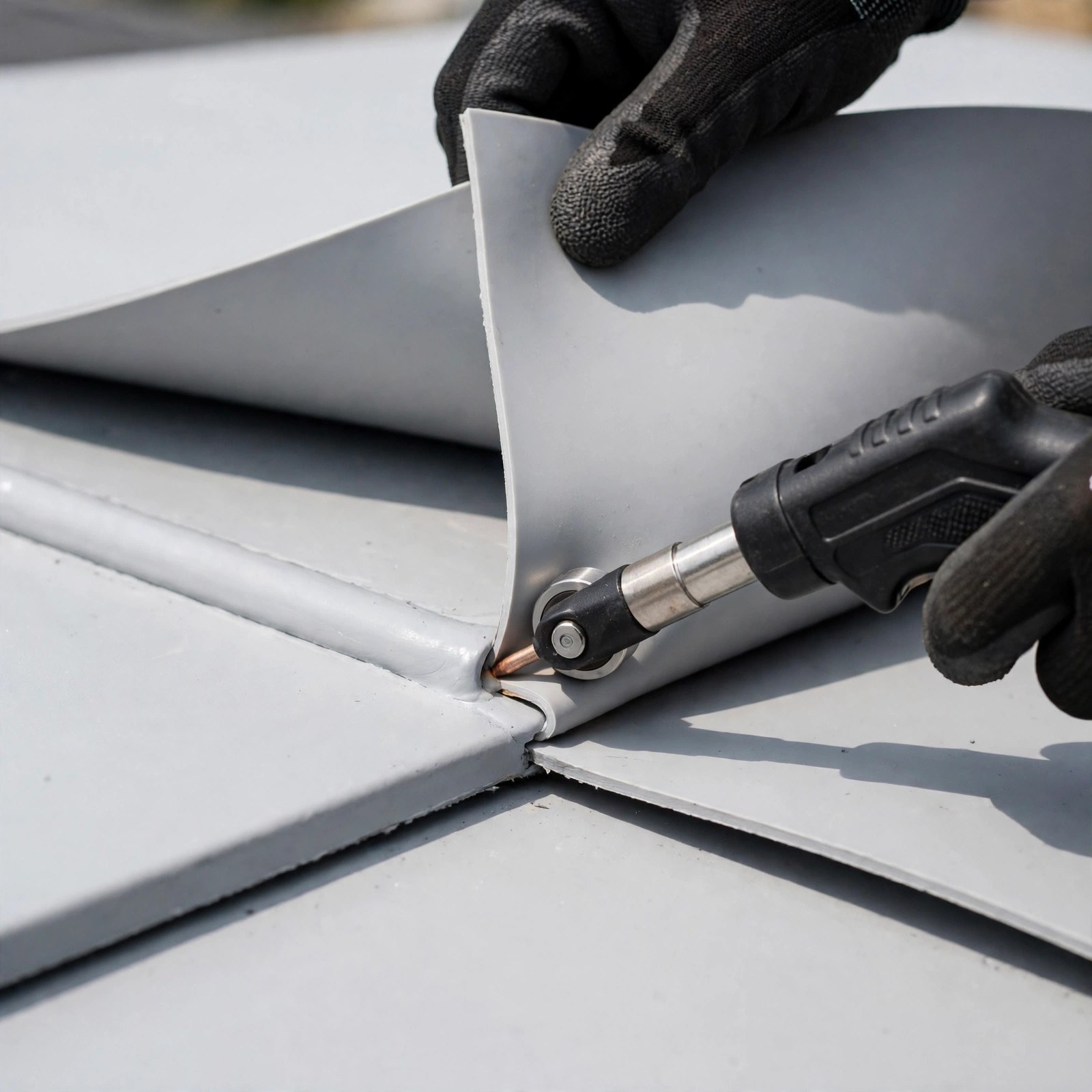
Overlaps are fused with hot air, test welds pulled and checked first, by a welder set to the material and the weather of the day.
Flash and Detail
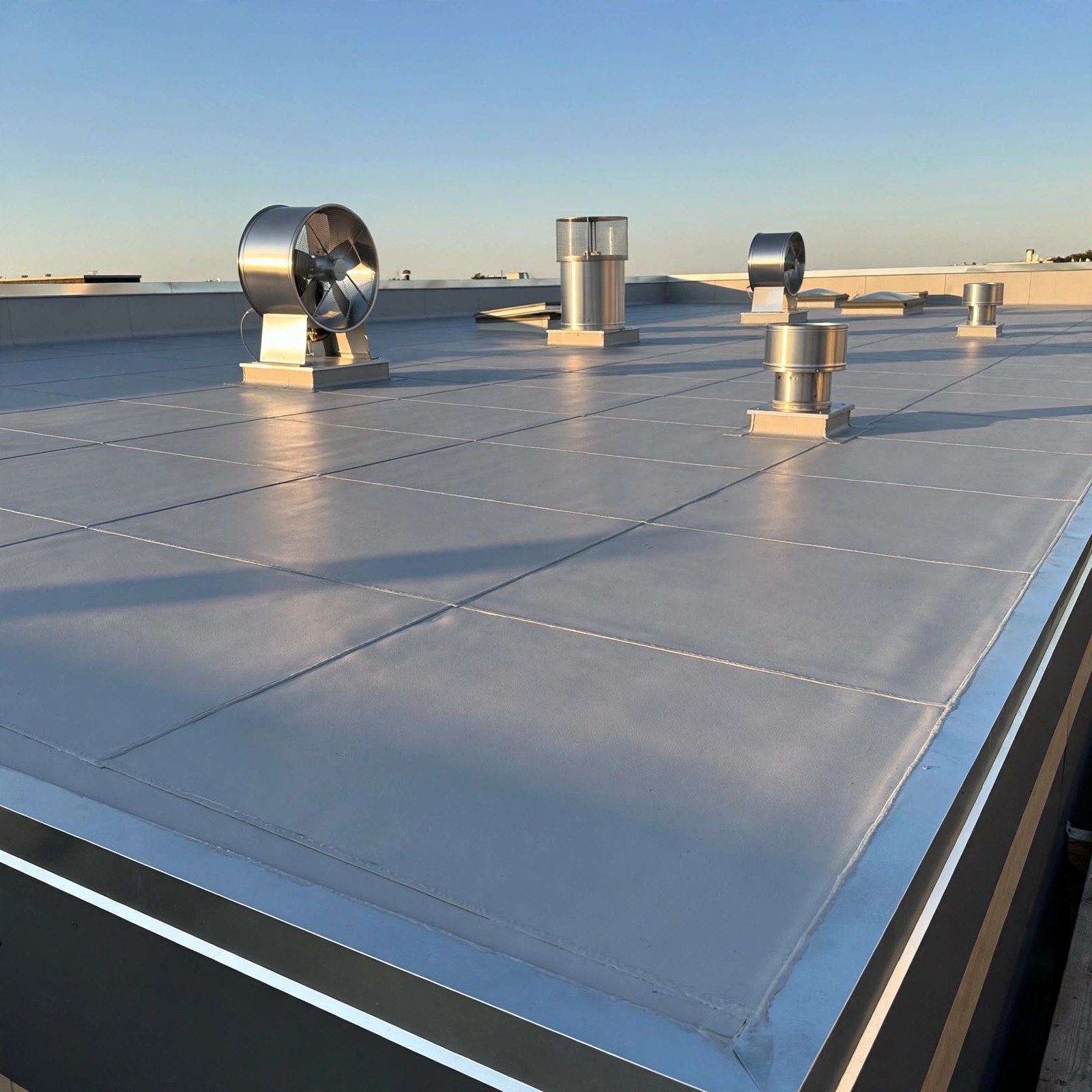
Pipes, curbs, and drains get formed PVC flashings welded into the field, with sacrificial protection where grease falls hardest around exhaust fans.
Probe and Hand Over
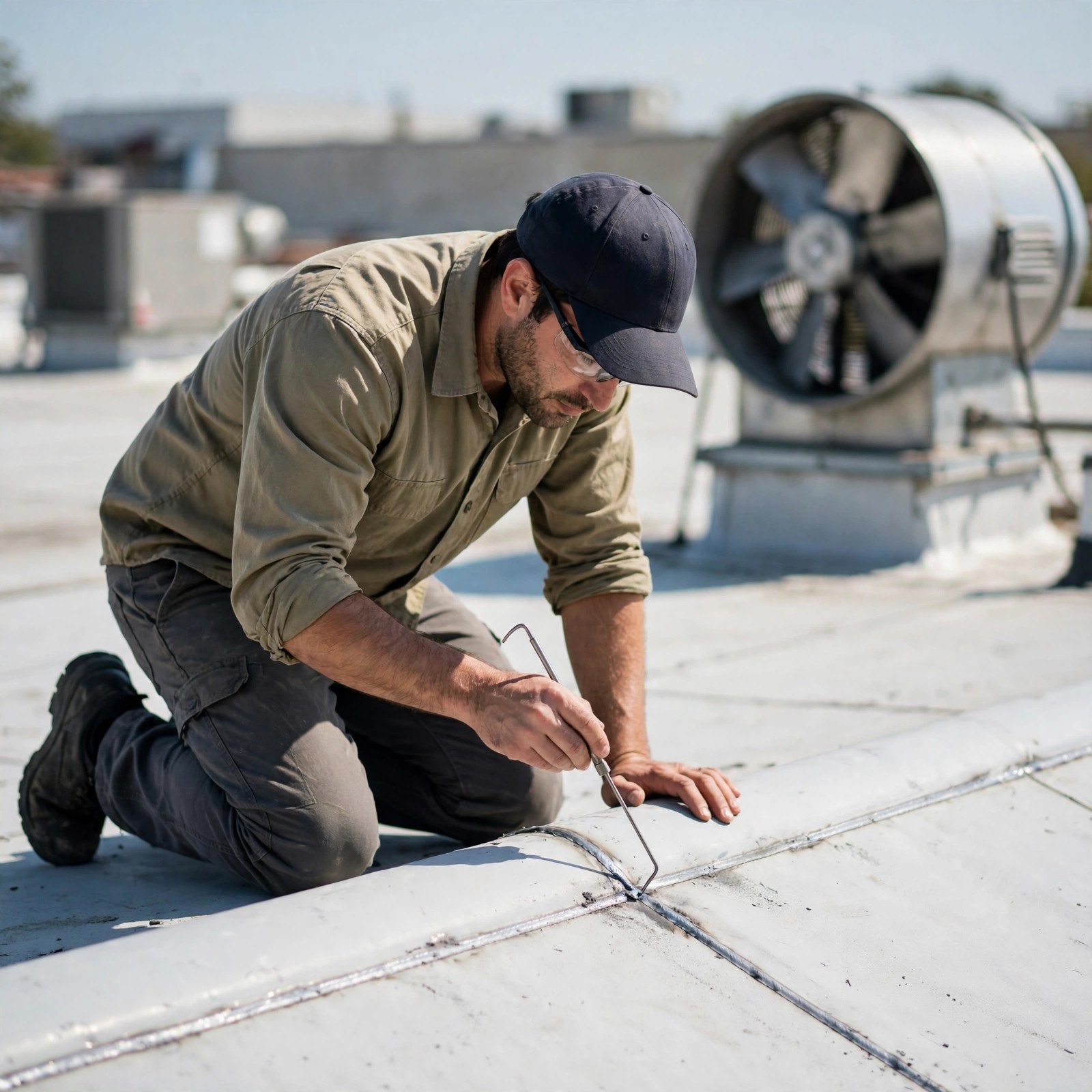
Every seam is probed end to end, any lift is cut out and rewelded, and the finished roof is walked with the owner before the job is called done.
The repair question
PVC Repairs Weld Like the Original
A cut or puncture in PVC is fixed the way the roof was built: a patch of PVC membrane welded over the damage with margins on every side, then probed like a factory seam.
Age changes the prep, not the principle. Older PVC can weld less willingly as the sheet weathers, so a repair visit starts with a test weld on the existing material, and the patch plan follows what that test proves.
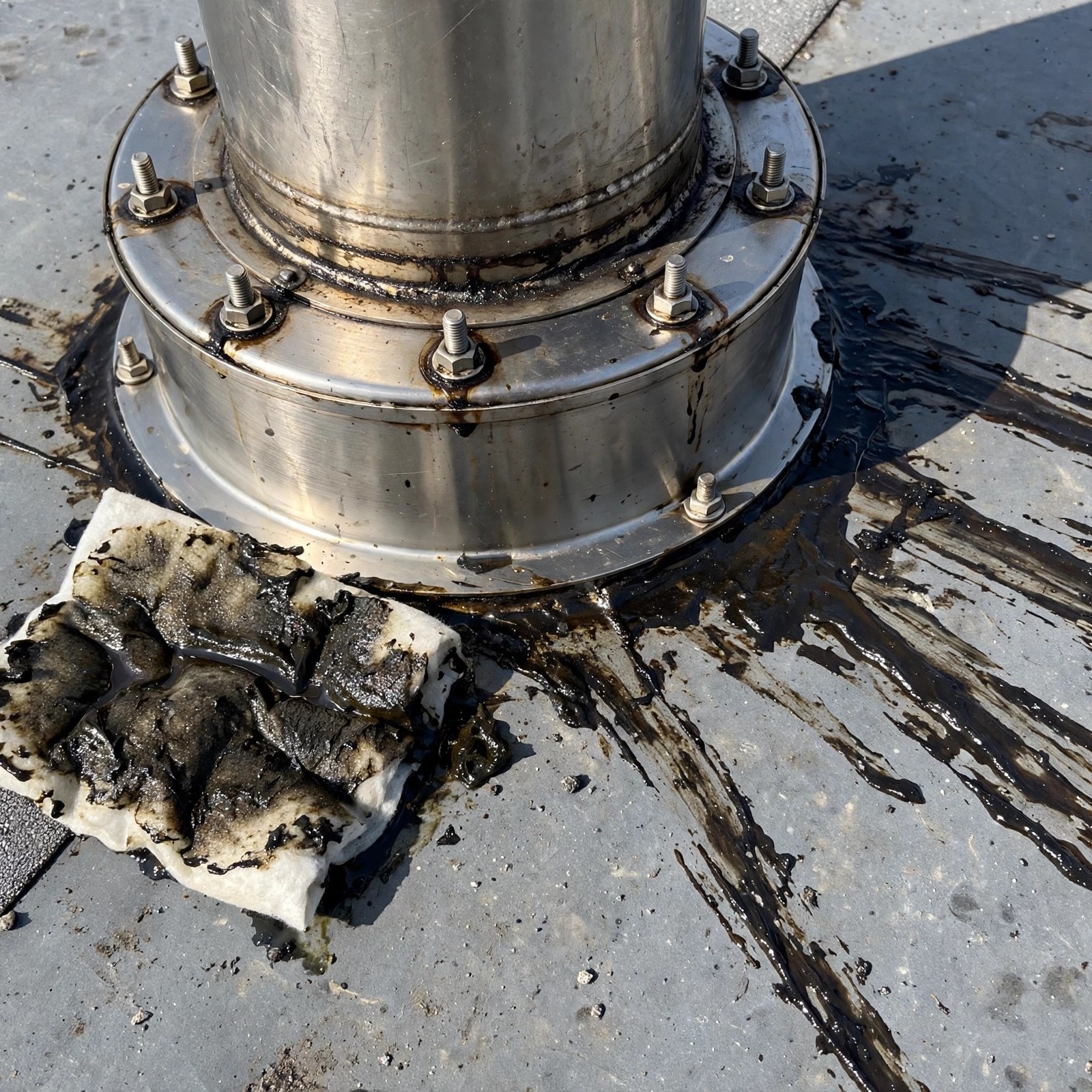
Grease damage is the one repair this page will not dress up: membrane already softened by years of exposure gets cut back to sound material, and if that area is the whole field, the honest scope is replacement of the affected run.
- Patches in matching PVC
- Test welds on aged sheets
- Softened material cut back
- Every patch probed after welding
The company
JBN Roofing of Texas, a Division of The JBN Group, Inc.
The JBN Group, Inc. is a family-owned general contracting company based at 125 Old Alton Drive in Denton since 1996. Its roofing division, JBN Roofing of Texas in Suite 8, installs and repairs PVC roofing on restaurants and commercial buildings across North Texas. The company carries an A+ Better Business Bureau rating and is fully insured. The roofing line is 469-340-0838 or sales@jbnroofingoftexas.com.
The honest fine print
What PVC Roofing Costs and Why
PVC usually carries a premium over the other single-plies, and this page will not pretend otherwise.
The premium buys the chemistry. Where grease, oil, or chemical exposure is the roof's real enemy, PVC outlasts membranes that cost less and fail early, and the math favors it. Where none of that exposure exists, the same money buys thickness or insulation in another system, and that trade gets shown in the written scope.
What never changes is how the price is built: the whole system, layers named, seams and flashings included, priced once in writing before a roll is opened on the roof.
- Premium justified or not at all
- Exposure named in the scope
- Alternatives priced honestly
- No years promised, seams probed
Read the Exposure
What falls on the roof decides if PVC belongs there at all.
Build the System
Insulation, membrane, and attachment go down as one drawn scope.
Weld and Detail
Seams fused with hot air, grease paths detailed in formed PVC.
Probe Every Seam
Welds are probe-tested and the finished roof walked at handover.
The honest fine print
The comparison question
PVC Against the Other Single-Plies
TPO, EPDM, and PVC are all single-ply answers, but they are not interchangeable: TPO welds and reflects, EPDM stretches and patches, PVC resists the chemicals that destroy the other two. The written scope here names which membrane your building is getting and the exposure reason behind the choice, so the recommendation is a fact about your roof, not a habit of the salesman.
Choosing between membranes? Call 469-340-0838 and get the comparison in writing.
Where we work
PVC Roofing Across North Texas
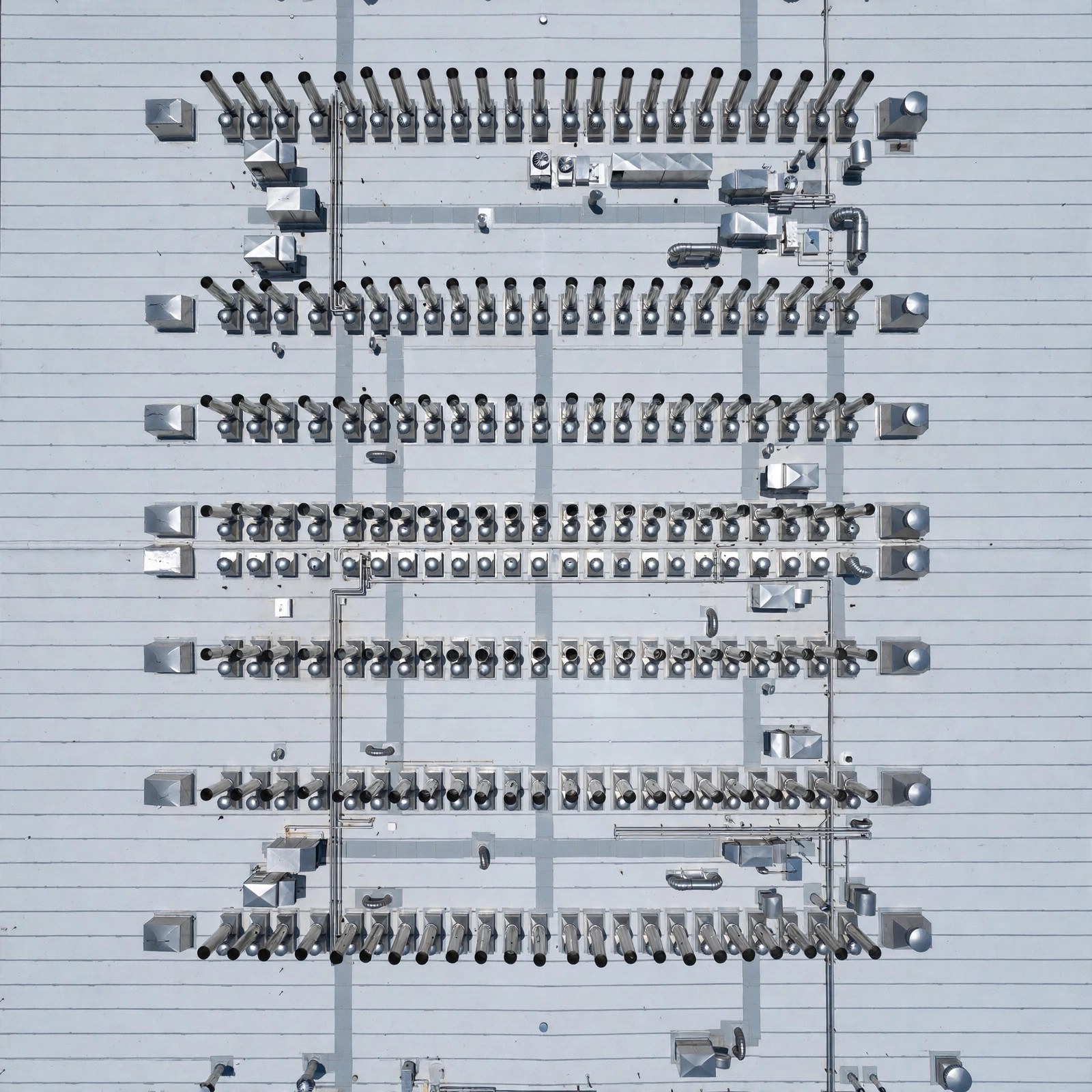
From Suite 8 in Denton, JBN Roofing of Texas installs and repairs PVC roofs on restaurants, food facilities, and commercial buildings across the northern Dallas-Fort Worth corridor.
Your building outside that area? Call 469-340-0838 and ask. If we cannot take it on properly, we will tell you plainly.
What the PVC Scope Includes
- Exposure and deck check
- Membrane choice justified
- Hot-air welded seams
- Probe test on every seam
- Walked and verified at handover
Straight answers
PVC Roofing FAQs
What is PVC roofing?
PVC is a thermoplastic single-ply membrane for low-slope commercial roofs. Its seams are hot-air welded into a continuous surface, and the material is chemically resistant in a way most roofing is not, which is why it is the standard answer over commercial kitchens.
Why do restaurants choose PVC?
Because of what lands on the roof. Kitchen exhaust deposits grease continuously, and grease degrades rubber and asphalt membranes. PVC resists animal fats and oils, and its welded seams give grease no glued joint to attack, so the roof over a busy kitchen lasts the way it was supposed to.
Is PVC better than TPO?
Better at one thing, at a price. Both are welded white single-plies. PVC resists grease and chemicals that TPO is not built for; TPO generally costs less where no such exposure exists. The honest pick depends on what your building puts on its roof, and that comparison belongs in the written scope.
Can a PVC roof be patched?
Yes. Damage is cut out and a PVC patch is welded over it with margins all around, then probed. On older roofs a test weld comes first, because weathered PVC welds differently than new rolls; the patch plan follows what the test weld shows.
How long does PVC roofing last?
On the right building, decades are normal for this material, and its welded seams age as one surface rather than as glued joints. Rather than promise a number of years, the scope names the exact membrane, every seam is probed at handover, and inspections keep the details honest.
What does PVC roofing cost?
More than the other single-plies, usually, and the quote says so plainly. It is priced as one system in writing: deck, insulation, membrane, seams, and flashings. Where grease or chemical exposure justifies the premium, it is the cheapest roof over its life; where it does not, the scope shows the alternative.
Welded · Probed · Grease-Proof
The Roof Grease Cannot Eat.
One call gets the exposure read, the membrane justified, and the whole PVC system priced in writing.